The five best stones for slab countertops are granite, quartzite, dolomite, marble, and engineered stone options like quartz and porcelain. Each of these materials offers a unique balance of durability, visual appeal, and long-term performance for kitchen and bathroom surfaces. Granite and quartzite rank among the hardest and most scratch-resistant options, while dolomite and marble deliver elegant veining that suits classic and contemporary designs. Engineered quartz and porcelain slabs provide non-porous, low-maintenance surfaces that never require sealing.
Choosing the right stone slab countertop depends on how you use your space, how much maintenance you are willing to commit to, and the overall design style you want to achieve. Below is a detailed breakdown of each stone type, including its composition, strengths, limitations, and best applications for kitchens and bathrooms.
1. Granite
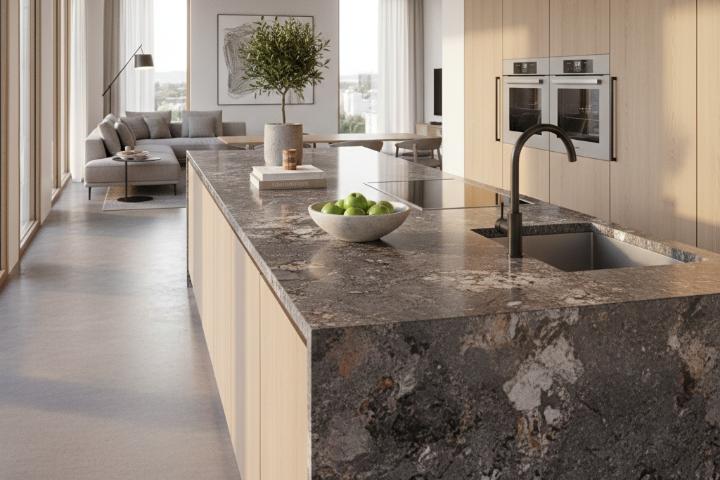
Granite has earned its reputation as the most popular natural stone for countertops, and that standing is well deserved. Loved by designers and homeowners alike, granite delivers a rare combination of striking beauty and exceptional durability that few other materials can match.
Once reserved for luxury homes due to higher price points, granite has become far more accessible in recent years as supply chains have expanded and more varieties have entered the market. Despite this increased availability, granite still carries a premium aesthetic appeal that instantly elevates any kitchen or bathroom design. According to This Old House, stone countertops are considered a luxury feature that can potentially increase a home's resale value.
Granite is an igneous rock that forms deep within the Earth's crust under extreme pressure and temperatures exceeding 2,300°F. This intense natural process fuses particles of quartz and feldspar together, producing the stone's signature speckled and mottled appearance. That distinctive patterning also makes granite highly effective at concealing seams between slabs, creating a more seamless look across larger countertop surfaces.
Available in a vast range of colors, patterns, and finishes, granite complements virtually any design style from modern minimalist kitchens to traditional bathroom vanities. It is naturally heat resistant, scratch resistant, and incredibly hard-wearing for everyday use.
One important consideration is that granite slabs require periodic sealing. Applying a quality sealant closes any small pores in the surface, preventing staining and keeping the countertop safe for food preparation. Most professionals recommend resealing granite countertops once per year to maintain peak performance and appearance.
2. Quartzite
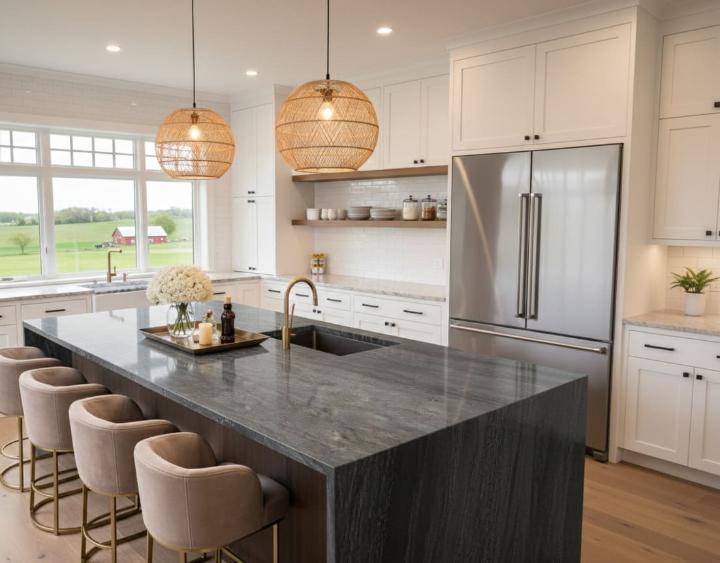
Quartzite is rapidly gaining popularity among homeowners who want the elegant look of marble paired with superior strength and resilience. Often confused with engineered quartz, quartzite is a completely natural stone with its own distinct set of properties.
Quartzite is a metamorphic rock that forms when quartz sandstone is subjected to the same extreme pressures and temperatures that create granite. During this process, individual quartz grains and cementing materials recrystallize into a tightly interlocking structure with a smooth, glassy surface. Mineral impurities in the original sandstone may introduce subtle color variations and sweeping veins that give quartzite a striking resemblance to marble.
This marble-like appearance is one of quartzite's greatest advantages. Homeowners who love the look of marble but need a more durable countertop surface often find quartzite to be the ideal compromise. It is denser than granite, which makes it more resistant to chipping, scratching, and staining under everyday kitchen and bathroom conditions. As Fine Homebuilding notes, some quartzite slabs are so visually striking that designers have changed entire kitchen plans after discovering them at a stone yard.
Like granite, quartzite countertops require regular sealing to protect against moisture absorption and stains. Beyond that, maintenance is minimal, making quartzite an excellent long-term investment for high-traffic spaces. The one drawback to consider is cost. Quartzite tends to be slightly more expensive than granite due to its density and the complexity involved in quarrying and fabrication.
3. Dolomite
Dolomite is a lesser-known natural stone that has been steadily gaining traction as a practical and beautiful alternative to marble. Sometimes referred to as dolostone, this sedimentary rock offers a look that closely mimics marble at a more accessible price point and with better overall durability.
Dolomite forms naturally when limestone comes into contact with magnesium-rich groundwater and undergoes a chemical transformation. The result is a stone that typically appears in shades of white and gray, often featuring elegant veining and streaks that make it nearly indistinguishable from marble at first glance.
While dolomite is not quite as hard as granite or quartzite, it is significantly harder than marble. This means it offers much better resistance to scratching, chipping, and surface damage than true marble countertops, making it a smarter choice for busy kitchens where durability matters. Visiting a local showroom to compare dolomite and marble side by side is the best way to appreciate the differences in hardness and surface texture.
The primary limitation of dolomite is its narrower color palette. Because it forms primarily in white and gray tones, homeowners seeking bolder or warmer color options may need to look elsewhere. Like other natural stone countertops, dolomite also requires regular sealing to guard against staining and moisture penetration.
4. Marble
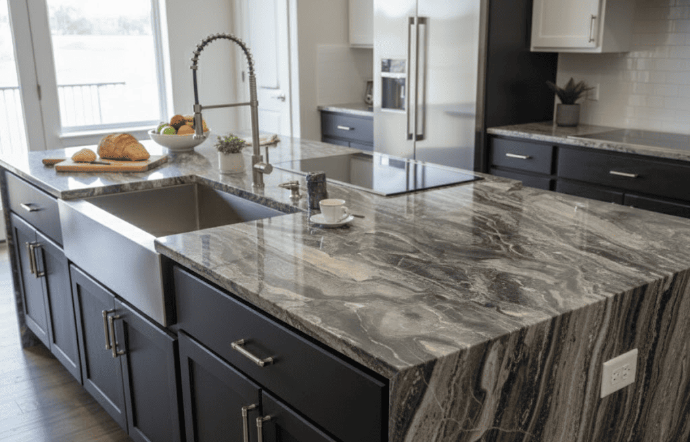
No list of premium countertop stones would be complete without marble. For centuries, marble has been synonymous with luxury, elegance, and timeless sophistication. From classical sculpture to high-end residential design, marble carries an unmistakable sense of opulence that continues to captivate homeowners today.
Marble is a metamorphic rock formed when limestone or dolomite is subjected to extreme pressure deep within the Earth's crust. This geological process produces a stunning array of colors and veining patterns, making every marble slab genuinely one of a kind. From dramatic Calacatta with bold gray veining to soft Carrara with delicate linear patterns, the design possibilities with marble are virtually endless.
However, beauty does come with trade-offs. Marble is more porous than granite, quartzite, or dolomite, which makes it highly susceptible to staining if not regularly sealed and maintained. It is also a softer stone, meaning it is more prone to scratching, etching from acidic substances like lemon juice or vinegar, and chipping from heavy impacts.
For homeowners willing to commit to consistent care and maintenance, marble delivers an unmatched aesthetic that can transform a kitchen or bathroom into a truly luxurious space. Many designers recommend marble for lower-traffic areas like bathroom vanities or decorative surfaces where its beauty can shine without the heavy wear of a busy kitchen.
5. Engineered Stone: Quartz and Porcelain
While natural stone dominates the world of premium countertops, engineered stone surfaces have earned a well-deserved place in the conversation. Designed specifically for use as countertops, engineered options like quartz and porcelain offer distinct performance advantages that natural stone alone cannot always deliver.
Engineered Quartz is made from loose quartz particles bound together with resin, creating a surface that is harder and more flexible than natural quartzite. This manufacturing process produces a countertop that is nearly indestructible, highly resistant to scratching, cracking, and chipping under normal use. Quartz countertops are available in a wide range of colors and patterns, including options designed to replicate the look of natural marble. Because the surface is non-porous, quartz requires no sealing and is exceptionally easy to maintain. The one trade-off is heat resistance. The resin component in quartz can be damaged by extreme temperatures, so using trivets or hot pads under cookware is always recommended. It is also worth noting that the CDC's National Institute for Occupational Safety and Health has raised awareness about silica exposure risks during the cutting and fabrication of engineered stone, which is one reason professional installation is always recommended.
Porcelain slabs have emerged as one of the most exciting developments in modern countertop design. Made from natural clay and minerals fired at extremely high temperatures, porcelain is incredibly durable, heat resistant, UV resistant, and virtually maintenance free. Large-format porcelain slabs can replicate the appearance of marble, granite, or concrete with remarkable accuracy while offering a lighter weight and thinner profile than traditional stone. Porcelain is also non-porous, meaning it resists staining and bacterial growth without ever needing to be sealed. This combination of performance and design versatility has made porcelain slab countertops a rapidly growing choice for both indoor and outdoor kitchen applications.
Conclusion
Selecting the right stone slab countertop is one of the most impactful decisions you can make during a kitchen or bathroom renovation. Each of the five stones covered in this guide brings a unique combination of beauty, durability, and practical performance to the table. Granite and quartzite deliver unmatched natural strength for high-traffic kitchens. Dolomite provides a marble-like aesthetic with better everyday resilience. Marble remains the ultimate choice for homeowners seeking timeless luxury. And engineered options like quartz and porcelain offer cutting-edge durability with virtually zero maintenance requirements.
The best countertop for your home ultimately depends on your lifestyle, design preferences, and maintenance expectations. Seeing and touching stone slabs in person is the best way to understand how each material will look and feel in your space.
At Nova Tile and Stone, we carry a wide selection of countertop slabs in natural stone, engineered quartz, and porcelain across our showrooms in Reno, Minden, Sacramento, and Fernley. Our team offers free design consultations to help you find the perfect surface for your project. Visit a showroom near you or browse our collections online to start exploring the best stone slab countertops for your kitchen or bathroom remodel.
Frequently Asked Questions
What is the most durable natural stone for countertops?
Granite and quartzite are widely considered the most durable natural stones for countertops. Both offer excellent resistance to scratching, heat, and chipping when properly sealed and maintained. Quartzite has a slight edge in density, while granite provides a broader range of color and pattern options at a wider range of price points.
Do stone slab countertops need to be sealed?
Yes, most natural stone countertops including granite, quartzite, dolomite, and marble require periodic sealing to protect against stains and moisture absorption. Sealing frequency varies by stone type, but most professionals recommend resealing once per year. Engineered quartz and porcelain countertops do not require sealing because their surfaces are non-porous.
What is the difference between quartzite and quartz countertops?
Quartzite is a natural metamorphic rock quarried from the earth, while quartz is an engineered product made from crushed quartz particles bound with resin. Quartzite offers natural beauty with unique veining and superior heat resistance, while engineered quartz provides a non-porous, low-maintenance surface that never needs sealing. Both are excellent countertop choices depending on your priorities.
Are porcelain slab countertops a good alternative to natural stone?
Porcelain slab countertops are an outstanding alternative to natural stone for many homeowners. They are non-porous, heat resistant, UV resistant, scratch resistant, and require virtually no maintenance. Modern porcelain slabs can convincingly replicate the look of marble, granite, and other natural stones while offering a lighter weight and thinner profile. They are also an excellent choice for outdoor kitchen countertops because they will not fade in direct sunlight.
Where can I see stone slab countertop options in Northern Nevada or Northern California?
Nova Tile and Stone operates four showroom locations in Reno, Minden, Sacramento, and Fernley where you can view a wide selection of natural stone slabs, engineered quartz, and porcelain countertop options in person. The team offers free design consultations so you can compare materials and get expert guidance before making your final decision.