Calacatta marble and quartz differ in origin, composition, and long-term performance. Calacatta marble is a 100% natural stone composed of 99.5% pure calcium carbonate, prized for its bold white background and distinctive grey and gold veining. Quartz surfaces are engineered products made from approximately 80% natural quartz mineral bound with resins and pigments. While quartz offers manufactured consistency, it is susceptible to heat damage and UV discoloration over time.
Calacatta marble, when properly sealed and maintained, delivers unmatched natural beauty, a unique veining pattern that cannot be replicated, and a surface that improves in character with age. Explore our curated selection of premium marble and natural stone slabs available for your next project and review professional care recommendations from the Natural Stone Institute to help preserve the beauty of your investment.
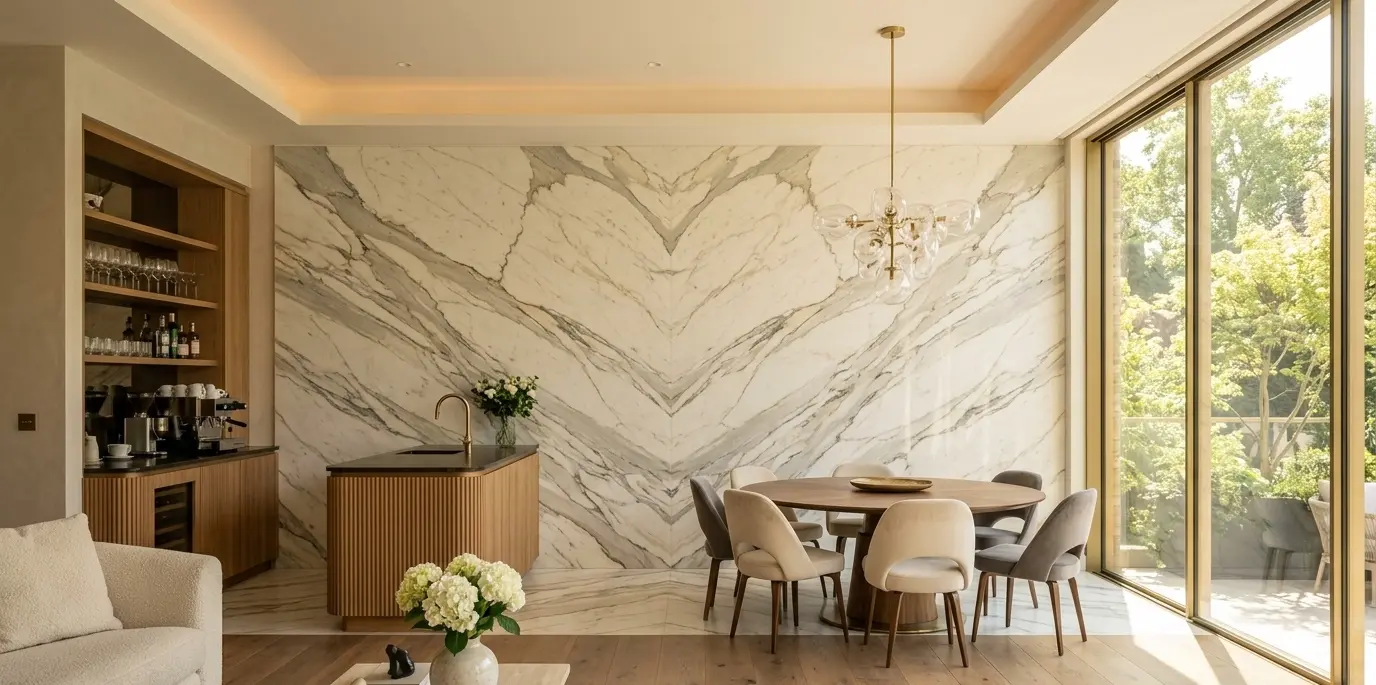
Calacatta vs. Quartz: Composition
Calacatta marble stands as one of the most sought-after natural stones available today, consistently setting the benchmark for luxury in the market. It is a metamorphosed limestone composed of approximately 99.5% pure calcium carbonate, with the remaining 0.5% consisting of trace minerals, the very elements responsible for its distinctive veining and one-of-a-kind patterning.
Calacatta is particularly recognized for its bright white background and its bold grey and gold veining. Its fine grain and smooth surface make it compatible with a wide range of finishes. Quartz, while one of the most abundant minerals found in nature, is not used in its pure form when manufactured into slabs or surfaces. Producers bind natural quartz with resins to engineer the final product. Most quartz slabs are composed of roughly 80% natural quartz and 10% resins, with the remainder made up of pigments and other additives.
Shop local with our tile and stone specialists to explore high-quality natural stone options available for your project and learn how different surface textures impact performance by reviewing the guide to selecting the ideal stone finish.
Durability
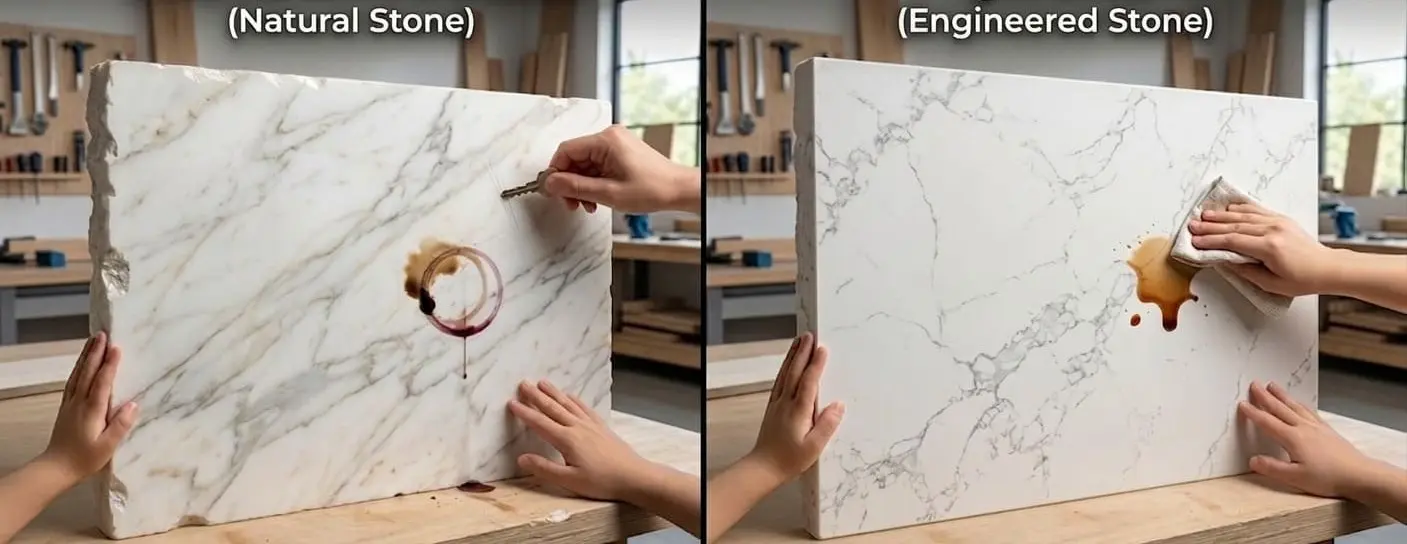
Calacatta marble is generally considered more durable than many other marble varieties, though porosity remains a common point of concern across all natural marbles. Marble is inherently porous and benefits from consistent upkeep. Fortunately, current stone technology makes it possible to improve mechanical strength and significantly reduce porosity. A range of sealants formulated specifically for natural marble also helps protect the surface over time. With proper care, marble performs beautifully for a lifetime, and many argue it only improves in character as it ages.
Quartz surfaces achieve their durability through the engineered combination of mineral and resin. That said, the resin component introduces notable vulnerabilities. Quartz slabs are susceptible to heat damage and can experience discoloration when exposed to prolonged sunlight, both of which may affect the surface's appearance and integrity over time.
Understand environmental and health product labels for natural stone to make a more informed material selection and schedule a consultation with our team to discuss the best surface for your space.
Aesthetic
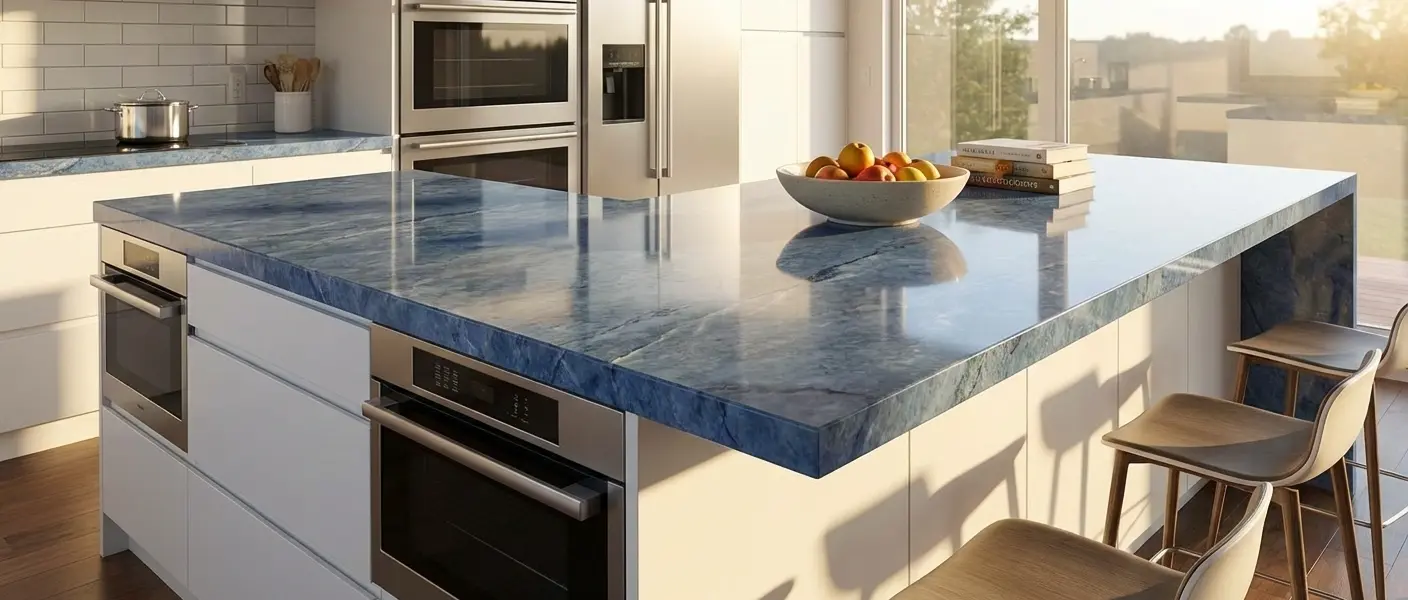
Calacatta marble has been a reference point for luxury design since antiquity. Its deep white base and dramatic veining are unmatched by any other natural stone variety, and it is precisely this look that engineered stone manufacturers have long attempted to replicate.
Quartz products carry a recognizable, consistent appearance. Unlike natural stone, however, the veining in quartz tends to look uniform and lacks the organic authenticity that comes from being formed in the earth. There are no true variations or natural imperfections, every slab reflects a manufactured pattern.
More products than ever before attempt to imitate the Calacatta aesthetic, but those imitations fall short of reproducing the natural inclusions, subtle tonal shifts, and unique veining that define the real stone. With routine maintenance and proper sealing, Calacatta marble remains in a category of its own, one that no engineered alternative has yet to equal.
Request a personalized slab quote to view authentic Calacatta marble options for your project and apply for a trade account to access exclusive pricing and professional support from our stone specialists.
Conclusion
Choosing between Calacatta marble and quartz ultimately comes down to what you value most in a surface material. Quartz offers consistency and engineered durability, but it comes with trade-offs, vulnerability to heat, sun discoloration, and a manufactured appearance that lacks the depth of natural stone. Calacatta marble, on the other hand, brings something no engineered product can manufacture: a material shaped entirely by nature, with a composition, character, and visual presence that is genuinely irreplaceable. With the right sealant and routine care, a Calacatta marble slab is not just a surface, it is a long-term investment in beauty, quality, and enduring value.
Work with a trusted tile and stone company that sources premium Calacatta marble and guides you through every step of the selection process.
Frequently Asked Questions
What is the main difference between Calacatta marble and quartz?
Calacatta marble is a 100% natural stone formed from metamorphosed limestone, composed of approximately 99.5% pure calcium carbonate. Quartz surfaces, by contrast, are engineered products made by combining natural quartz mineral with resins and pigments. This fundamental difference in origin and composition affects everything from appearance and texture to long-term performance and maintenance requirements.
Is Calacatta marble more durable than quartz?
Both materials are durable, but in different ways. Quartz is resistant to scratching and staining due to its resin binders, while Calacatta marble is a naturally strong stone that, when properly sealed and maintained, holds up exceptionally well over time. It is worth noting that quartz is prone to heat damage and sun-induced discoloration, limitations that do not apply to natural marble in the same way.
Does Calacatta marble require a lot of maintenance?
Marble is naturally porous and does require regular upkeep, including periodic sealing with products formulated specifically for natural stone. However, advances in stone treatment technology have made it easier than ever to protect marble surfaces and reduce porosity. With a consistent care routine, Calacatta marble maintains its appearance and structural integrity for a lifetime.
Can quartz replicate the look of Calacatta marble?
Manufacturers have long attempted to mimic the Calacatta aesthetic in quartz products, but the result is always a uniform, repeating pattern rather than a truly unique surface. Natural Calacatta marble features one-of-a-kind veining, organic tonal variation, and subtle imperfections that cannot be reproduced by an engineered material. The distinction is visible to a trained eye and felt in the overall presence of the stone.
Which material is better for long-term use, Calacatta marble or quartz?
For long-term use, Calacatta marble offers a distinct advantage in aesthetic longevity. Rather than degrading in appearance over time, well-maintained marble develops a natural patina that many designers and homeowners consider part of its appeal. Quartz, while durable, can suffer from heat exposure and UV discoloration over the years, which may affect its visual quality. For those seeking a material that genuinely improves with age, Calacatta marble is the stronger long-term choice.