Graphite marble slabs are natural stone characterized by deep charcoal and dark grey tones, typically accented by white, silver, or gold veining. They are cut from quarried metamorphic rock composed primarily of calcite or dolomite and are available in polished, honed, and leathered surface finishes. Common applications include kitchen countertops, bathroom walls and floors, fireplace surrounds, and feature walls. Graphite marble ranks around 3 to 4 on the Mohs hardness scale, requires periodic sealing, and is best evaluated in person at a stone showroom due to the natural variation between individual slabs.
What Are Graphite Marble Slabs?
Graphite marble is a metamorphic rock composed primarily of recrystallized carbonate minerals, most commonly calcite or dolomite, formed under intense heat and pressure over geological time. The stone's dark coloration originates from carbon deposits and mineral inclusions present during formation, producing a material with a deep, moody base tone and movement that ranges from subtle and smoky to bold and graphic.
Slabs are cut directly from quarried blocks, preserving the stone's full natural pattern intact. Because no two quarried blocks are alike, every graphite marble slab presents a unique combination of veining, color depth, and surface character. That inherent variation is what sets natural stone slabs apart from engineered surface alternatives.
Surface Finishes for Graphite Marble Slabs
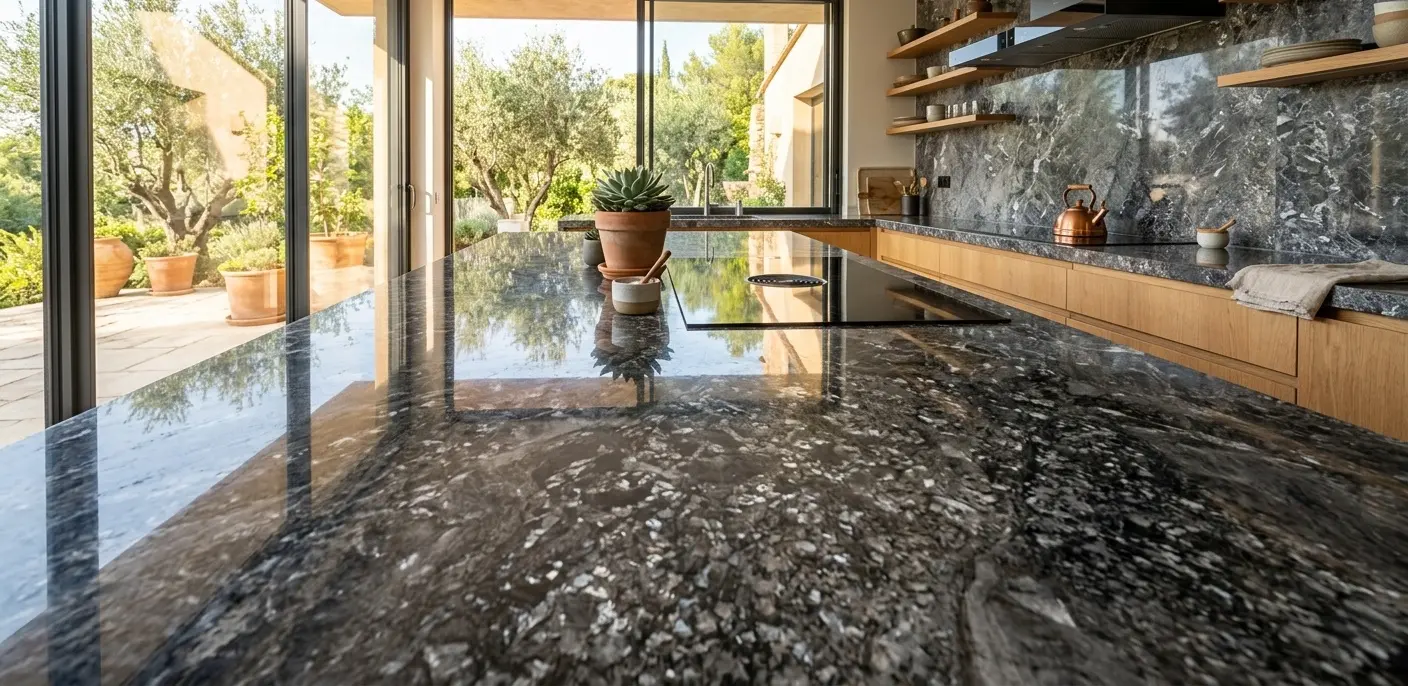
The finish selected for a graphite marble slab has a significant effect on both its appearance and its performance in a given application.
Polished finishes draw out the full depth and richness of the dark base tone, producing a reflective surface that intensifies veining contrast. This remains the most widely chosen finish for countertops and feature walls where visual drama is a priority.
Honed finishes deliver a matte, velvety result that softens the stone's intensity without diminishing its presence. This finish is a strong option for flooring, bathroom walls, and applications where reducing glare is a practical concern.
Leathered finishes introduce a subtle tactile texture by running diamond-tipped brushes across the slab surface. This process compresses the surface pores slightly, and the organic, lived-in quality that results has made leathered graphite marble a popular choice for kitchen islands and statement countertops.
Explore available graphite marble slabs and finishes at our local showroom to find the right surface for your project.
Design Applications for Graphite Marble Slabs
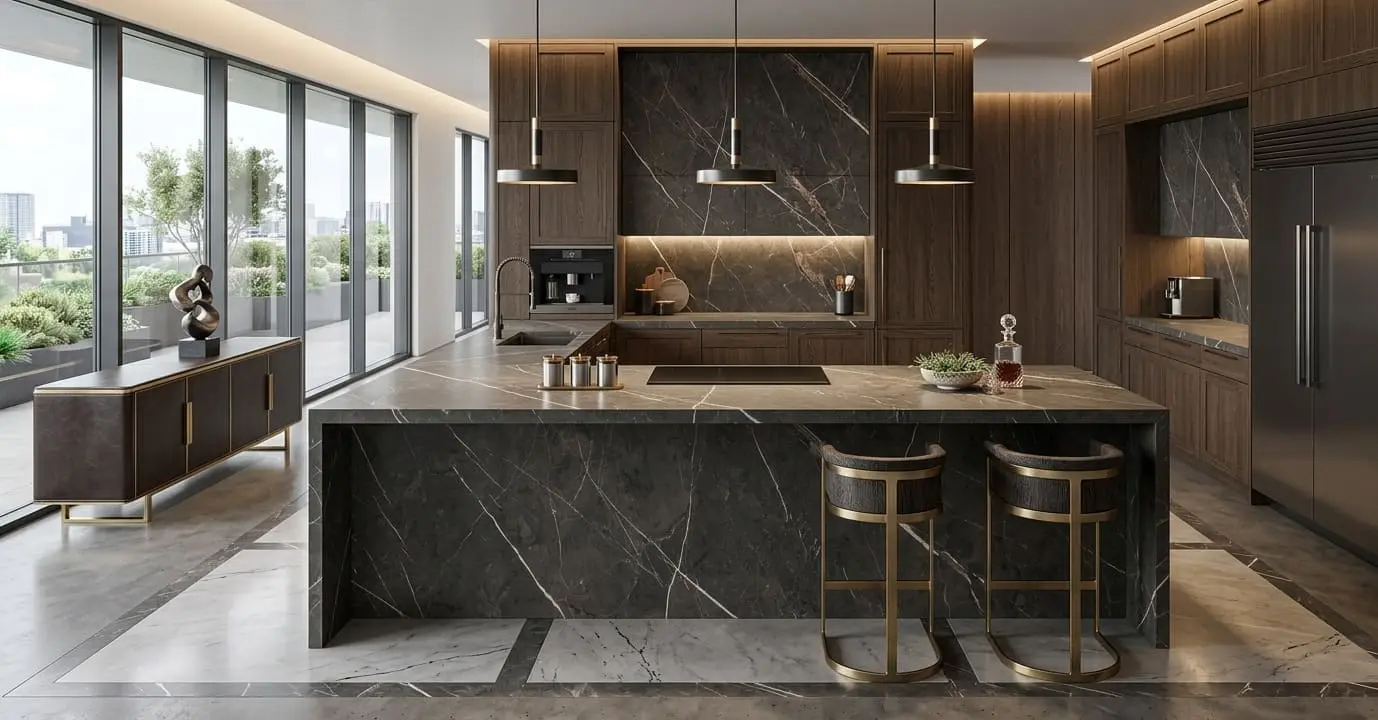
Graphite marble slabs perform across a broad range of interior applications, and their dark tonality creates design opportunities that lighter stone varieties cannot offer.
Kitchen Countertops. A graphite marble countertop anchors a kitchen with unmistakable authority. Set against white or light wood cabinetry, the contrast reads as striking without tipping into harsh. Against darker cabinetry, the effect becomes seamless and sophisticated. The pronounced veining found in many graphite varieties, particularly those with white or gold movement, adds visual complexity that keeps the surface from reading as flat or heavy. Understanding how sealing protects stone surfaces is essential for maintaining the beauty and durability of natural stone countertops.
Bathroom Walls and Floors. Full-slab graphite marble on bathroom walls creates a spa-caliber atmosphere that tiled surfaces rarely match. Because slabs eliminate grout lines entirely, veining flows without interruption across the surface, lending the room a clean, architectural quality. On bathroom floors, graphite marble pairs naturally with brushed metal fixtures and warm lighting to establish a moody, high-end aesthetic.
Fireplace Surrounds. Marble's natural heat resistance makes it a reliable material for fireplace surrounds and hearth slabs. Graphite marble suits modern and transitional fireplace designs where a dark, dramatic focal point is the objective. The stone's veining draws the eye toward the hearth and introduces movement to what is otherwise a static architectural element.
Feature Walls and Accent Panels. Graphite marble slabs installed as feature walls in living rooms, entryways, or behind vanities deliver high-impact results with minimal visual clutter. A single large-format slab, or a bookmatched pair, is enough to transform any wall into a deliberate design statement. Request a custom slab quote for graphite marble to bring your design application to life.
Hardness, Durability, and Care Considerations
Marble ranks around 3 to 4 on the Mohs hardness scale, placing it softer than quartzite or granite and more susceptible to scratching and etching from acidic substances. In kitchen applications, where exposure to citrus juice, vinegar, and cleaning products is routine, using cutting boards, wiping spills promptly, and avoiding harsh chemical cleaners will preserve surface integrity.
Sealing is recommended for most marble installations, particularly in high-use or moisture-prone environments. Many installations call for resealing once every one to two years, though denser varieties may need less frequent attention. On polished graphite marble, etching can show more readily against the high-contrast dark base. Honed and leathered finishes tend to absorb the visual impact of everyday wear more effectively, which explains why both have gained traction in active household kitchens. Follow proper marble cleaning practices to help maintain the finish and protect the surface from everyday wear.
How to Select the Right Graphite Marble Slab
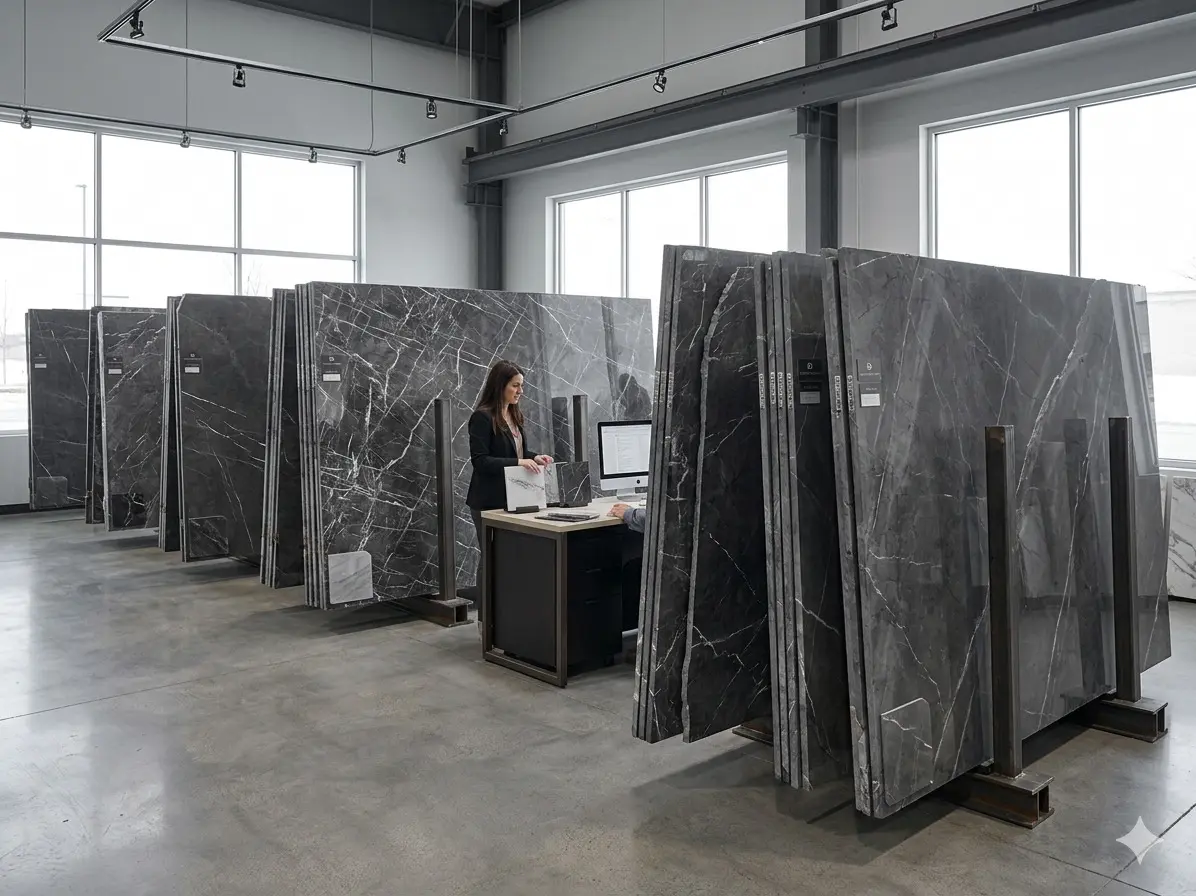
Viewing slabs in person is the most consequential step in the selection process. Photographs and small samples do not fully communicate the scale of veining, the depth of base color, or the way a particular slab responds to your lighting conditions. When visiting a stone showroom, bring material references from your space, such as cabinet finishes, flooring samples, and hardware, so you can evaluate each slab in context.
Consider the intended application before committing to a finish. High-traffic surfaces benefit from honed or leathered finishes that mask daily wear. Decorative applications such as feature walls or fireplace surrounds can carry polished finishes without the maintenance demands those finishes introduce on a working countertop. For large-format applications, confirm that sufficient inventory is available from the same quarry run to keep color and veining consistent across multiple pieces. Schedule a showroom appointment to view graphite marble slabs in person and compare finishes side by side.
Transform Your Space with Graphite Marble Slabs
Graphite marble slabs offer a combination of natural beauty, design flexibility, and lasting material character that manufactured surfaces cannot replicate. Whether the project calls for a bold kitchen countertop, a spa-inspired bathroom, or a dramatic fireplace surround, graphite marble delivers depth and sophistication that stands the test of time. Visit a showroom to view full slab selections and find the piece that fits your vision.
Conclusion
Graphite marble slabs bring a level of depth and material presence that few natural stones can match. Their dark, veined character works equally well as a kitchen countertop, a bathroom wall, a fireplace surround, or a feature panel, making them one of the more versatile options in the natural stone category.
Understanding the available surface finishes, the stone's hardness range, and the care it requires will help you get the most out of your investment. Because every slab is cut from a unique quarried block, viewing material in person at a showroom remains the most reliable way to find the right piece for your project. Work with a trusted tile and stone supplier to ensure you select high-quality graphite marble slabs for your space.
Frequently Asked Questions
Is graphite marble a good choice for kitchen countertops?
Graphite marble can work well as a kitchen countertop but requires consistent maintenance. Because it ranks around 3 to 4 on the Mohs hardness scale, it is more prone to scratching and etching than granite or quartzite. A honed or leathered finish is the more practical choice for high-use kitchens, as both conceal everyday wear more effectively than polished.
What is the difference between polished, honed, and leathered graphite marble?
Polished finishes produce a reflective surface that amplifies veining contrast and base tone depth. Honed finishes result in a matte, velvety surface that reduces glare and softens the stone's intensity. Leathered finishes add a subtle tactile texture achieved by compressing the surface pores with diamond-tipped brushes, giving the stone an organic, lived-in quality.
How often does graphite marble need to be sealed?
Most graphite marble installations benefit from resealing once every one to two years, depending on the stone's porosity, surface finish, and application. High-use surfaces such as kitchen countertops require more consistent sealing than low-contact applications like feature walls or fireplace surrounds.
Can graphite marble be used for fireplace surrounds?
Yes. Marble's natural heat resistance makes it well suited for fireplace surrounds and hearth slabs. Because fireplace surrounds are low-contact surfaces, the stone's susceptibility to scratching and etching is less of a concern in this application than it would be for a kitchen countertop.
Why is viewing graphite marble slabs in person important before purchasing?
No two slabs are identical. Digital images and small samples do not capture the true scale of veining, depth of color, or how the stone interacts with your specific lighting. Visiting a showroom with material references from your space allows you to make a more accurate and confident selection.