Graphite marble is a natural metamorphic stone defined by its deep grey-to-black base color, produced when organic carbon in the original limestone converts into graphite during geological metamorphism. Each slab forms under millions of years of intense heat and tectonic pressure, resulting in a dense crystalline structure threaded with veins of white, silver, or subtly warm tones. Because these vein patterns are determined by the unique mineral conditions of each quarry deposit, no two slabs are identical. This geological origin is precisely what makes graphite marble slabs unlike any engineered or manufactured surface available today.
As a surface material, graphite marble is valued for its visual depth, structural density, and design versatility. It performs well across kitchen countertops, bathroom walls, feature walls, and large-format flooring, pairing naturally with wood tones, ceramic tile, and metal finishes. Its dark, neutral base absorbs and reflects light differently depending on finish, making polished, honed, and leathered treatments each produce a distinct aesthetic result. For homeowners and designers seeking a natural stone that combines dramatic visual impact with long-term durability, graphite marble remains one of the most distinctive options available.
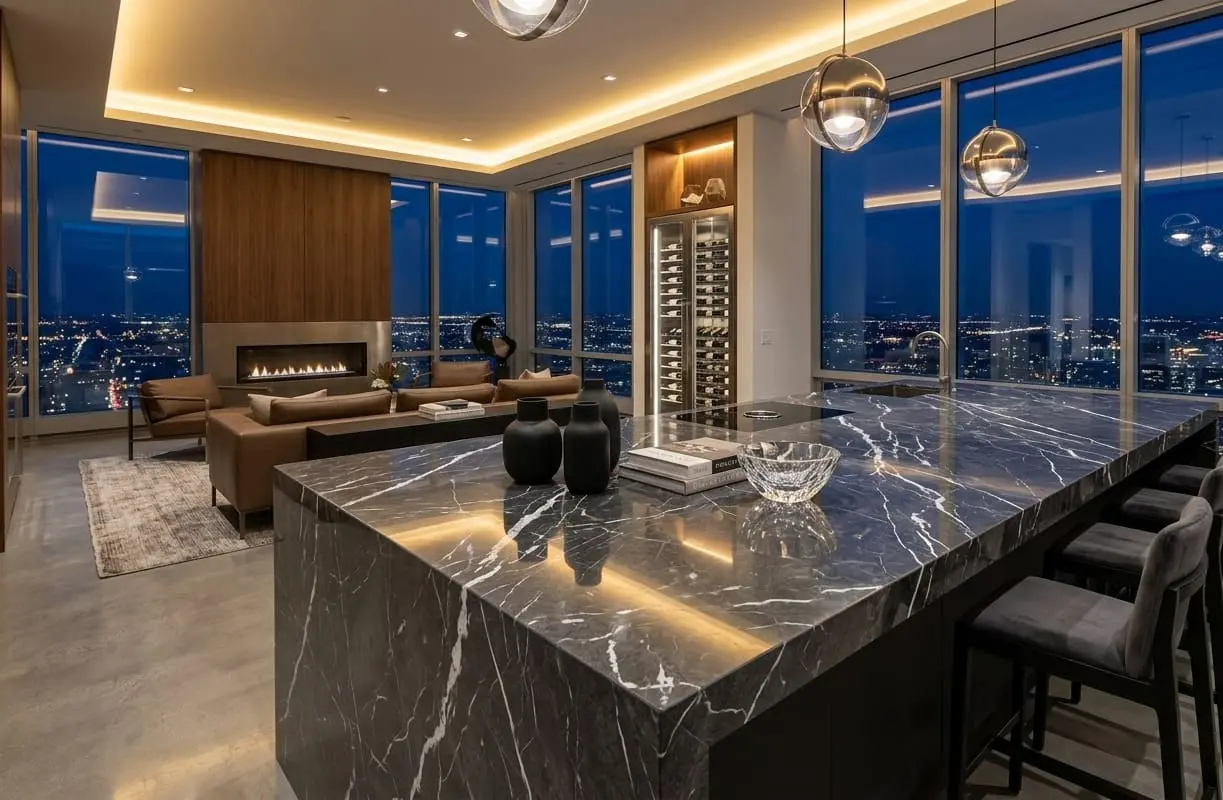
What Is Graphite Marble and How Does It Form?
Graphite marble begins its journey as limestone, a sedimentary rock composed primarily of calcium carbonate. Over millions of years, extreme heat and tectonic pressure buried deep within the Earth's crust cause the limestone to recrystallize, transforming it into the denser, interlocking crystalline structure that defines marble. During this metamorphic process, organic material originally present in the limestone, such as preserved shells and carbonaceous matter, converts into fine graphite. It is this graphite content that gives the stone its signature deep grey-to-black coloration.
The resulting stone is composed predominantly of calcite, with graphite and other accessory minerals influencing its final appearance. As mineral-rich fluids move through cracks in the stone during formation, they leave behind veins of contrasting minerals, creating the distinctive white, silver, or subtly warm streaks that cut across the dark base. Because these vein patterns are determined by geological conditions specific to each quarry deposit, no two slabs share the same composition. Every piece is genuinely one of a kind, and browsing our current stone slab inventory is one of the most effective ways to appreciate how dramatically each piece differs in character and movement.
The Visual Qualities That Set It Apart
What draws designers and homeowners to dark natural stone is the depth it creates without relying on ornamentation. Graphite marble achieves visual drama through its geology alone. The deep base absorbs light in a way that polished lighter stones simply cannot, producing a sense of richness that feels immersive rather than flat.
The veining tells a geological story. Thin white or silver streaks cut across the dark field in linear, branching, or sweeping formations depending on the specific slab. Some pieces carry wide, expressive veins that draw the eye across the full length of a countertop or feature wall. Others display fine, quiet striations that reward a closer look. This natural variation is precisely what makes the material so compelling for those who want surfaces with genuine character rather than manufactured consistency.
When light hits a polished graphite marble surface, the stone takes on a mirror-like quality that amplifies the contrast between the dark base and lighter veining. Honed finishes reduce the reflectivity and reveal the stone's more textural, matte qualities. Leathered and brushed finishes introduce subtle surface texture, creating a tactile dimension that works particularly well in spaces where a softer, more organic aesthetic is preferred. Understanding how different stone finishes perform and feel is worth exploring before committing to a final surface treatment for your project.
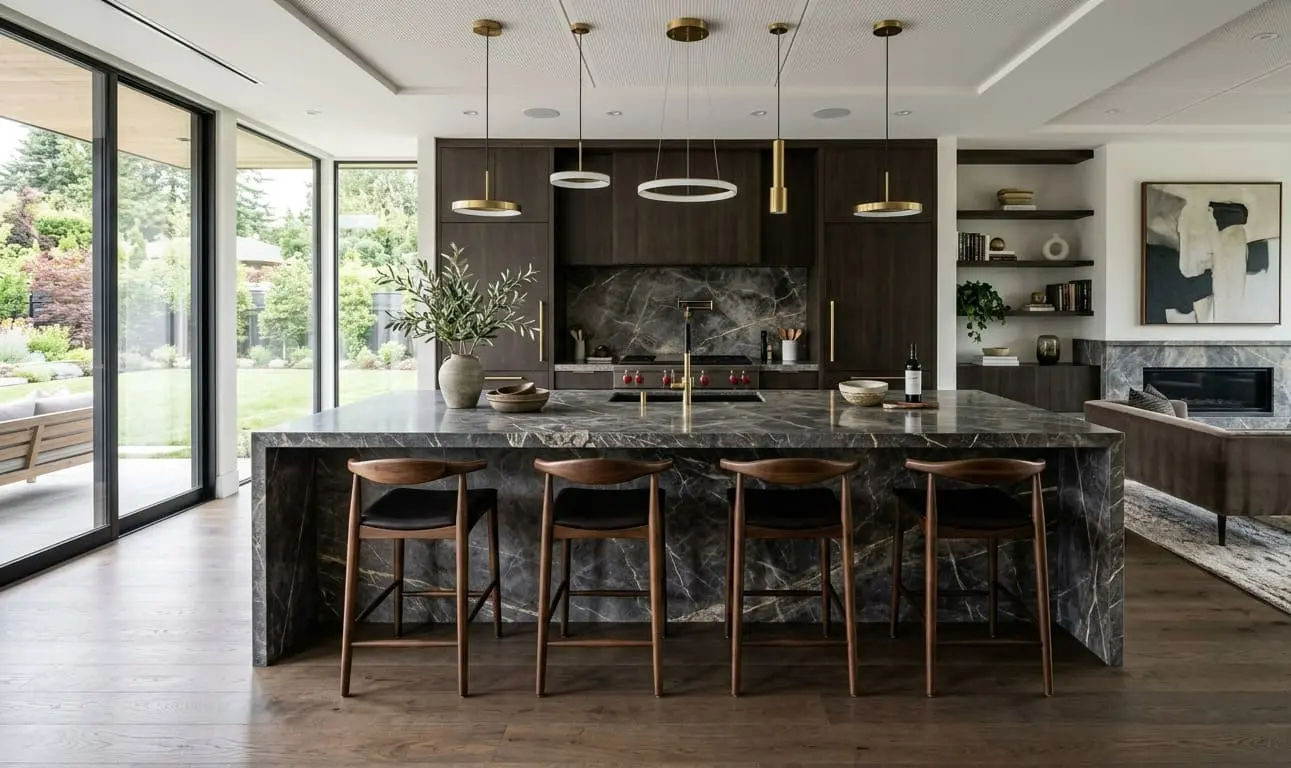
Where Graphite Marble Performs Best
Few surfaces perform confidently across such a wide range of applications. In kitchen settings, natural stone countertops in darker marble varieties bring a moody sophistication that pairs naturally with warm wood cabinetry, brushed metal hardware, and lighter ceramic or porcelain tiles. The contrast between the dark stone and surrounding lighter elements creates a layered, multi-dimensional composition that feels both contemporary and timeless.
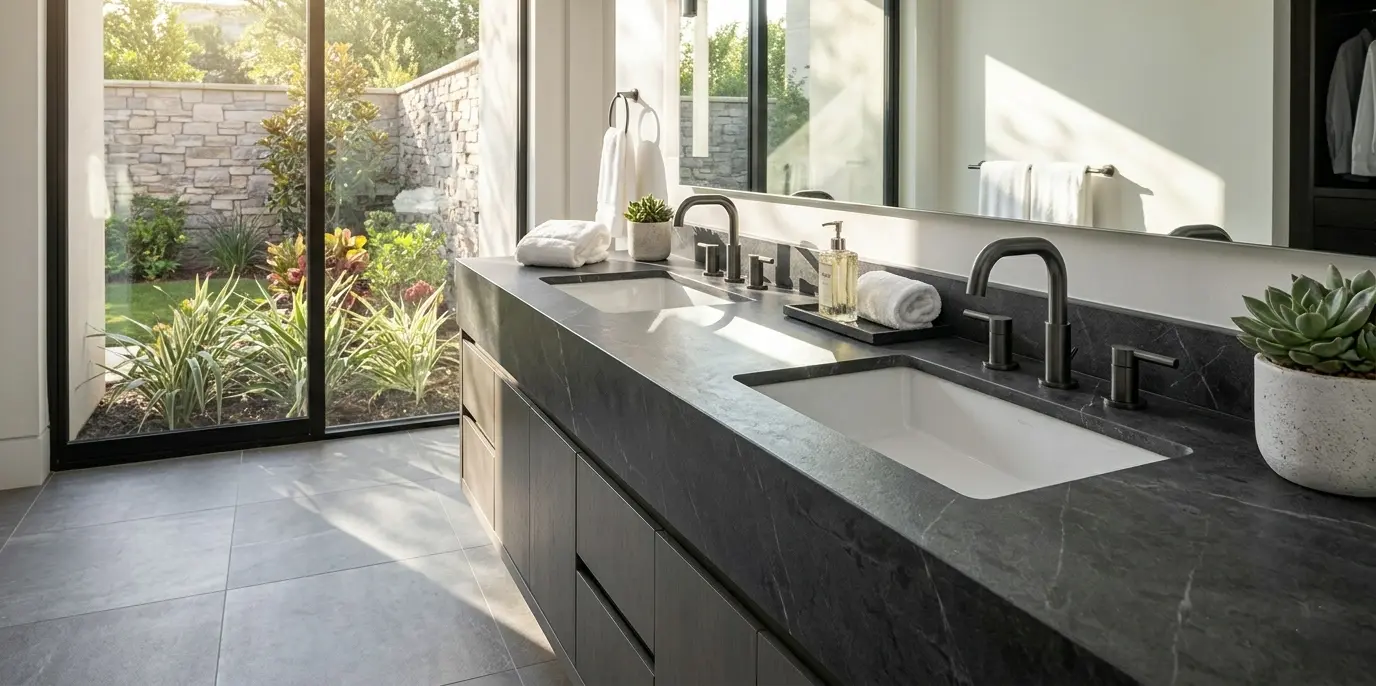
Bathroom applications showcase some of the most dramatic results. Full-height wall panels in graphite marble transform a standard bathroom into something closer to a spa environment. When used as flooring, particularly in a polished finish, the surface reflects ambient light beautifully, making even compact rooms feel more expansive and refined.
Feature walls in living areas represent another compelling application. A single large slab installed as a fireplace surround or an accent wall behind seating provides the kind of focal point that artwork alone rarely achieves. The scale of a full slab allows the natural veining to read as a continuous visual composition rather than a fragmented pattern, which is one of the most powerful arguments for choosing large-format natural stone slabs over smaller tile formats in statement applications.
How It Pairs With Other Materials
One of the most practical design strengths of graphite marble is how well it integrates with surrounding surfaces. The dark, neutral base acts as a unifying element capable of drawing together contrasting materials without creating visual tension. Pairing it with wood-look and stone-look tiles introduces warmth and organic texture that softens the stone's intensity while maintaining a grounded, natural palette.
Combining graphite marble with crisp white ceramic wall tile creates a clean, high-contrast aesthetic suited to contemporary interiors. Metal finishes, particularly matte black, brushed gold, and aged brass, interact naturally with the stone's vein tones. When those metallic notes echo the lighter veins within the slab, the result is a cohesive palette that feels deliberate and refined.
This versatility extends across design styles. In minimalist interiors, a large graphite marble slab delivers visual complexity without introducing clutter. In more traditional settings, the stone's geological origins and organic veining bring an authenticity that manufactured surfaces cannot match.
Durability and Long-Term Considerations
Graphite marble is a dense, hard-wearing stone, but like all marble varieties, it requires proper care to maintain its appearance over time. Marble falls between 3 and 5 on the Mohs hardness scale, which means it is softer than granite and susceptible to surface etching when exposed to acidic substances such as citrus juice, wine, or vinegar. Wiping spills promptly with a soft cloth and warm water is the most effective first line of defense.
Sealing is an important part of caring for any marble surface. A quality penetrating sealer applied at installation and reapplied annually helps reduce the stone's porosity and limits its vulnerability to staining. Using pH-neutral stone cleaners for routine maintenance, rather than acidic or abrasive household products, preserves the sealer and prevents surface dullness over time. For practical, step-by-step guidance on caring for marble surfaces at home, Bob Vila's resource covers everyday cleaning habits and stain prevention in thorough detail.
With consistent upkeep, graphite marble holds its visual depth for decades, developing a natural patina that many homeowners and designers find adds further character to the stone. From a long-term value standpoint, natural stone surfaces consistently support property values. The permanence and prestige associated with marble, particularly in darker, more distinctive varieties, are recognized features in both residential and commercial real estate.
Selecting the Right Slab for Your Project
Because every slab differs in its vein pattern, tonal range, and overall movement, the selection process matters considerably. Viewing stone in person under natural light is the most reliable way to understand how a particular piece will read in a specific environment. Photographs rarely capture the full depth of color or the subtlety of vein movement that becomes immediately apparent when standing in front of a full slab.
Our team offers free design consultations to help match the right stone to each project. Whether you are based near Fernley, Reno, Sacramento, or Minden, visiting a showroom gives you the opportunity to evaluate current slab inventory and tile pairings side by side. If you already have a project in mind, submitting a slab quote request is a straightforward way to get the process started.
Nova Tile and Stone carries a curated selection of natural stone slabs chosen for quality and individual character, ensuring that every piece selected is genuinely worth featuring in a finished space.
Conclusion
Graphite marble slabs occupy a rare position in the world of natural stone. Their deep coloration is the direct result of geological processes, specifically the conversion of organic carbon into graphite during metamorphism, which means the material's character is authentic at every level. From kitchen surfaces and bathroom walls to living area focal points, this stone performs with consistent visual confidence across applications. Its compatibility with a wide range of complementary materials, from warm wood tones to crisp white ceramics, makes it one of the most adaptable natural stones available. For those who want surfaces that carry both beauty and permanence, graphite marble remains an exceptional and enduring choice.
Frequently Asked Questions
Is graphite marble suitable for kitchen countertops?
Yes, it works well in kitchen environments when properly sealed. Its dense crystalline structure makes it resistant to scratches and everyday impact. Because marble is reactive to acids, wiping up spills from citrus, wine, and vinegar promptly is important for preserving the surface finish.
How does graphite marble differ from standard grey marble?
The key distinction lies in the origin of its coloration. Graphite marble gets its deep grey-to-black tones from actual graphite mineral content formed during metamorphism, whereas lighter grey marbles typically contain fewer carbonaceous impurities. This gives graphite marble a deeper, denser tonal quality and a more pronounced vein contrast.
Can graphite marble be used in bathrooms?
Yes. It is a strong candidate for bathroom walls, floors, and vanity surfaces. Because marble is porous, proper sealing before use and periodic resealing are recommended to protect against moisture absorption, staining, and surface etching over time.
What finishes are available for graphite marble slabs?
The stone can be finished as polished, honed, brushed, or leathered. Polished finishes emphasize the dramatic vein contrast and create a highly reflective surface. Honed and leathered finishes produce a softer, more textural appearance that suits spaces where a less reflective, more tactile aesthetic is preferred.
How do I choose the right graphite marble slab for my project?
Viewing slabs in person is the most effective approach, as photographs rarely convey the full tonal range and vein movement of each individual piece. Scheduling a free design consultation with our experts allows you to evaluate current inventory options in the context of your specific project requirements.