Mont Blanc quartzite is a natural metamorphic stone quarried in Brazil, recognized for its creamy white background, soft gray and taupe veining, and a hardness rating of 7 to 8 on the Mohs scale. It is commonly used for kitchen countertops, bathroom surfaces, flooring, and wall cladding, valued for its marble-like appearance combined with greater resistance to scratching, heat, and etching.
There is a certain kind of stone that earns its place in a room not by demanding attention, but by quietly elevating everything around it. Its luminous, neutral palette brings warmth to a space without the fragility that often accompanies marble alternatives, making it a compelling option for homeowners and designers who want surfaces that are as functional as they are refined. If you have been weighing your options for a kitchen countertop, a bathroom vanity surface, or a statement floor, understanding what sets this stone apart is a worthwhile place to start.
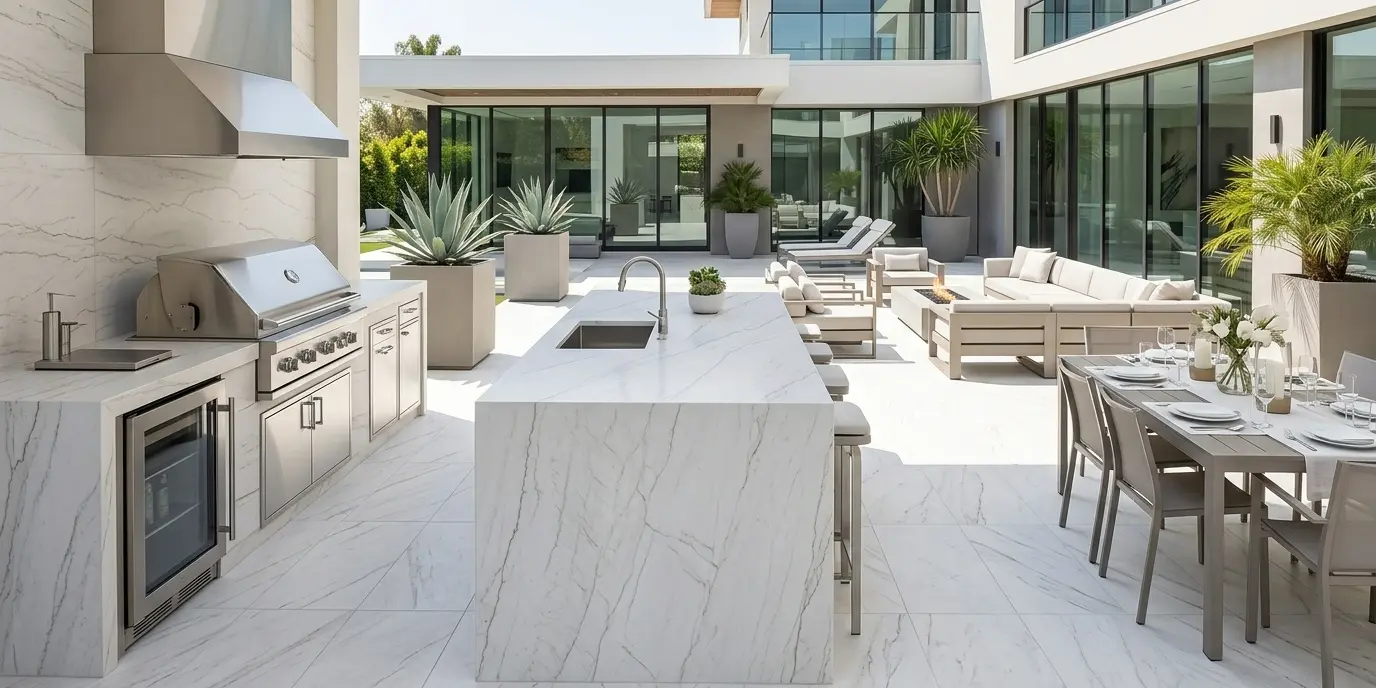
What Is Mont Blanc Quartzite?
Quartzite is a metamorphic rock that forms when sandstone rich in quartz is subjected to intense heat and pressure deep within the earth. The result is an exceptionally dense, interlocked mineral structure with outstanding hardness and natural character. Named after the iconic snow-capped peak in the Alps, Mont Blanc carries that same pale, serene quality in its coloring: a predominantly white to light gray base threaded with flowing veins of charcoal, taupe, and cream.
Because every slab is cut from a unique section of earth, no two pieces are identical. Some display bold, dramatic movement, while others carry softer, more restrained patterning. This natural variation is part of what makes it so coveted among designers working on high-end residential and commercial projects.
It is also worth clarifying that quartzite and engineered quartz are not the same material. Quartzite is a purely natural stone, while engineered quartz slabs combine ground stone with resin binders to create a man-made surface. Mont Blanc belongs firmly in the natural category, and that distinction matters when it comes to performance, appearance, and long-term value.
Why Mont Blanc Stands Apart From Marble
The visual resemblance between this quartzite and white marble is understandable, given that both materials share a refined, high-contrast aesthetic. However, their performance profiles differ considerably, and that difference becomes most apparent in spaces that see daily activity.
Marble typically sits between 3 and 4 on the Mohs hardness scale, making it susceptible to scratching and etching from acidic substances. Mont Blanc quartzite rates between 7 and 8 on the same scale, placing it among the hardest natural countertop stones available and on par with, or slightly above, granite in scratch resistance. It withstands heat exposure and resists the kind of surface etching that acidic liquids leave on calcite-based stones. For readers comparing stone types before committing to a material, the Fine Homebuilding guide to natural stone countertops is a thorough and reliable reference.
Its mineral composition also makes it less porous than marble, though proper sealing remains essential for Mont Blanc specifically. Lighter quartzite varieties can absorb moisture more readily than their appearance suggests, so maintaining an intact seal is the most reliable way to protect the surface from staining over time. When consistently sealed, it resists oils, wine, and other kitchen substances that would compromise a more porous material. Those ready to explore available options can browse our live stone slab inventory to see what is currently in stock.
Design Applications Worth Considering
Kitchen Countertops and Islands
The kitchen is where Mont Blanc quartzite truly performs. Its light, neutral tone brightens any cooking space and creates a clean visual anchor that complements both light and dark cabinetry. Whether paired with warm wood tones, painted shaker fronts, or handle-free modern panels, the stone integrates naturally. A full-height backsplash in matching quartzite adds movement and visual continuity to the overall scheme.
Bathroom Vanity Tops and Shower Surrounds
Bathrooms benefit considerably from this stone. The creamy palette and flowing veining create a spa-like atmosphere on vanity surfaces, and the material's resistance to humidity and frequent cleaning keeps it performing well over time. When extended across shower walls and floors, it introduces a sense of cohesion that makes smaller bathrooms feel more expansive and intentional.
Flooring in High-Traffic Areas
Quartzite flooring is an underused opportunity in residential design. Its hardness allows it to hold up through years of foot traffic without losing its finish or visual appeal. Hallways, entryways, and open-plan living spaces benefit from the warmth and movement it contributes underfoot. In large-format slabs, the pattern flows continuously across the floor, creating an effect that feels more like art than standard flooring.
Fireplace Surrounds and Feature Walls
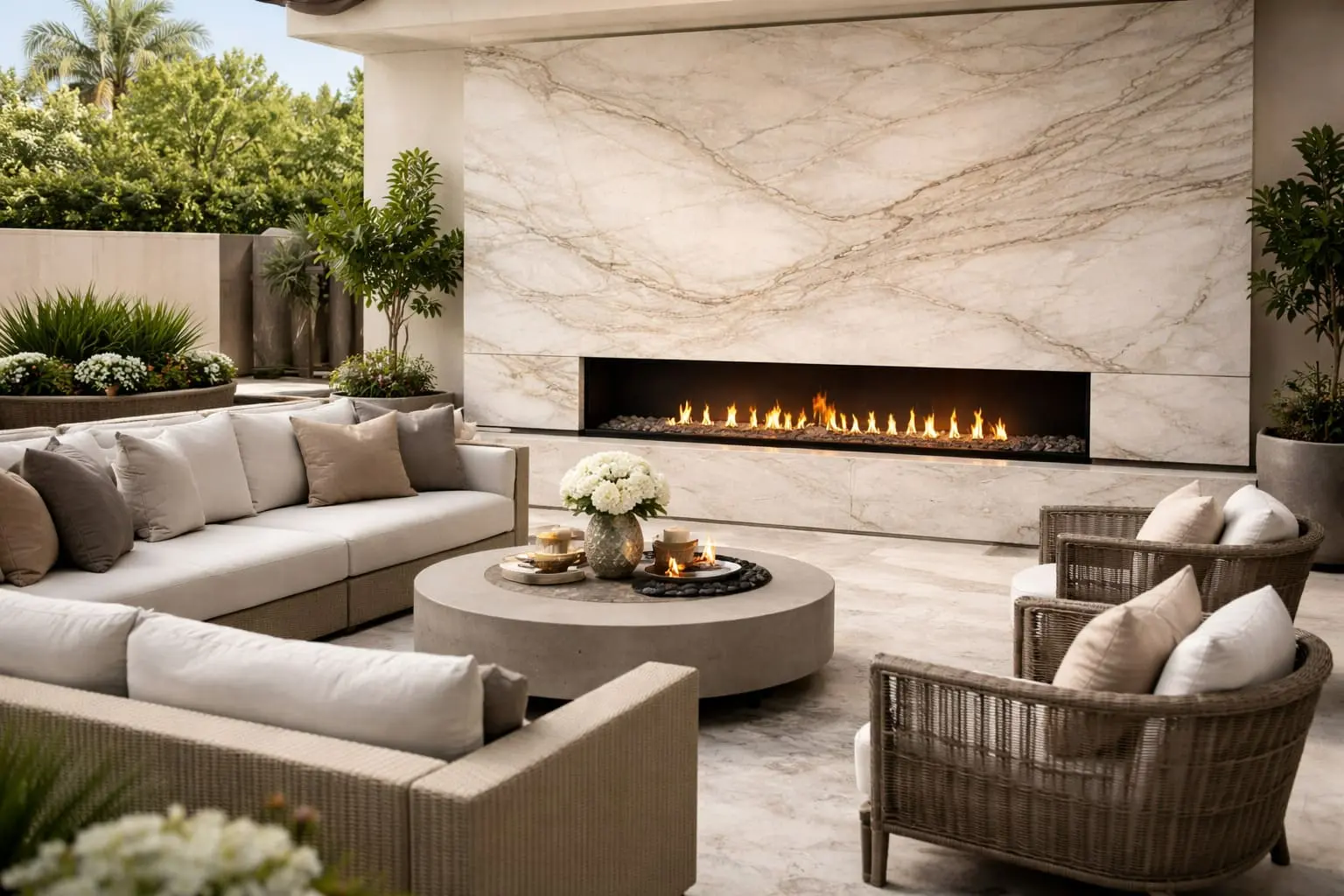
The stone's neutral coloring and natural texture make it an ideal choice for fireplace surrounds, where heat resistance is equally important as visual character. As a feature wall material, it introduces organic depth that painted surfaces simply cannot replicate. Trade professionals sourcing material for client projects can apply for our trade account program to access dedicated support and streamlined project resources.
How to Maintain a Quartzite Surface
One of the most practical qualities of this stone is that upkeep is straightforward when the right habits are in place. Annual sealing is the standard recommendation to keep the surface protected from moisture and staining, though the exact frequency depends on usage and the specific sealer used. Between seal applications, wiping with a soft cloth and a pH-neutral cleaner formulated for natural stone handles daily upkeep effectively.
Prompt attention to spills, particularly acidic liquids, goes a long way in protecting the surface between sealing cycles. Given its density, this stone recovers well from everyday kitchen and bathroom activity when basic care habits are consistently followed. The Natural Stone Institute's care guidelines provide an authoritative reference for understanding how to properly maintain quartzite and other natural stone surfaces over the long term.
Choosing the Right Finish
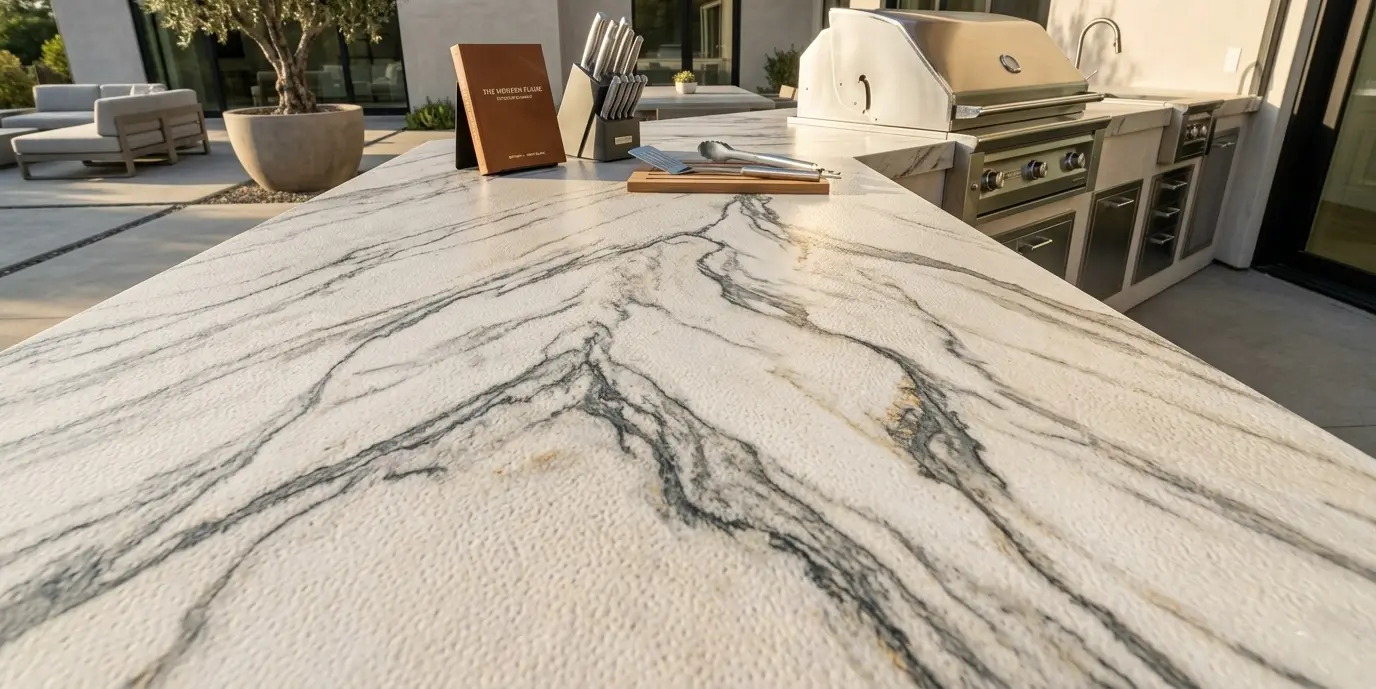
The finish applied to a slab changes its visual character considerably, and selecting the right one is a natural extension of thinking about how the stone will be used daily. A polished finish amplifies the stone's natural brightness and brings out the depth of the veining with a reflective surface. A leathered or honed finish produces a more matte, tactile result that reads as warmer and less formal, while also being more forgiving of fingerprints and minor surface contact in high-use areas.
Working with a Natural Stone Supplier
Selecting a natural stone slab in person is strongly recommended. Photographs capture the general character of a material but cannot fully convey the scale of the veining, the depth of color, or the way light moves across the surface. Viewing physical slabs side by side allows for more confident comparisons and ensures that the chosen piece works within the specific context of a room's light, cabinetry, and flooring.
Our team offers free design consultations to guide the selection process, whether working on a single countertop or a full-scale interior renovation. Clients in Northern Nevada and California can visit our showrooms in Reno, Minden, Sacramento, and Fernley to view slabs firsthand and speak with a design specialist. For a broader overview of what to look for when shopping for stone, This Old House covers stone countertop selection in practical, consumer-friendly terms.
Conclusion
Mont Blanc quartzite occupies a rare position in the world of natural stone. It delivers the visual elegance of white marble with a hardness and durability profile that makes it genuinely practical for kitchens, bathrooms, flooring, and beyond. Its Brazilian origin, neutral palette, and organic veining give every slab a distinctive character that manufactured surfaces cannot replicate. The key to getting the most from this material lies in viewing actual slabs, selecting the right finish for the intended use, and committing to consistent sealing maintenance. For homeowners and designers ready to explore what this stone can bring to a space, Nova Tile and Stone offers free design consultations for those who want expert guidance before making a final decision.
Frequently Asked Questions
Is Mont Blanc quartzite harder than marble?
Yes. It rates between 7 and 8 on the Mohs hardness scale, which places it well above marble at 3 to 4. This makes it considerably more resistant to scratching, etching, and surface abrasion in high-use areas.
Can this stone be used outdoors?
It performs well in exterior applications because of its resistance to UV exposure, temperature fluctuations, and moisture. Patio surfaces, pool surrounds, and outdoor kitchen countertops are all appropriate uses for this material.
How often does quartzite need to be sealed?
Periodic sealing, typically once every one to two years, is the general recommendation. The exact frequency depends on usage intensity and the specific sealer product applied. For lighter quartzite varieties like Mont Blanc, staying consistent with the sealing schedule is especially important.
Does Mont Blanc quartzite look different from slab to slab?
Yes. Natural variation is inherent to the material. Some slabs display more prominent charcoal veining with dramatic movement, while others present softer gray veins against a lighter background. Viewing slabs in person allows for a more accurate assessment of what a specific piece will look like in a finished space.
Is quartzite a good choice for bathroom floors?
Quartzite is well-suited to bathroom flooring because of its hardness, resistance to humidity, and low maintenance requirements. Its refined appearance also lends a polished, cohesive quality to bathroom spaces when coordinated with wall and vanity surfaces.