Taj Mahal quartzite is a natural stone countertop material quarried in Brazil, valued for its warm white to creamy beige background and soft veining in tones of gold, gray, and ivory. On the Mohs hardness scale it ranks between 7 and 7.5, making it harder than marble and most granites, and more resistant to scratching, staining, and etching under daily kitchen use. It is available in polished, honed, and leathered finishes and is commonly used for kitchen countertops, islands, bathroom vanities, and backsplashes. Homeowners who want the appearance of marble without the maintenance and surface sensitivity that marble requires often choose Taj Mahal quartzite as the more practical alternative.
What Is Taj Mahal Quartzite?
Named after India's well-known monument, Taj Mahal quartzite takes its name from a visual quality that sets it apart from most natural stones. Quarried in Brazil, it is a metamorphic rock formed over millions of years under intense heat and pressure, which gives it the dense, hard composition that distinguishes quartzite from softer stones like marble and travertine. For a broader overview of how natural stone countertop materials are categorized and sourced, This Old House provides a useful reference.
What makes Taj Mahal a common consideration for countertop buyers is the combination it offers: the refined, luminous appearance associated with high-end marble alongside durability that marble does not provide. Homeowners drawn to marble but concerned about its susceptibility to etching and surface wear often find that Taj Mahal quartzite addresses those concerns while keeping the aesthetic they are after.
The Visual Appeal of Taj Mahal Quartzite
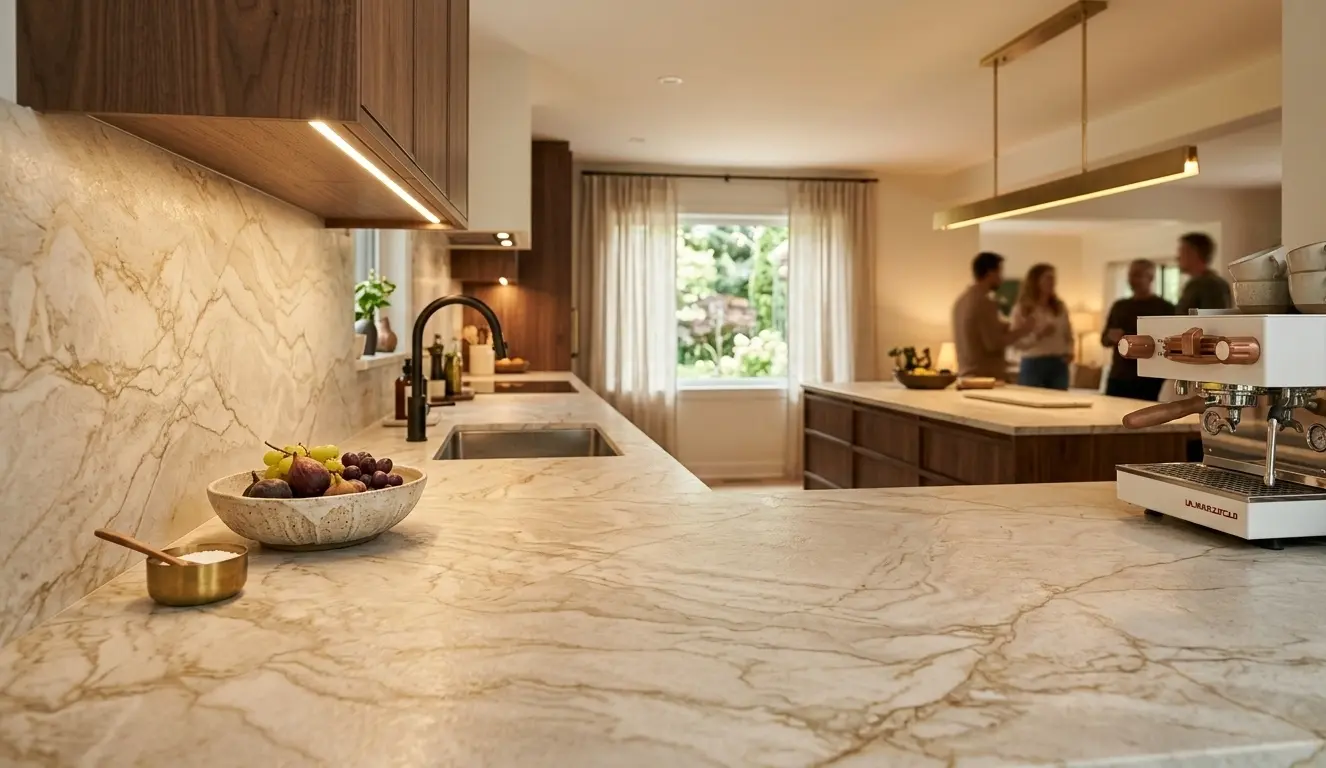
Taj Mahal quartzite has a creamy white or warm beige background with veining in soft tones of gold, gray, and ivory. The veining tends to be feathery and organic rather than bold or graphic, creating movement and depth across the surface without dominating the overall design.
The stone reads differently depending on lighting conditions. Under natural light, the warm tones come forward and give the surface an inviting quality. Under artificial lighting, the crystalline structure can produce a subtle depth that changes how the stone appears throughout the day.
A few characteristics consistently come up when homeowners and designers discuss Taj Mahal quartzite. Its patterning resembles marble but the stone is harder and more resistant to everyday wear. The range of tones across its surface, from creamy white to soft gold, gives it a warmth that cooler gray stones do not have. It pairs with both light and dark cabinetry, which makes it a flexible option across a range of kitchen styles. And because each slab comes from natural stone, no two countertops are identical.
This flexibility is part of why Taj Mahal quartzite appears across a broad range of interior styles, from modern and transitional to more traditional kitchen designs.
Durability and Performance
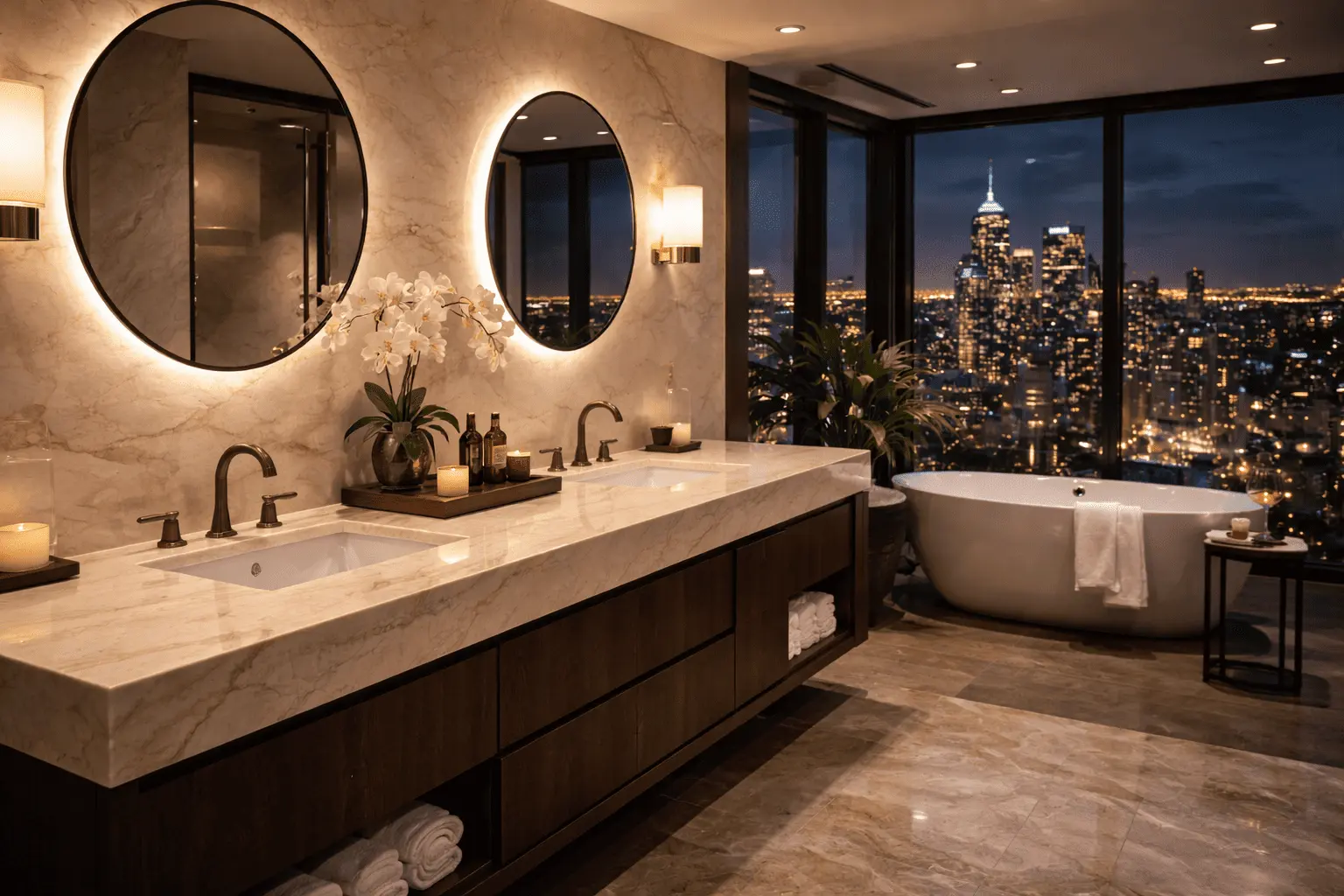
Taj Mahal quartzite is a hard, dense stone. On the Mohs hardness scale it typically measures between 7 and 7.5, placing it among the harder natural stones used for countertops. That hardness affects how the surface holds up in daily kitchen use across several areas.
Scratch resistance: Quartzite is more resistant to scratching than softer stones like marble. It handles contact from cookware, utensils, and general kitchen activity without the surface damage that marble or travertine are prone to.
Heat tolerance: Because quartzite forms under extreme geological heat, it tolerates temperature exposure well. Brief contact with hot cookware is unlikely to cause the damage that can occur with engineered or resin-based countertop materials. Homeowners considering engineered stone alternatives should also be aware of silica-related health considerations covered by the CDC and NIOSH, which is one reason some buyers prefer natural quartzite.
Stain resistance: Taj Mahal quartzite is less porous than marble, which makes it more resistant to staining from common kitchen substances including oils, wine, and acidic foods. Periodic sealing helps maintain that resistance over time.
Maintenance: Routine cleaning with mild soap and water, along with periodic resealing, is generally what Taj Mahal quartzite requires to keep its appearance. For a detailed look at natural stone countertop care, Fine Homebuilding covers sealing schedules and maintenance practices across stone types.
The Value Taj Mahal Quartzite Brings to Your Home
When choosing a natural stone countertop, homeowners are making a decision that affects both how the kitchen functions day to day and how the home is perceived over time. Taj Mahal quartzite holds up well on both counts.
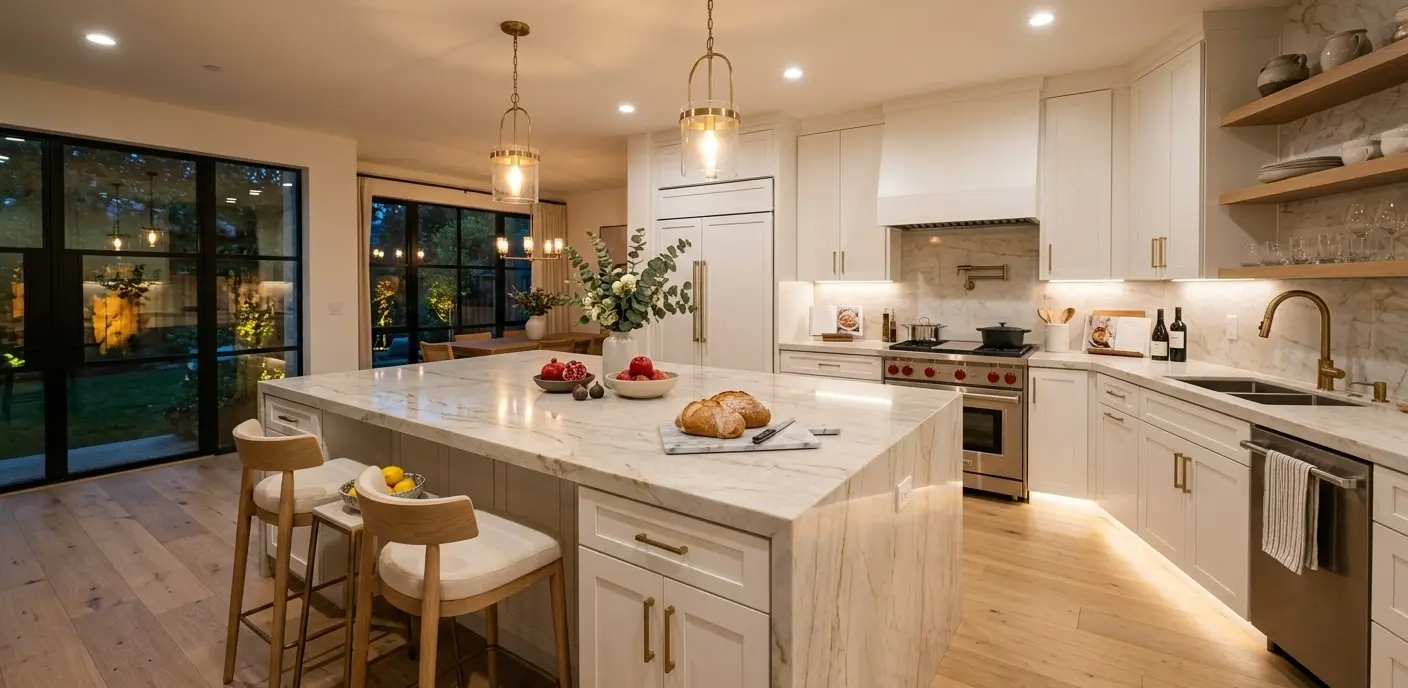
Its hardness means the surface tends to retain its appearance over years of use rather than accumulating the wear, etching, and surface dulling that softer stones develop. Its neutral, warm color palette does not limit future design changes. White, cream, navy, charcoal, warm wood tones, and soft greens all pair naturally with Taj Mahal, so the stone remains compatible with different cabinet colors and finishes as design preferences shift.
On the resale side, natural stone countertops are generally considered a quality upgrade by buyers and appraisers, and quartzite in particular has strong recognition as a premium material. That perception can contribute to the overall value of the home when the time comes to sell. You can explore the full range of natural stone slabs we carry as a direct stone importer to get a sense of what is available before visiting a showroom.
Trending Design Applications
Taj Mahal quartzite is appearing in several design applications that are currently in demand for kitchen remodels.
Waterfall island countertops are one of the most visible uses. When the slab extends vertically down the sides of a kitchen island, the continuous flow of veining creates a cohesive, architectural look. Taj Mahal works well in this application because its organic veining flows naturally rather than appearing abrupt at the edge.
Full-height backsplashes that carry the countertop stone up the wall to the upper cabinets have become a common request in contemporary kitchen design. Using the same Taj Mahal quartzite for both the countertop and backsplash creates a surface with fewer grout lines and a more unified look than tile provides.
Mixed material kitchens are another area where Taj Mahal fits well. Pairing the warm, neutral stone with dark cabinetry, matte black hardware, or natural wood accents creates contrast without the stone competing visually with other elements in the space.
Accent lighting placed above or near countertops can bring out the depth and texture of Taj Mahal's veining in ways that standard overhead lighting does not. Pendant lighting positioned over an island is a common approach that draws attention to the stone's surface character.
What Homeowners Say About Taj Mahal Quartzite
Homeowners who have had Taj Mahal quartzite in their kitchens for a period of time tend to point to a few consistent observations. The scratch and heat resistance they read about beforehand holds up in actual daily use, which reinforces confidence in the material. The maintenance requirements turn out to be manageable, which matters for households that use their kitchens regularly and want a surface that does not require constant care.
The stone's visual character is also something homeowners note over time. Natural stone has a quality of looking appropriate in a lived-in space, and Taj Mahal quartzite tends to complement how kitchens actually function. Whether the design direction is contemporary or traditional, the stone fits without feeling out of place.
Conclusion
Taj Mahal quartzite brings together the marble-like appearance that many homeowners are after with the hardness and practical performance that a working kitchen requires. Its warm, neutral tones pair with a wide range of cabinet colors and design styles, its surface holds up well with standard care, and its natural origin means that every slab is one of a kind.
If you are considering Taj Mahal quartzite, seeing it in person is the most useful step you can take. Photographs do not fully capture how the stone reads under real light or how the texture feels at scale. Our team at our Reno, Sacramento, Minden, and Fernley showrooms is available for free design consultations to help you explore slab options, finishes, and pairings for your specific project. Visit our slabs page to see current inventory, or find a showroom near you to view full slabs in person.
Frequently Asked Questions
Is Taj Mahal quartzite actually quartzite, or is it a marble?
Taj Mahal quartzite is classified as a quartzite, though it falls within a category that geologists sometimes describe as dolomitic or calcareous quartzite due to its mineral composition. In practical terms, it performs more like quartzite than marble. It is harder, less porous, and more resistant to etching than true marble, which is what matters most for countertop use.
How does Taj Mahal quartzite compare to marble for kitchen use?
Taj Mahal quartzite is harder and more resistant to everyday damage than marble. Marble typically ranks between 3 and 5 on the Mohs hardness scale, which makes it prone to scratching from utensils and etching from acidic substances like lemon juice, vinegar, and wine. Taj Mahal quartzite ranks between 7 and 7.5, making it a more practical option for kitchens where the surface sees regular use.
Does Taj Mahal quartzite need to be sealed?
Yes. Like other natural stone countertops, Taj Mahal quartzite benefits from periodic sealing to help it resist staining. Because it is less porous than marble, it does not need to be sealed as frequently, but annual sealing is a reasonable general guideline. A water bead test, where you place a small amount of water on the surface and observe whether it beads up or begins to absorb, is a simple way to tell when the sealant needs to be refreshed.
What cabinet colors pair well with Taj Mahal quartzite?
Taj Mahal quartzite works with a wide range of cabinet colors because its warm, neutral tones are flexible. White and cream cabinets allow the stone's veining to stand out. Navy and charcoal create contrast that draws attention to the warm gold and beige tones in the stone. Warm wood tones complement the stone's earthy quality. Soft greens and sage are also compatible. One pairing to be careful about is matching warm beige cabinets too closely to the stone, as the similarity in tone can reduce contrast and flatten the overall design.
What finishes are available for Taj Mahal quartzite?
Taj Mahal quartzite is available in polished, honed, and leathered finishes. A polished finish produces a high-gloss surface that reflects light and makes the veining more prominent. A honed finish creates a smooth, matte surface with a quieter, more understated appearance. A leathered finish adds a subtle texture to the surface that brings out dimensionality in the veining and gives the stone a more tactile feel. Each finish changes how the stone reads in a space, and viewing samples of all three in person is the most reliable way to decide which is right for your kitchen.