Few materials hold up under real-world punishment the way quartzite does. Homeowners searching for surfaces that balance elegance with everyday resilience often land on one standout option: Zermatt quartzite. This striking natural stone slab delivers a rare combination of hardness, visual depth, and lasting beauty that synthetic alternatives simply cannot replicate.
So what makes Zermatt quartzite the go-to pick for heavily used spaces? The answer lies in its geological makeup. Formed under intense heat and pressure, it ranks among the hardest natural materials available for residential and commercial applications.
In this guide, you will discover why Zermatt quartzite outperforms competing materials, how designers are using it across patios, pool decks, and staircases, and how to source the right slab for your next project.
The Performance Advantages of Zermatt Quartzites in High-Traffic Areas
Why Surface Hardness Changes Everything
Quartzite is not marble. It is not granite. It occupies its own category, with a Mohs hardness rating that routinely exceeds seven. That hardness matters enormously in spaces that see constant foot traffic, rolling luggage, furniture legs, and outdoor elements.
Zermatt quartzite specifically features a dense, low-porosity structure. That density resists scratching, etching, and staining far better than softer natural stones. Spills that would permanently mar a marble surface wipe cleanly off a sealed quartzite slab.
For homeowners evaluating long-term value, durability translates directly into savings. Fewer replacements, lower maintenance costs, and a surface that holds its finish for decades make quartzite a financially sound decision.
Key performance advantages at a glance:
- Scratch resistance superior to marble and most engineered stones
- Low water absorption ideal for wet zones and outdoor exposure
- UV-stable coloring that resists fading under direct sunlight
- Thermal resistance suitable for climates with dramatic temperature swings
- Compatibility with ANSI-compliant installation standards for professional-grade results
Comparing Quartzite Against Common Alternatives
Understanding how Zermatt quartzite stacks up against competing materials helps homeowners make informed decisions before committing to a significant investment.
Feature | Zermatt Quartzite | Marble | Porcelain Tile | Granite |
Hardness (Mohs) | 7+ | 3-4 | 6-7 | 6-7 |
Scratch Resistance | Excellent | Poor | Good | Good |
Stain Resistance (sealed) | Excellent | Fair | Excellent | Good |
UV Stability | Excellent | Good | Good | Excellent |
Natural Variation | High | High | Low | Moderate |
Outdoor Suitability | Yes | Limited | Yes | Yes |
Longevity | 50+ years | 20-30 years | 15-25 years | 40+ years |
Pros and Cons of Choosing Zermatt Quartzite
Pros:
- Exceptionally hard and abrasion-resistant surface
- Unique veining patterns that add visual sophistication
- Performs reliably in both indoor and outdoor settings
- Holds value in luxury resale markets
- Pairs beautifully with warm and cool design palettes
Cons:
- Requires professional sealing every one to three years
- Higher upfront cost compared to porcelain alternatives
- Heavier than engineered stone, requiring reinforced substrate in some cases
- Limited availability compared to more common stones
Creative Design Applications for Zermatt Quartzite
Outdoor Patios That Make a Statement
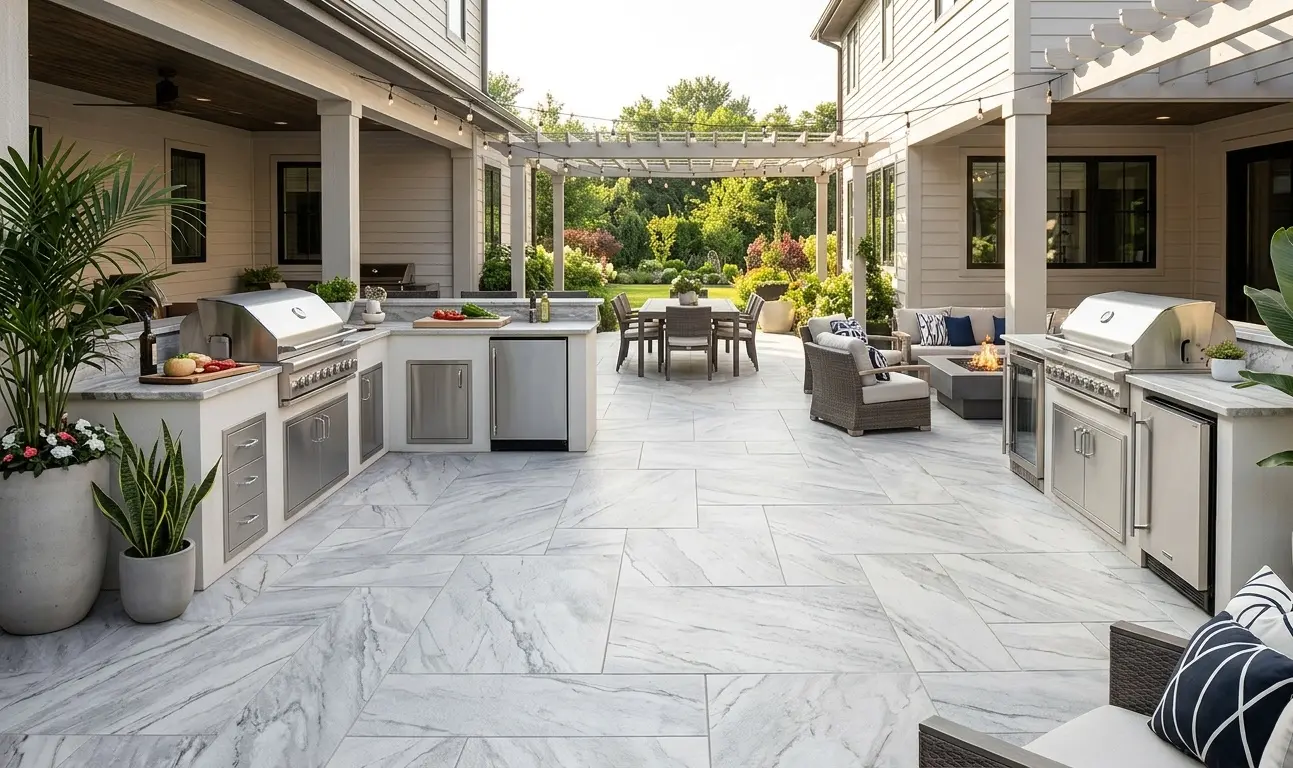
A patio is one of the most visible and used extensions of any home. The wrong surface chips, cracks, or stains within a few seasons. Zermatt quartzite, with its layered grey and white tones, creates an outdoor living space that looks intentional and holds its appearance through years of entertaining and weather.
Designers working with Elle Decor's highlighted 2026 color directions have noted a strong pull toward earthy neutrals and natural textures. Zermatt quartzite aligns perfectly with that shift, offering organic visual movement without the maintenance demands of raw limestone or travertine.
Large-format slabs installed with tight grout lines create a seamless, upscale look. A coordinating quartzite border or inset adds definition without overwhelming the overall design.
Pool Decks Built for Safety and Style
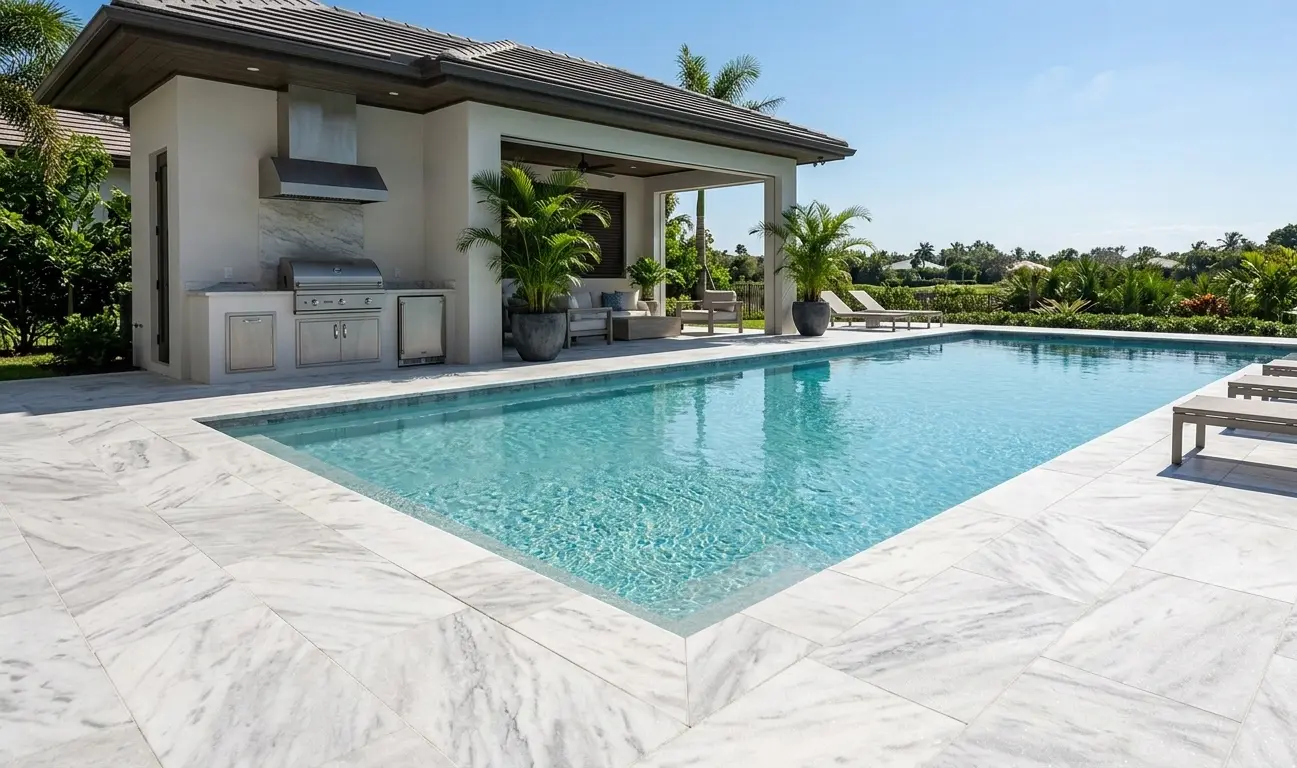
Pool deck surfaces face a uniquely demanding environment. They endure constant moisture, pool chemicals, bare feet, and intense sun exposure. Most materials that look beautiful in a showroom fail within a few seasons when placed directly around a pool.
Zermatt quartzite handles pool deck conditions with ease. Its naturally textured finish, when honed rather than polished, provides slip resistance that keeps families safe. The stone's inherent coolness underfoot, even in full sun, adds a practical comfort layer that tile and concrete cannot match.
For cohesive outdoor design, many homeowners extend their pool deck stone into surrounding garden paths or outdoor kitchen countertops. Exploring design events and trends at Dezeen's 2026 guide shows how top designers are doubling down on material continuity for cohesive outdoor spaces.
Staircases That Balance Beauty and Function
A staircase endures more repeated impact than almost any other surface in a home. Each step must handle the cumulative weight of thousands of footfalls, yet it remains one of the most photographically prominent architectural features in a residence.
Zermatt quartzite treads bring a polished but grounded aesthetic to both interior and exterior staircases. The stone's natural veining creates visual rhythm that draws the eye upward, while the material itself handles the physical demands without surface degradation.
Pairing quartzite treads with a contrasting riser, such as a brushed white oak or painted plaster, creates depth and visual interest. For exterior staircases leading from a patio or pool deck, using the same slab material across all surfaces creates an uninterrupted design language.
How to Select and Source the Right Slab for Your Project
A Step-by-Step Guide to Choosing Your Zermatt Quartzite
Selecting the right slab requires more than pointing at a photo. Here is a focused process that leads to confident, regret-free decisions.
Step 1: Define your surface requirements. Identify whether the application is indoor, outdoor, or both. Note expected foot traffic volume, proximity to water, and whether the surface will be sealed regularly.
Step 2: Request physical samples. Digital photos misrepresent stone movement and color. Order samples and view them in your actual space under both natural and artificial lighting before committing.
Step 3: Review full slab availability. Book matching slabs from the same lot for large installations. Natural stone has inherent variation between lots, and mismatched batches create visible inconsistencies.
Step 4: Confirm finish selection. Polished finishes maximize visual drama indoors. Honed or brushed finishes reduce slip risk for pool decks and exterior staircases while retaining the stone's natural depth.
Step 5: Verify installation requirements. Consult with your fabricator and installer about substrate needs, adhesive compatibility, and sealing schedules before any cutting begins.
Finding the Right Partner for Your Natural Stone Project
Why the Source Matters as Much as the Stone
Even the finest natural stone slab underperforms when it comes from an unreliable supply chain. Sourcing from a knowledgeable supplier means having access to consistent inventory, honest guidance, and material that meets project specifications before the first cut is made.
Nova Tile and Stone's full slab collection showcases Zermatt quartzite alongside a curated range of natural stone options. Each slab is available for in-person review, allowing homeowners, designers, and contractors to assess movement, tone, and texture before purchase.
The team also supports trade professionals through a dedicated trade account program, offering streamlined access, consistent pricing, and priority support for ongoing projects.
Serving Clients Across Key Regional Markets
Whether a project is residential or commercial, access to local expertise reduces logistics friction and accelerates timelines. The Reno, Fernley showrooms, and Minden location serve the Northern Nevada market with hands-on slab viewing and knowledgeable staff. For California-based projects, the Sacramento location provides comparable service with regional delivery options.
Clients who prefer browsing locally sourced inventory before committing can use the shop local tool to identify available stock near their project site.
Reaching out early in the planning process pays off. It allows time to book matching slab lots, confirm fabricator schedules, and avoid the delays that come from last-minute sourcing decisions.
Conclusion
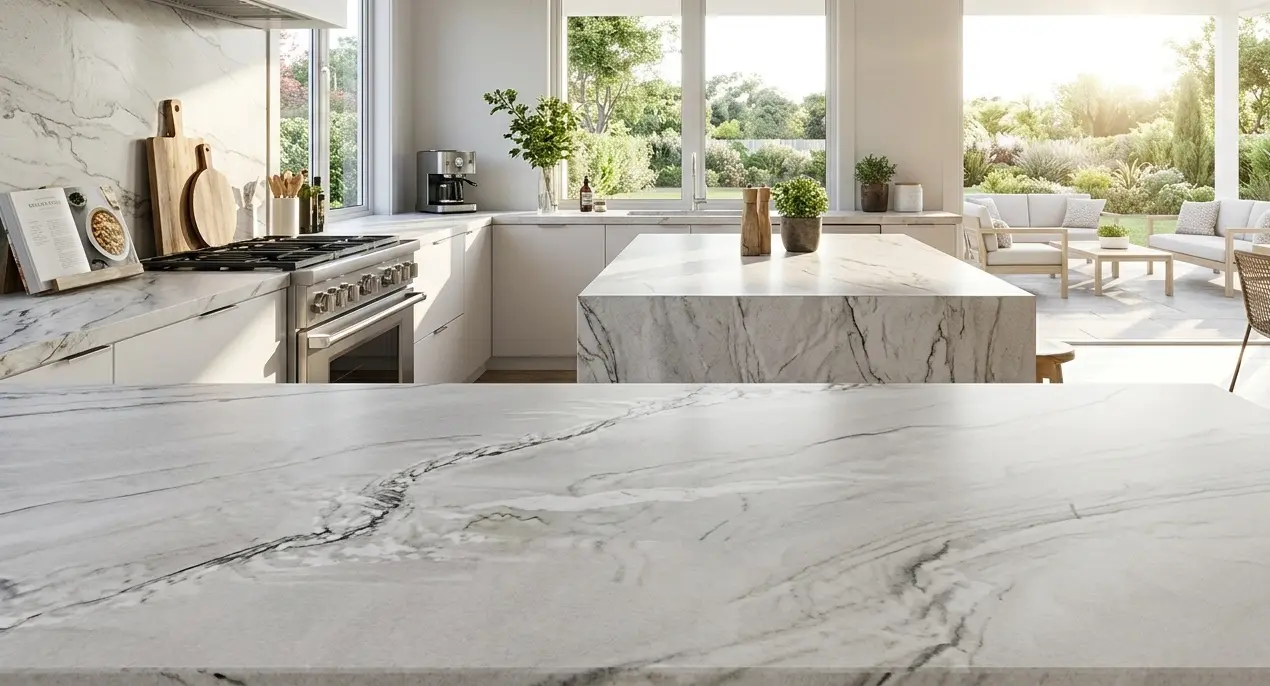
Zermatt quartzite earns its place at the top of any shortlist for demanding applications. Its hardness, low maintenance requirements, and striking visual character make it one of the most reliable natural stone slabs available for patios, pool decks, staircases, and beyond.
The practical takeaways from this guide are straightforward. Choose a stone that matches the physical demands of your space. Prioritize finish selection for safety and aesthetics. Source from a supplier who offers real inventory transparency and expert guidance. Seal consistently and enjoy a surface that improves with age rather than deteriorating under use.
For homeowners and designers ready to take the next step, explore the full collection to view Zermatt quartzite alongside other high-performance natural stone options. The right slab is waiting.
Frequently Asked Questions
Is Zermatt quartzite suitable for outdoor pool decks in hot climates?
Yes. Zermatt quartzite is highly UV-stable and thermally resistant. With a honed finish, it stays cooler underfoot than many synthetic alternatives and handles direct sun exposure reliably over many years.
How often does quartzite need to be sealed?
Most quartzite installations require sealing every one to three years, depending on traffic level and exposure to moisture. Outdoor surfaces and pool decks benefit from annual sealing checks.
Can Zermatt quartzite be used on interior staircases?
Absolutely. Its hardness makes it ideal for staircase treads. A polished finish works well for interior applications, while a honed or brushed surface is better suited for exterior staircases where slip resistance matters.
How does quartzite compare to granite for high-traffic floors?
Both are durable choices, but quartzite often scores higher on hardness and carries a more distinctive visual character with bolder veining. Granite tends to have a more uniform, granular appearance. The right choice depends on aesthetic preference and specific application needs.
Where can I view Zermatt quartzite slabs in person before purchasing?
Showrooms in Reno, Minden, and Sacramento carry natural stone inventory available for in-person review. Visiting in person is always recommended before finalizing any large slab order.