Warm-toned stone slabs are natural stone surfaces with backgrounds in cream, beige, sand, taupe, and soft gold rather than the cool grays and stark whites that dominated kitchen design for the past decade. The most popular options include quartzite varieties like Taj Mahal and Perla Venata, marble with gold or caramel veining like Calacatta Gold, travertine in ivory and walnut tones, and granite with flowing warm movement. These surfaces pair naturally with white oak cabinetry, brass and bronze fixtures, matte finishes, and other organic materials trending heavily in 2026. We are direct natural stone importers with slab inventory available for viewing at our showrooms in Reno, Minden, Sacramento, and Fernley.
This guide covers what is driving the shift to warm-toned stone, which materials lead the trend, how to pair them successfully, and what finish and application options work best.
Why Warm Tones Are Taking Over in 2026
For most of the 2010s, cool gray and bright white ruled kitchen design. Bright white quartz, gray-veined Carrara marble, and pale gray painted cabinets became the default combination in renovation after renovation. The look was clean and photogenic, but over time it also started to feel sterile and impersonal.
The shift happening in 2026 is a direct response to that. According to data from the National Kitchen and Bath Association, designers across the country are moving toward surfaces that feel warmer, more tactile, and more grounded. Industry reports from the Kitchen and Bath Industry Show (KBIS) confirm that warm neutrals are leading the countertop market this year, with creamy off-white backgrounds layered with veining in taupe, beige, sand, chocolate, and soft gold replacing the stark whites and cool grays of recent years.
Health awareness is also playing a role. NIOSH and the CDC have raised concerns about silica exposure associated with engineered stone surfaces, prompting many homeowners to take a closer look at natural stone alternatives for their kitchens and bathrooms.
The movement has a design concept behind it: quiet luxury. Rather than flashy or high-contrast, quiet luxury is about materials that feel rich and natural up close, that age gracefully, and that invite you to actually use your kitchen rather than just photograph it. Warm stone fits that vision better than almost anything else on the market.
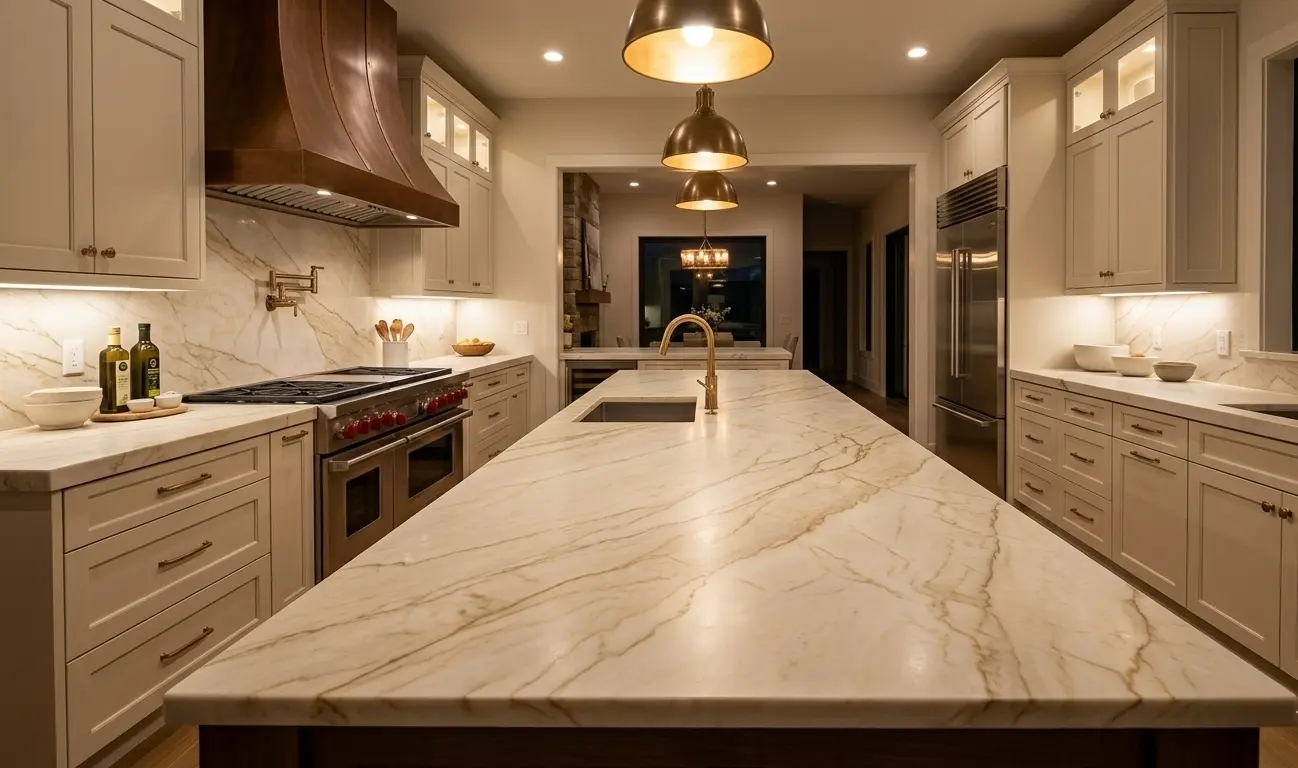
The Warm-Toned Palette: What Colors Define the Trend
Understanding what makes a stone "warm-toned" helps when shopping slabs in person. The key characteristics to look for are:
Background color. Warm-toned slabs have backgrounds in ivory, cream, soft white with yellow undertones, beige, sand, or light taupe. If the background reads as gray or blue-white in natural light, the stone is cool-toned regardless of what the veining does.
Vein color. Warm veining runs in gold, caramel, taupe, brown, soft black, or chocolate. These tones deepen the warmth of the background and add movement without cooling the overall feel of the slab.
Finish. Honed and brushed finishes amplify warmth by removing the reflective quality of a polished surface. A cream marble with a honed finish reads warmer than the same slab polished to a mirror shine.
The combinations trending most strongly right now include cream backgrounds with wispy gold veins, ivory backgrounds with taupe and gray movement, beige quartzite with flowing warm-white patterns, and travertine with deep walnut fill tones. Cool grays, blue undertones, and stark white backgrounds are the tones designers are actively steering clients away from this year.
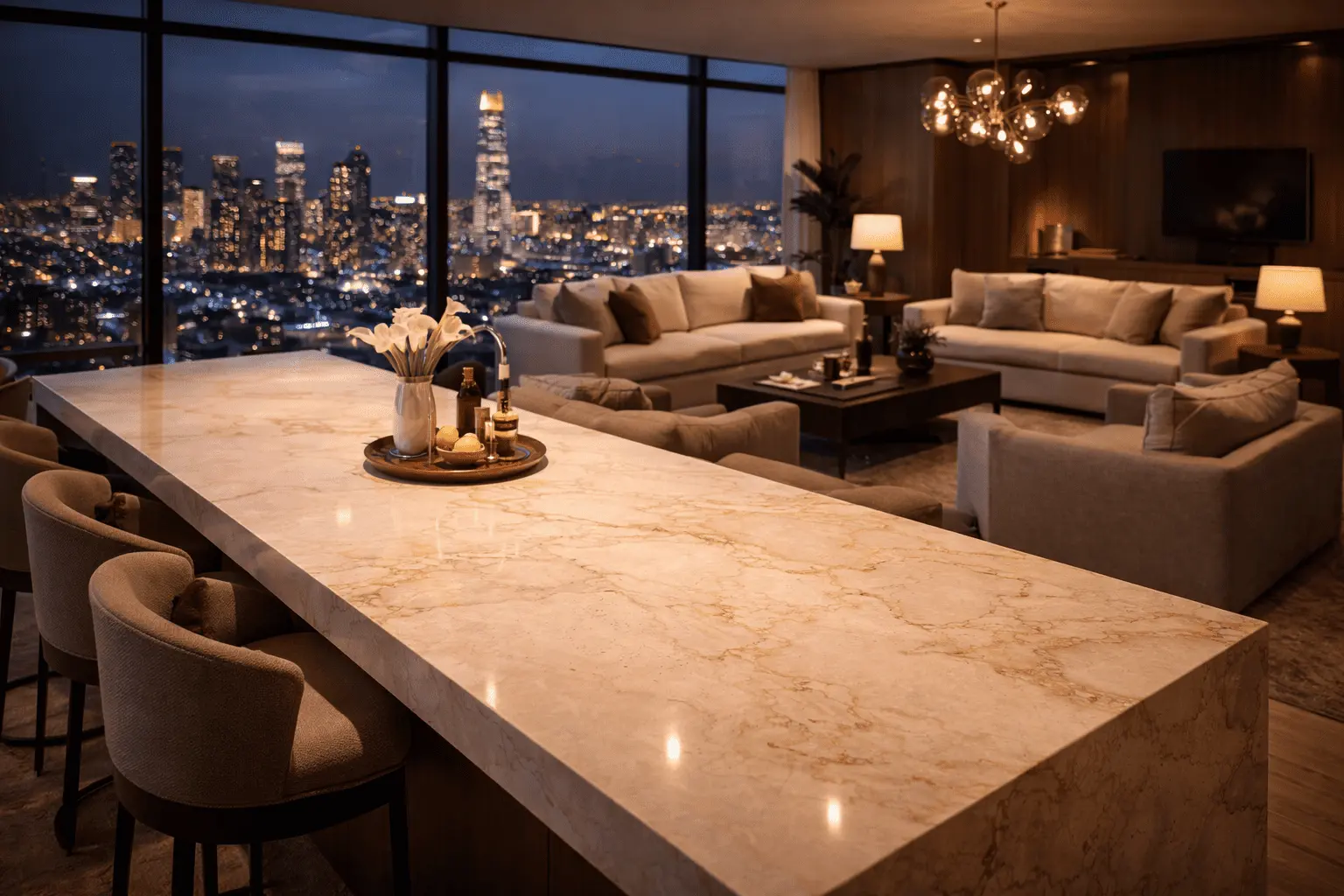
Best Natural Stone Materials for Warm Tones
Quartzite
Quartzite is the most requested warm-toned natural stone in 2026. Taj Mahal quartzite, which features a soft ivory background with delicate gold and taupe veining, has been cited by designers across the country as one of the defining stones of the current moment. Its combination of warmth, marble-like elegance, and greater hardness than marble makes it a suitable choice for active kitchens. Perla Venata quartzite is another strong option in this category, with a slightly warmer, creamier background and similarly soft movement.
Quartzite in warm tones pairs especially well with white oak cabinetry, unlacquered brass hardware, and honed or brushed finishes. Because it is a naturally hard stone, it is less susceptible to scratching and etching than marble, which can make it easier to maintain over time. As noted in Fine Homebuilding's guide to natural stone countertops, quartzite requires annual sealing to maintain stain protection, but otherwise holds up well under heavy daily use.
Marble
Warm-toned marble remains one of the most coveted materials in high-end kitchen design. Calacatta Gold marble, with its creamy white background and flowing veins in gold and gray, is the classic entry point for homeowners who want both warmth and drama. The bold movement of Calacatta Gold works best when the surrounding cabinetry and fixtures are kept calm and supportive, allowing the stone to function as the focal point of the room.
Marble with warm veining is best suited for applications where daily care is manageable. It is softer and more porous than quartzite or granite, and acidic substances can etch the polished surface over time. Choosing a honed finish for marble in kitchen applications reduces the visibility of minor etching and everyday wear while reinforcing the warm, matte quality that the 2026 aesthetic favors. This Old House recommends sealing marble every six to twelve months and wiping spills promptly to protect the surface.
Travertine
Travertine is experiencing renewed interest in 2026 after years of being associated with early-2000s design. Properly selected and finished, travertine in ivory, cream, or walnut tones brings a warmth and depth that differs from what engineered surfaces offer. Filled and honed travertine creates a smooth, consistent surface ideal for countertops and vanities while preserving the organic variation that makes the stone so distinctive.
Warm-toned travertine pairs naturally with wood cabinetry, aged brass fixtures, limewash walls, and terracotta or stone tile floors. It is best suited for bathrooms, kitchen islands used primarily for prep, and decorative surfaces where a softer, more lived-in aesthetic is the goal.
Granite
Warm-toned granite has made a quiet comeback as part of the broader shift away from cool palettes. The key is selecting varieties that feature flowing movement rather than the frenetic speckled patterns associated with earlier decades. Granites with cream or ivory backgrounds and bold, sweeping veins in caramel, gold, or deep taupe deliver the warmth and visual interest of marble with granite-level hardness and a generally lower maintenance profile.
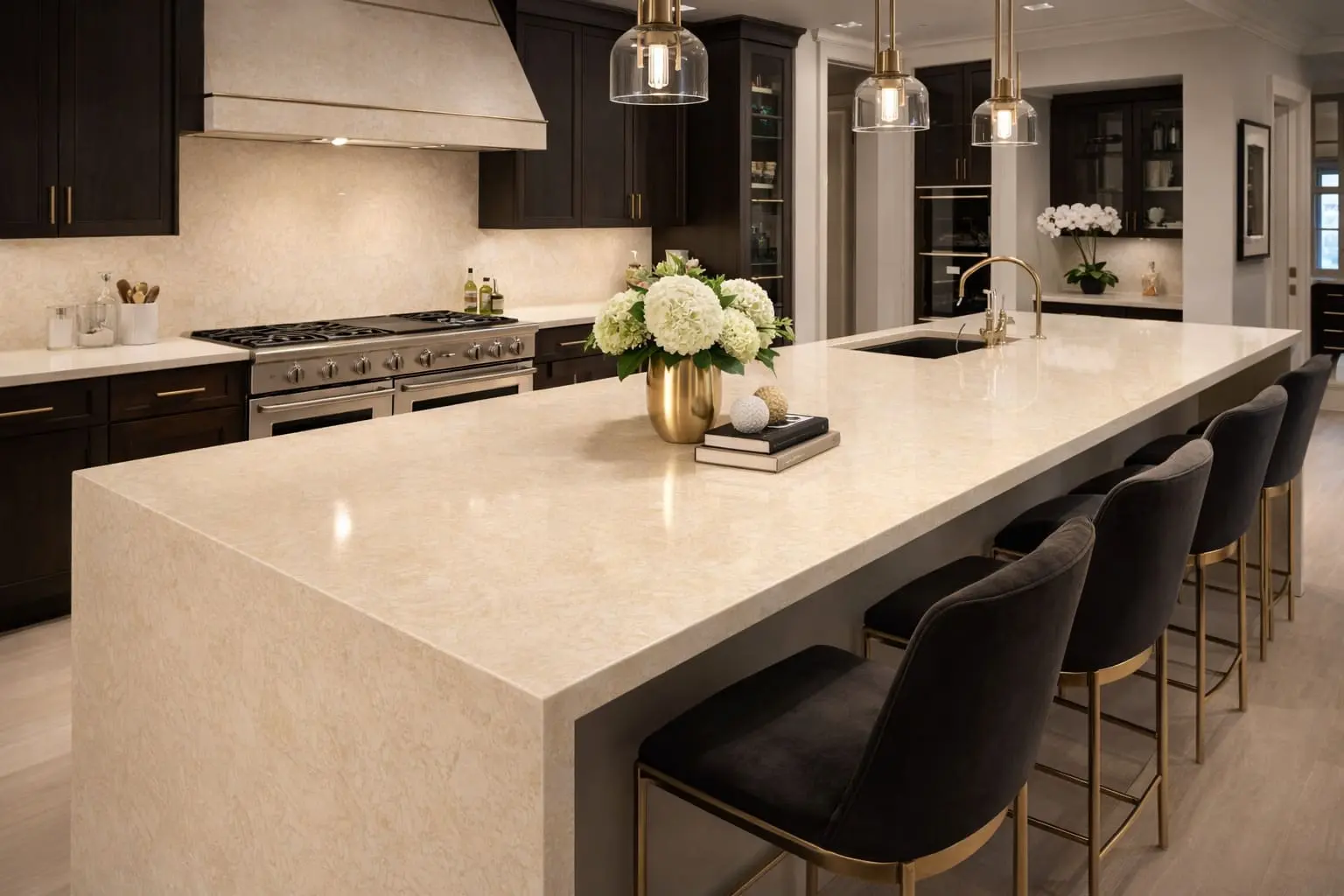
How to Pair Warm-Toned Slabs with Cabinets and Fixtures
Warm stone works with a wide range of cabinet colors and materials because it sits in the neutral zone while still having clear tonal direction. The most successful pairings currently trending include:
Natural wood cabinets. White oak, light walnut, and cerused wood finishes are the most requested cabinet choices alongside warm stone in 2026. The organic grain of the wood and the natural veining of the stone complement each other without competing.
White and off-white cabinets. A warm-toned slab against white or cream cabinetry creates a layered neutral look that reads as refined and current rather than stark. The key is making sure the white leans warm rather than cool, as a blue-white cabinet alongside a cream stone will create an awkward undertone mismatch.
Sage green, forest green, and muted navy. Deeper cabinet colors work well with warm-toned stone as long as the hardware and fixtures bridge the two. Unlacquered brass, aged bronze, and brushed gold are the natural hardware choices in these combinations.
Fixtures and hardware. Warm stone pairs best with warm metal finishes: unlacquered brass, brushed gold, champagne bronze, and oil-rubbed bronze. Matte black works as an accent but loses some warmth. Polished chrome and brushed nickel read cool and can undercut the warmth the stone is intended to deliver.
Finish Options That Enhance Warm Tones
The finish on a warm-toned slab has a significant effect on how warm the material actually reads in a space.
Honed. A matte, non-reflective surface that deepens color and texture. Honed finishes make warm tones feel more grounded and organic, which is precisely why they are trending alongside warm palettes in 2026. They do require slightly more attentive sealing on porous stones like marble and travertine.
Brushed or leathered. A textured surface finish that adds a tactile quality to the stone. Brushed and leathered finishes work especially well on quartzite and granite, and they reinforce the quiet luxury aesthetic by making the material feel natural and handcrafted rather than manufactured.
Polished. A reflective, high-sheen finish that maximizes color depth and vibrancy. Polished finishes work on warm-toned stone but produce a more formal, luxurious result than honed or brushed. They are best suited for marble in formal spaces or for quartzite countertops where a slightly more dramatic look is the goal.
Where Warm-Toned Slabs Work Best
Warm-toned stone is versatile enough to work across most residential applications:
Kitchen countertops and islands. The primary application, and where warm stone makes the strongest visual impact. A large island in Taj Mahal quartzite or Calacatta Gold marble becomes the anchor of the entire kitchen.
Full-height slab backsplashes. One of the defining design moves of 2026 is running the countertop material directly up the wall to the range hood or upper cabinets, eliminating grout lines and creating a seamless, cohesive surface. Warm-toned stone works especially well in this application because the continuous material amplifies the warmth throughout the kitchen. Browse our natural stone slab collection to explore options well suited for this application.
Bathroom vanities. Warm stone on a vanity top immediately elevates the feel of the bathroom. Travertine, warm marble, and cream quartzite all perform well in bathroom applications.
Fireplace surrounds. A warm-toned slab on a fireplace surround creates one of the most inviting focal points a living space can have.
Conclusion
The shift to warm-toned stone slabs in 2026 is not a passing trend. It reflects a broader and lasting change in how homeowners want their kitchens and bathrooms to feel: less cold and sterile, more grounded, tactile, and personal. Cream quartzite, gold-veined marble, travertine, and warm granite all offer that quality in a way that differs from engineered surfaces, because the variation, depth, and organic character of natural stone is precisely what the current design moment is reaching for.
As a direct stone importer, our showrooms carry full slabs you can view in person under real lighting before making any decisions. Our commission-free design team is available for free consultations at our Northern Nevada and Northern California showrooms. Come see the stone in person at our locations in Reno, Minden, Sacramento, and Fernley and we will help you find the right warm-toned slab for your project.
Frequently Asked Questions
What are the most popular warm-toned stone slabs for kitchen countertops in 2026?
Taj Mahal quartzite leads the warm-toned category in 2026, followed closely by Perla Venata quartzite, Calacatta Gold marble, ivory and walnut travertine, and warm-movement granite varieties. These stones share cream, beige, or ivory backgrounds with veining in gold, taupe, caramel, or soft brown, which is precisely the palette trending across kitchen and bathroom design this year.
Do warm-toned stone slabs work with white cabinets?
Yes. Cream, beige, and ivory stone pairs beautifully with white and off-white cabinetry as long as the white leans warm rather than cool. A warm-toned stone against a blue-white cabinet can create an undertone mismatch that makes both materials look off. If your cabinets are a clean or slightly warm white, a cream quartzite or gold-veined marble will complement them very naturally.
What finish should I choose for a warm-toned stone countertop?
Honed is the most popular finish choice for warm-toned stone in 2026 because the matte surface deepens the warmth of the material and reinforces the quiet luxury aesthetic driving the current trend. Brushed and leathered finishes work particularly well on quartzite and granite. Polished is also an option if you prefer a more formal, reflective look, though it slightly reduces the organic warmth the material delivers.
Are warm-toned stone slabs harder to maintain than cool-toned options?
Maintenance depends on the stone type, not the tone. A warm-toned quartzite like Taj Mahal requires the same annual sealing as any other quartzite, regardless of its color. Warm-toned marble requires the same periodic sealing and careful use around acidic substances as any other marble. The warmth of the palette has no effect on the stone's porosity or durability.
How do I avoid my warm-toned stone looking dated?
The key is avoiding the frenetic speckled patterns associated with early-2000s granite. Warm-toned stone with flowing movement, clear veining, and a clean background is exactly what designers are specifying now and what holds up best over time. Pair it with natural wood cabinetry or warm white painted cabinets, choose brass or bronze hardware, and opt for a honed or brushed finish rather than polished. That combination reflects the current moment and is grounded in materials that have been timeless for centuries.