Granite is a natural igneous stone available in polished, honed, leathered, and specialty finishes, making it suitable for indoor floors, walls, fireplaces, kitchens, and outdoor surfaces. Formed through the slow crystallization of magma, it rates between 6 and 7 on the Mohs hardness scale, offering heat resistance, food-safe properties, and weather tolerance that few surface materials can match across every application in a single project. Its mineral composition of quartz, feldspar, and mica produces a low-porosity, dense surface that holds up well under sunlight when properly sealed, withstands the thermal demands of gas and wood-burning fireplaces, resists moisture in kitchens and bathrooms, and remains stable against outdoor temperature fluctuations without cracking or discoloring.
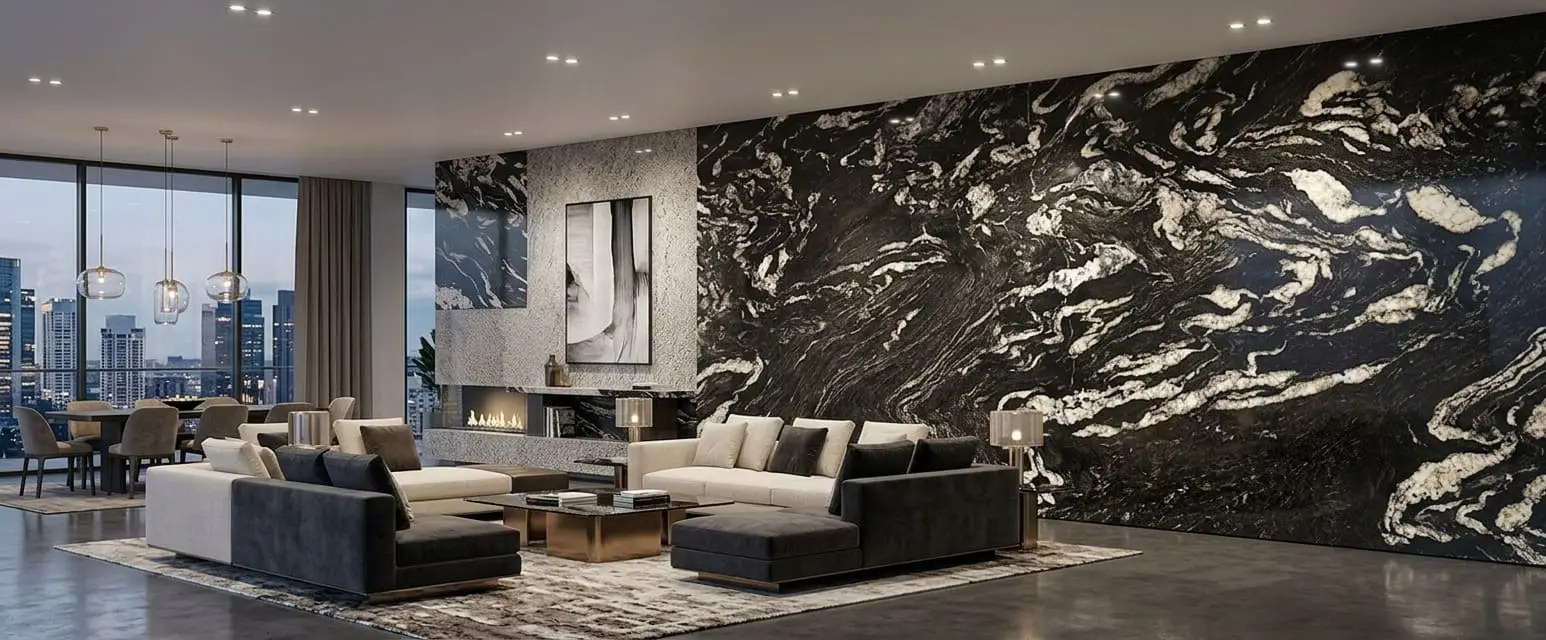
Granite on Floors: Durability Meets Design
Among the more durable flooring materials available, this igneous stone rates between 6 and 7 on the Mohs hardness scale, making it exceptionally resistant to scratching, abrasion, and the kind of gradual surface wear that dulls softer stones over time. In high-traffic areas such as entryways, hallways, kitchens, and living spaces, this density translates directly into long-term performance.
The finish choice plays a significant role in how a stone floor reads in a room. A polished finish produces a high-gloss surface that reflects light and amplifies the depth of the stone's natural patterning. It works beautifully in formal spaces and open-plan kitchens where visual impact matters. A honed finish, by contrast, offers a smooth matte surface that feels understated and grounded, lending itself to more casual or transitional interiors. For spaces where texture adds character, a leathered finish introduces a subtle tactile quality without sacrificing the stone's inherent elegance.
Because this natural material has low porosity and performs well under UV exposure when properly sealed, it does not fade or discolor easily in sun-filled rooms or spaces with large windows. This quality extends its usefulness beyond standard interior applications and into areas where other stones might deteriorate over time.
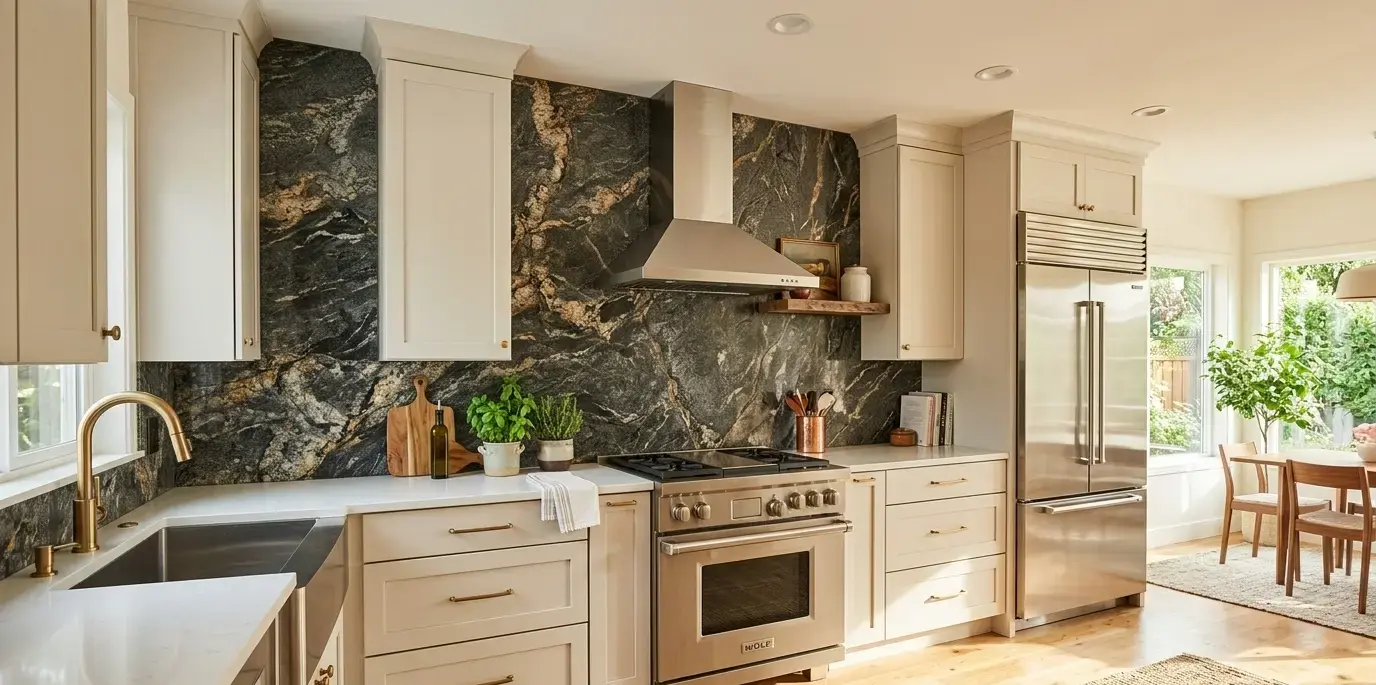
Granite on Walls: Texture, Pattern, and Visual Weight
Wall cladding in this material brings a dimension to vertical surfaces that paint and manufactured panels simply cannot replicate. Each slab carries a unique mineral composition, meaning no two sections of a finished wall are identical. This natural variation gives wall applications a visual richness and depth that becomes more compelling the longer you look at it.
Feature walls and accent surfaces benefit enormously from the stone's bold patterning. Whether the design calls for a monolithic slab running floor to ceiling or a more segmented layout using smaller stone sections, the material adapts to the scale of the project. Its weight and presence make it a natural focal point in living rooms, dining areas, entryways, and commercial lobbies.
The range of available finishes further broadens its application on walls. Specialty finishes, in particular, open up creative possibilities for designers who want something beyond the standard polished or matte result. Brushed, flamed, and sandblasted surface treatments each produce a different interplay of light and texture, giving wall surfaces a character that shifts with the lighting conditions throughout the day.
For trade professionals working on larger projects, our trade program provides access to dedicated support and resources tailored specifically to commercial and professional design work.
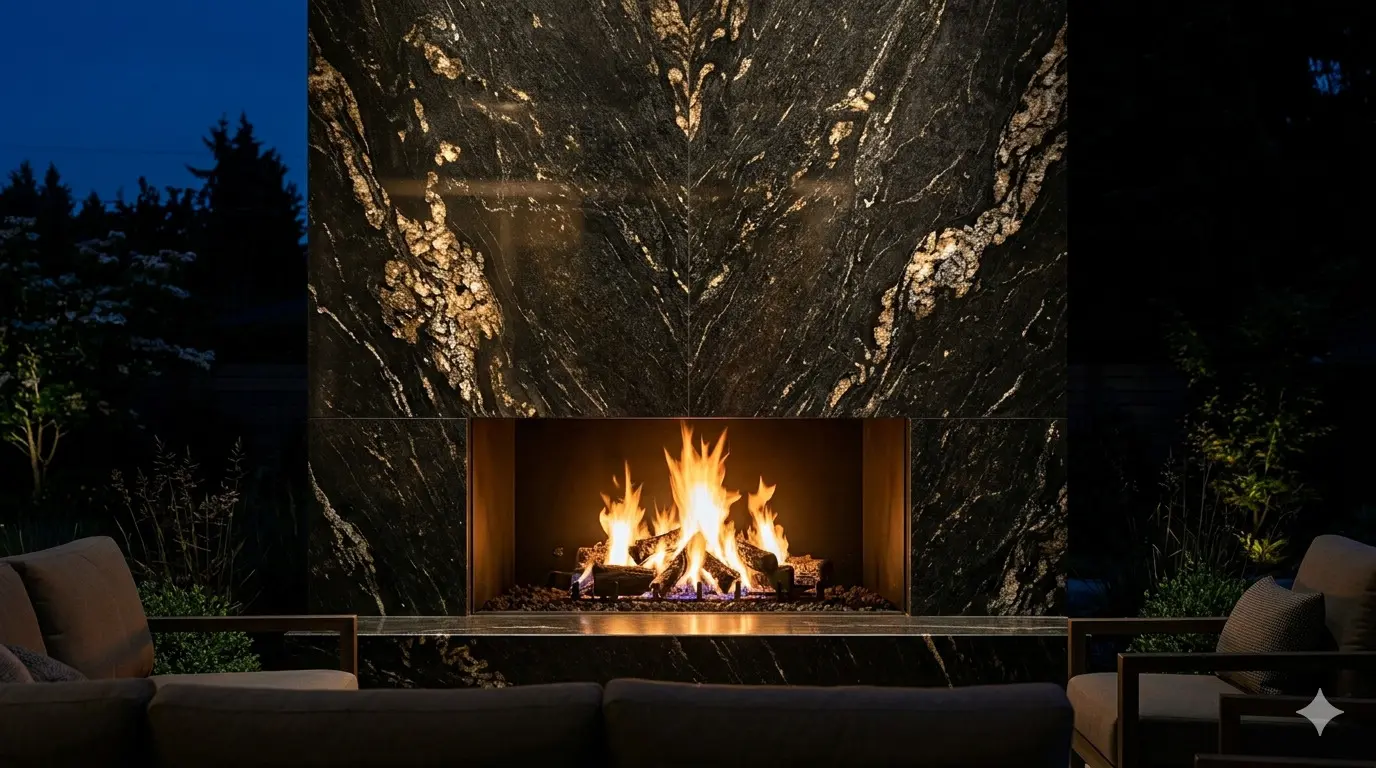
Granite at the Fireplace: Heat Resistance and Lasting Appeal
Few surfaces in a home carry more visual responsibility than a fireplace surround. It anchors the room, sets the design tone, and draws the eye every time someone enters the space. This igneous stone handles that role with a combination of heat resistance and aesthetic authority that makes it a consistently strong choice for surrounds, hearths, and mantels.
Its exceptionally high heat resistance means it withstands the thermal demands of gas, wood-burning, and electric fireplaces without warping, cracking, or discoloring over time. Beyond raw performance, the natural variation in color and mineral patterning suits a wide range of interior styles. Deep blacks and dramatic veining work well in contemporary settings, while warmer tones in gold, rust, and cream bring richness to more traditional or transitional interiors.
A full-height fireplace wall clad in natural stone creates an architectural statement that adds measurable long-term value to a home. The material retains heat efficiently, continuing to radiate warmth even after the fire has faded, which contributes to a more comfortable and energy-conscious living environment.
According to the Natural Stone Institute, proper care of natural stone surfaces extends their performance and preserves their finish quality across decades of use.
Indoor Applications: Kitchens, Bathrooms, and Beyond
Inside the home, this stone's practical strengths align closely with the demands of the most active spaces. It is food-safe and widely regarded as one of the best choices for kitchen countertops, where it must withstand daily contact with water, cutting, and varying temperatures without deteriorating. Its naturally low-porosity surface, when properly sealed, resists bacterial buildup and does not harbor moisture in ways that compromise hygiene.
In bathrooms, wall panels and vanity surfaces in this material bring a spa-quality finish that holds up against humidity without warping or delaminating. Its resistance to moisture makes it a reliable choice for wet environments where lesser materials fail prematurely.
Beyond kitchens and bathrooms, it performs equally well on stair treads, windowsills, and built-in shelving. Its hardness makes it suitable for surfaces that see regular contact and handling, and its visual presence elevates even functional architectural elements into design features.
Homeowners considering this stone for an upcoming project can book a free design consultation to explore finish options and slab selections with the guidance of a knowledgeable design professional.
Outdoor Applications: UV Resistance and Weather Performance
One of this material's most significant advantages over competing natural stones is its suitability for outdoor use. Its UV resistance means prolonged sun exposure does not cause the surface color to fade or shift, a quality that matters greatly in climates with intense sunlight. It also handles temperature fluctuations well, expanding and contracting minimally in response to heat and cold compared to more porous alternatives.
Outdoor kitchens, patio surfaces, garden walls, pool surrounds, and exterior feature walls all benefit from this stone's combination of weather tolerance and visual longevity. The same material that works beautifully on an indoor kitchen counter can extend seamlessly to an outdoor entertaining area, creating a consistent design language between interior and exterior spaces.
This continuity of material is a strategy that architects and landscape designers have long favored. When the stone flows from inside the home to the outdoor living area, it creates a sense of cohesion and intentionality that elevates the entire property. Visitors in the Reno, Sacramento, Minden, and Fernley areas can explore slab options in person to see how different varieties perform across indoor and outdoor contexts.
As Fine Homebuilding notes, natural stone countertops and surface materials remain among the most enduring choices in residential design, valued for both their performance and ability to retain aesthetic appeal over decades.
Choosing the Right Finish for Each Surface
Versatility in this natural stone is not limited to where it can be used. It extends equally to how it can be finished. The four available finish types each serve a different functional and visual purpose, and selecting the right one for a given surface makes a meaningful difference in long-term satisfaction.
A polished finish suits kitchen countertops and formal floor applications where visual impact and ease of cleaning are the primary priorities. A honed finish works well in bathrooms and casual living spaces where a softer, less reflective surface feels more appropriate. A leathered finish adds tactile texture that works particularly well on outdoor surfaces and fireplace surrounds, where the added depth complements the organic nature of the setting. Specialty finishes open creative possibilities for feature walls and architectural accent elements where a standard surface treatment would feel too predictable.
Selecting the right combination of finish and application is a decision that benefits from hands-on experience with the material. Nova Tile and Stone offers free design consultations where clients can view live slab inventory and receive guidance tailored to their specific project needs, without any sales pressure.
Conclusion
Granite earns its reputation as one of the most versatile natural stones in residential and commercial design not through marketing, but through consistent performance across every application it touches. From high-traffic floors and dramatic feature walls to heat-tolerant fireplace surrounds and weather-resistant outdoor surfaces, it delivers both visually and functionally across the full life of a project. Its UV resistance, food-safe properties, and range of finish options make it a material that adapts rather than compromises, offering designers and homeowners a single natural stone solution that works cohesively throughout an entire space. To explore available options in person, visit one of our showrooms and speak with a design expert at no cost.
Frequently Asked Questions
Is granite suitable for outdoor use in areas with intense sunlight?
Yes. This natural stone is UV resistant, which means prolonged sun exposure does not cause the surface to fade or discolor. This makes it a reliable choice for outdoor kitchens, patio surfaces, garden walls, and exterior cladding in climates with strong sunlight.
Can granite be used on fireplace surrounds for all fuel types?
Yes. It handles the thermal demands of gas, wood-burning, and electric fireplaces without warping, cracking, or discoloring. Its high heat resistance makes it one of the most dependable natural stone choices for fireplace surrounds, hearths, and mantels.
What finish is best for granite floors in high-traffic areas?
A polished finish is commonly chosen for formal or high-visibility floor areas because it reflects light and showcases the stone's natural patterning. A honed finish is preferred in casual spaces where a more understated, slip-resistant surface is desired.
Is granite a food-safe surface for kitchen countertops?
Yes. It is suitable for food preparation and is widely considered one of the best natural stone options for kitchen surfaces. When properly sealed, its dense composition resists moisture and bacterial buildup, making it both practical and hygienic.
Does granite work for both indoor and outdoor applications in the same project?
It does. One of its most valued qualities is the ability to carry a consistent design language from interior spaces to outdoor living areas. Its UV resistance and weather tolerance allow it to perform equally well on both sides of the home, making it a strong choice for projects that seek visual continuity throughout.