When selecting a surface that delivers both striking beauty and genuine durability, few choices hold up like Zermatt quartzite. This premium metamorphic stone has captivated homeowners and designers searching for a material that performs as impressively as it looks.
Zermatt quartzite is formed deep within the earth under extreme heat and pressure, producing one of the most resilient natural stone slabs available today. Its density and mineral composition give it a hardness that outperforms many popular alternatives on the market.
In this guide, you will learn exactly why Zermatt quartzite ranks among the toughest stones available, how to incorporate it into real design projects, and where to find quality slabs that align with your style and budget.
Why Zermatt Quartzite Outperforms Other Countertop Materials
A Hardness Level That Speaks for Itself
Zermatt quartzite scores between 7 and 8 on the Mohs hardness scale. This places it firmly above granite (which typically scores 6 to 7) and well above marble (which sits at a fragile 3 to 4). For countertops that endure daily use, that gap matters significantly.
The stone resists surface scratches from cookware, utensils, and general kitchen activity. It also withstands etching from mild acidic spills far better than softer alternatives like marble or limestone. Homeowners who prioritize longevity over short-term savings consistently choose materials in this hardness range.
Beyond scratch resistance, Zermatt quartzite handles high heat well. Unlike engineered quartz composites, which can discolor or warp under sudden temperature changes, quartzite remains stable when warm dishes or pans make brief contact with the surface.
Key Performance Advantages at a Glance
- Scratch resistance rated 7 to 8 on the Mohs scale
- Superior heat tolerance compared to engineered quartz
- Minimal etching from everyday household acids
- Long-term color stability with very low fading risk
- Low porosity when properly sealed at installation
- Versatile application across kitchen islands, bathroom vanities, and countertops
How Zermatt Quartzite Stacks Up Against the Competition
Material | Mohs Hardness | Scratch Resistance | Heat Resistance | Maintenance Level |
Zermatt Quartzite | 7 to 8 | Excellent | High | Low to Moderate |
Granite | 6 to 7 | Very Good | High | Low |
Marble | 3 to 4 | Poor | Moderate | High |
Standard Quartzite | 7 | Good | High | Low to Moderate |
Engineered Quartz | 7 | Good | Low to Moderate | Low |
Inspired Design Ideas for Kitchen Islands and Bathroom Vanities
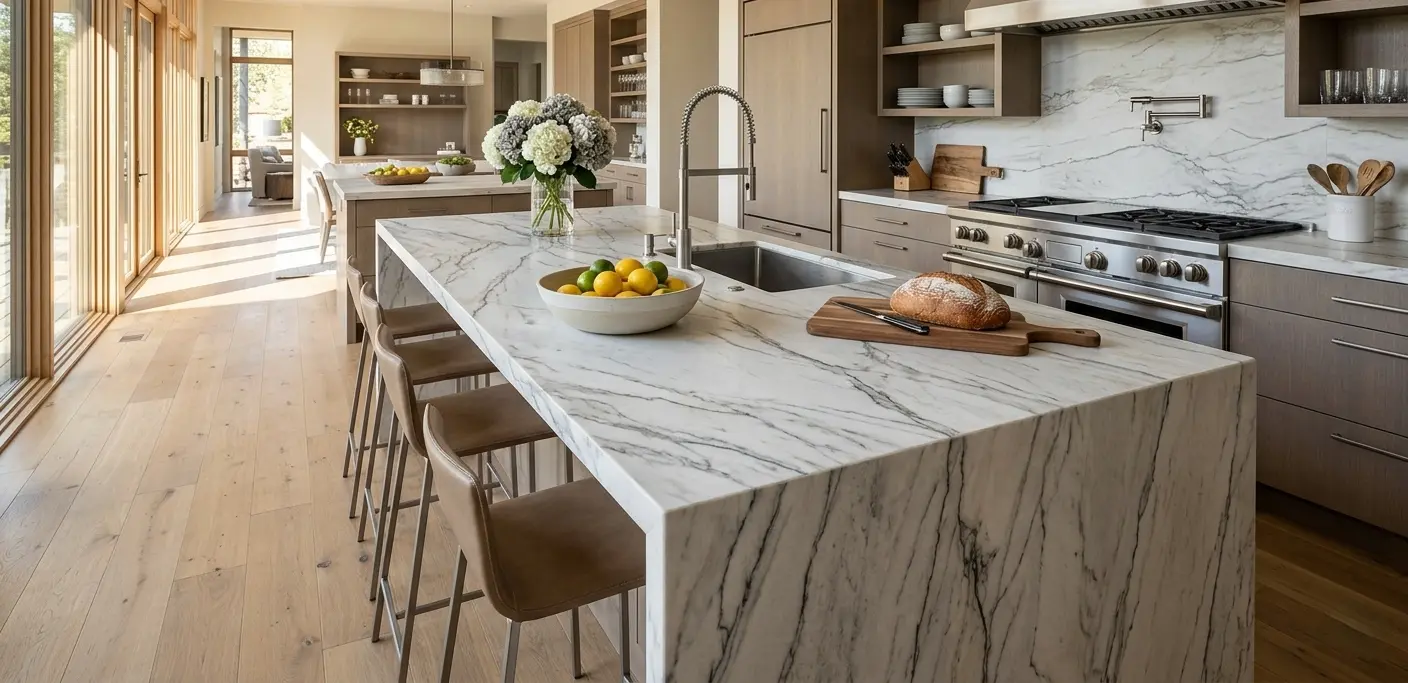
Transforming the Kitchen Island Into a Centerpiece
The kitchen island has evolved into the heart of the modern home. Zermatt quartzite brings layered veining and soft tonal movement that instantly elevates an island from functional to unforgettable.
Its white, grey, and subtle warm undertones pair gracefully with both warm wood cabinetry and clean, contemporary finishes. Designers frequently combine it with strategic under-cabinet lighting to draw out the natural variation within the stone.
For maximum visual impact, consider extending the same slab material to a matching full-height backsplash. This slab backsplash approach eliminates grout lines and creates a seamless, gallery-worthy surface. Pairing Zermatt with classic color schemes built around neutral backdrops keeps the overall palette fresh for decades.
Creating Spa-Like Bathroom Vanity Surfaces
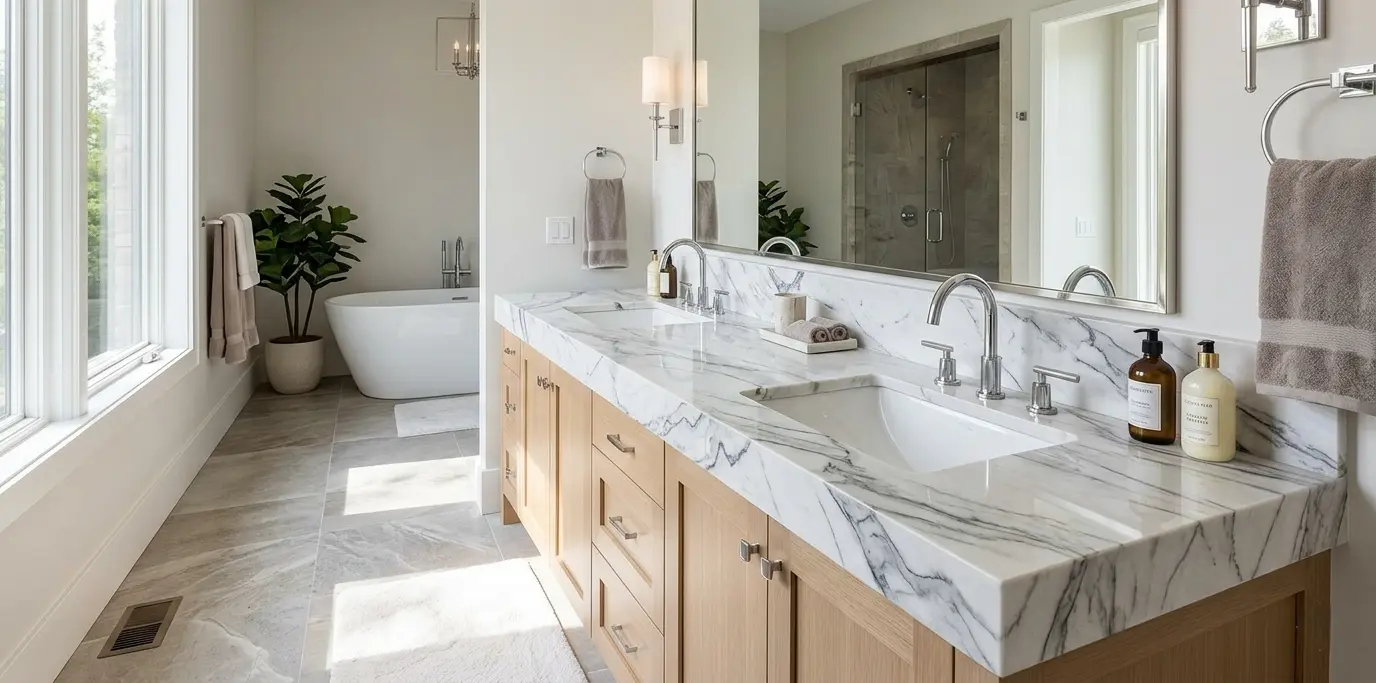
In the bathroom, Zermatt quartzite delivers a level of luxury that few materials can replicate. Its naturally low porosity makes it a practical choice for moisture-rich environments where lesser stones would absorb water and stain.
A floating vanity topped with a single continuous slab of Zermatt creates an uninterrupted surface that feels both refined and calm. The gentle veining adds visual interest without overwhelming a smaller space.
Unlike marble, which requires aggressive sealing schedules and still remains vulnerable to common toiletry spills, Zermatt holds its finish under daily water exposure. Learning proper stone surface care techniques will help you protect that finish and maintain its original luster for years to come.
Pros and Cons of Choosing Zermatt Quartzite
Pros
- Exceptional hardness and scratch resistance for demanding environments
- Unique veining patterns that distinguish every individual slab
- Suitable for both indoor applications and select covered outdoor surfaces
- UV-resistant, unlike some engineered products that fade over time
- Complements a wide range of cabinetry styles and color palettes
Cons
- Requires professional sealing at the time of installation
- Considerable weight demands reinforced cabinet and vanity support
- Higher price point compared to ceramic or porcelain tile options
- Premium varieties like Zermatt may have limited stock; sourcing early is advisable
How to Source the Right Natural Stone Slabs for Your Project
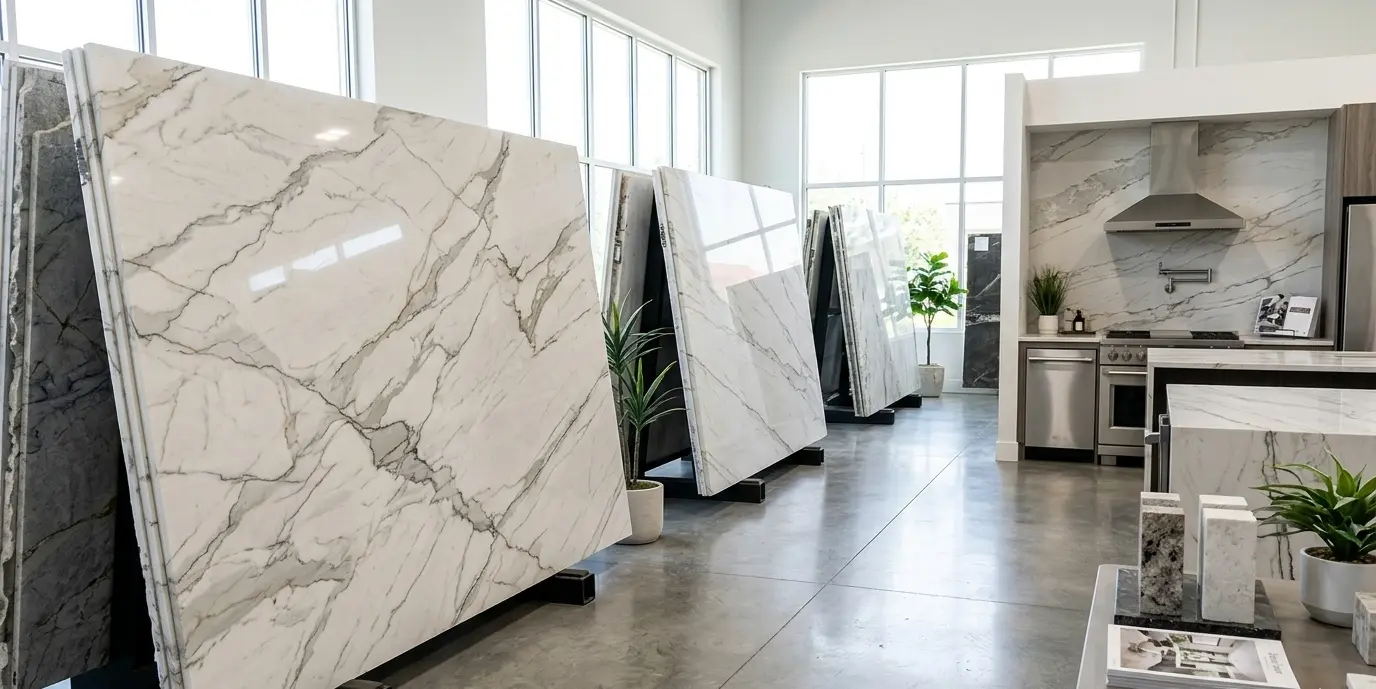
What to Prioritize When Choosing a Supplier
Selecting the right stone partner is just as critical as choosing the material itself. A knowledgeable supplier will help you navigate slab thickness, finish types, edge profiles, and installation requirements without guesswork.
The most important step is viewing full slabs in person before purchasing. Digital photography rarely captures the true depth, movement, and tonal range of quartzite. A single slab can look dramatically different under natural light versus showroom lighting. Hands-on evaluation protects your investment and eliminates guesswork.
Suppliers who align with industry benchmarks and uphold quality controls similar to porcelain tile certification standards are better positioned to provide consistent, high-quality natural stone products. Asking about sourcing transparency and quality grading will help you evaluate any supplier's reliability.
Step-by-Step Guide to Selecting Your Slab
- Start with an online inventory review. Browse the complete slab collection to shortlist materials that fit your project's color palette and style direction.
- Visit a showroom location. Nothing replaces seeing the material in person. Showrooms in Reno, Minden, Fernley, and Sacramento offer full-slab viewing so you can make a truly informed choice.
- Request physical samples. Bring samples home to evaluate alongside your cabinetry, flooring, hardware, and wall color before finalizing your selection.
- Consult with a design specialist. A qualified advisor will recommend the appropriate slab thickness, surface finish, and edge detail based on your specific application and usage needs.
- Confirm availability and lead times. Premium quartzite slabs move quickly. Locking in your selection early ensures you secure the specific lot and quantity you need for a cohesive finished result.
Resources for Trade Professionals and Local Buyers
For interior designers, general contractors, and builders managing multiple projects, streamlined procurement matters. Applying for a professional trade account provides access to dedicated service, project coordination support, and trade pricing options.
Homeowners and professionals who prefer a guided, in-person experience can take advantage of local showroom browsing to explore materials with expert support at hand. The team behind this established stone resource brings deep product knowledge to every consultation, helping clients find exactly what their project demands.
Conclusion
Zermatt quartzite stands out because it delivers on both aesthetics and performance simultaneously. Few natural stone slabs combine that level of hardness, heat resistance, and visual sophistication in a single material. Whether you are upgrading kitchen countertops, designing a feature-forward kitchen island, or creating a refined bathroom vanity, Zermatt provides a foundation that improves the value and experience of your space over time.
The key is pairing a remarkable material with a supplier who brings equal commitment to quality and service. From your first slab selection to the final installation, the right guidance makes the entire process rewarding.
Explore available inventory, schedule a showroom visit, and take the first step toward a surface that genuinely lasts.
Frequently Asked Questions
Is Zermatt quartzite harder than granite?
Yes. Zermatt quartzite typically scores between 7 and 8 on the Mohs hardness scale. Granite generally ranges from 6 to 7. This difference makes Zermatt noticeably more resistant to everyday scratching and surface wear.
Does Zermatt quartzite need to be sealed?
Yes. Like all natural stone, Zermatt quartzite should be professionally sealed at installation. Resealing every one to two years, depending on usage, helps preserve its low-porosity surface and guards against potential staining over time.
Can Zermatt quartzite handle heat from cookware?
Yes. Quartzite in general tolerates heat better than engineered quartz composites. Brief contact with warm pots or pans is unlikely to cause damage, though using trivets consistently remains a recommended practice for long-term surface care.
How does Zermatt quartzite differ from other quartzite varieties?
Zermatt quartzite is distinguished by its specific veining character, tonal palette, and geological origin. While all quartzite shares similar hardness properties, Zermatt carries a distinct visual identity that sets it apart from more common varieties available in the market.
Where can I view Zermatt quartzite slabs before purchasing?
Showroom locations in Reno, Minden, and Sacramento provide full in-person slab viewing. Visiting a showroom before committing to a purchase is strongly recommended, as photographs cannot fully represent the depth and movement within the stone.