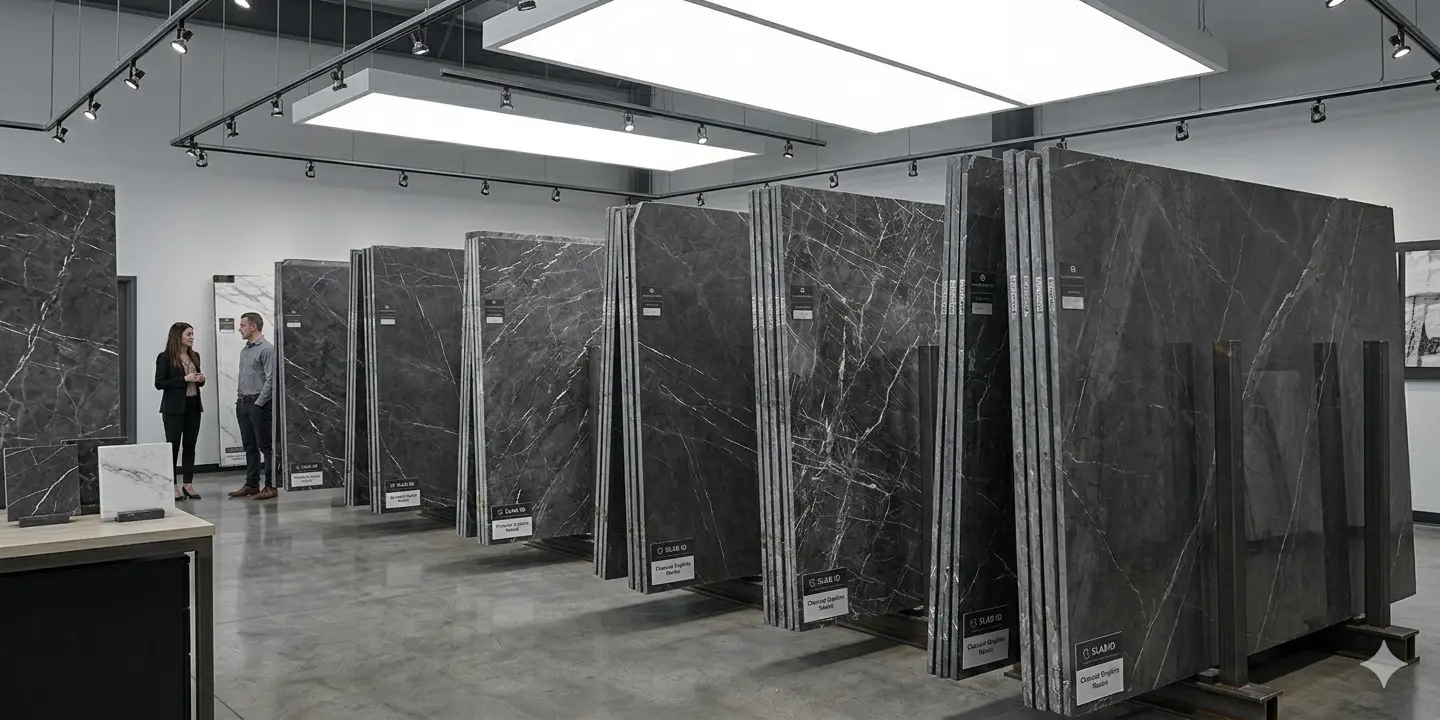
Charcoal Graphite Marble
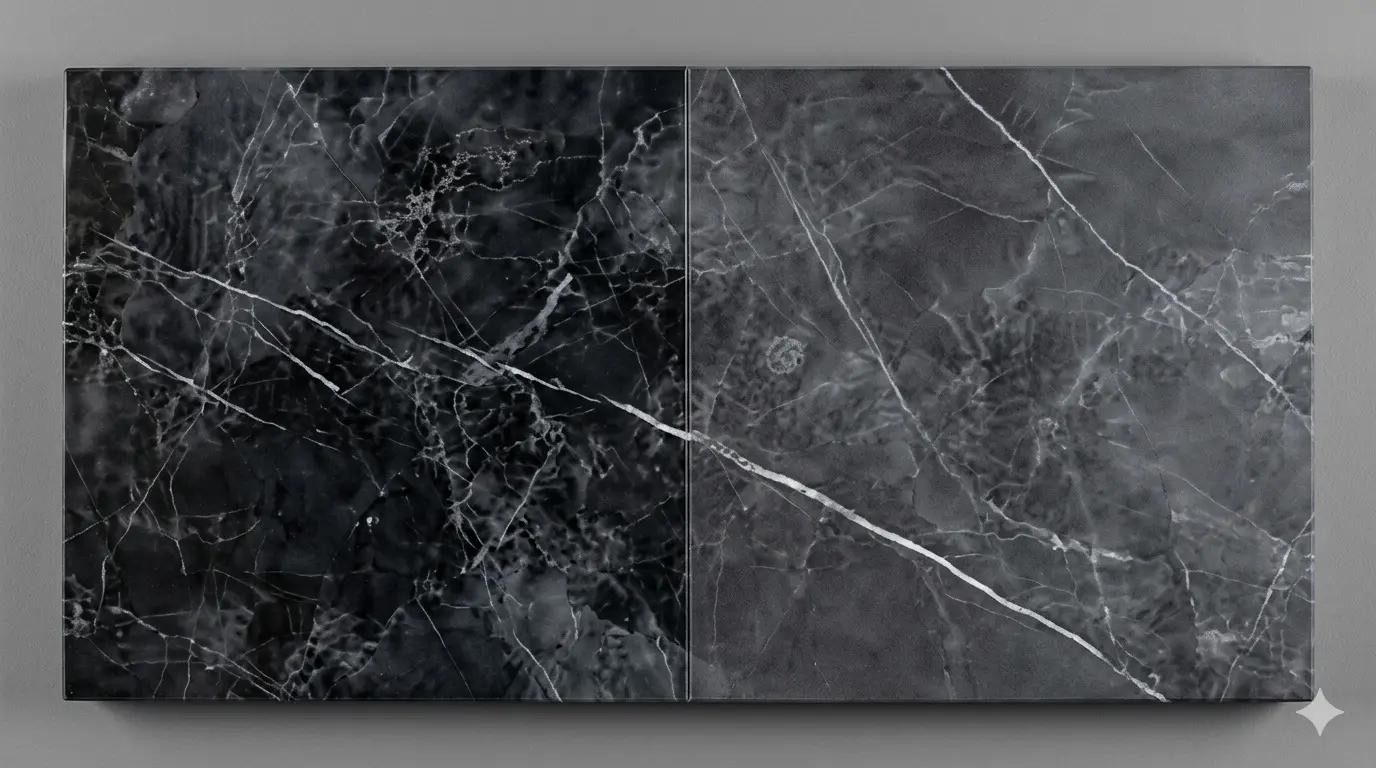
Charcoal Graphite Marble is a natural stone slab with a deep charcoal base and bold white-to-silver veining that gives it a commanding visual presence in any space. It is one of the strongest design choices available for modern kitchen countertops, bathroom vanities, and high-impact accent walls. The stone is quarried as a natural metamorphic material, meaning each slab has its own vein movement and tonal range, which makes every surface genuinely one of a kind. At Nova Tile and Stone's natural stone showrooms, you can view actual slabs in person before making your selection, which is the most practical way to evaluate how the veining and finish will read in your specific space.
This marble is available in polished, honed, and leathered finishes, and each one behaves differently in real-world use. Polished finish heightens the stone's depth and drama. Honed finish creates a soft, matte appearance with better grip for floor applications. Leathered finish adds texture that conceals daily wear better than a mirror-smooth surface. The right finish depends on where the slab will be used and how much daily contact it will receive.
How Charcoal Graphite Marble Adapts Across Spaces and Layouts
This stone has a design range that extends well beyond a single room or style. The charcoal tone reads as neutral enough to complement most cabinetry colors, while the veining adds enough movement to make the surface feel intentional rather than plain. Whether the project is a contemporary kitchen or a more layered traditional interior, this marble carries both directions effectively.
The finish choice also shapes how the stone functions in the layout. A polished slab on a kitchen island will read differently at different times of day as light conditions change. A honed slab on a bathroom floor holds its tone consistently and stays safer underfoot when wet. Understanding these distinctions before committing to a finish is worth the extra time.
Design Applications by Space
- Kitchen countertops and islands: Charcoal Graphite Marble pairs well with both white shaker cabinetry and dark, flat-front modern cabinets. The veining creates contrast against light finishes and adds depth against darker ones. For luxury kitchen countertops specifically, the slab format without visible grout lines is a defining feature.
- Bathroom vanities: The deep charcoal tone grounds a bathroom vanity and pairs naturally with matte black, brushed nickel, or warm brass hardware. Polished finish is common here for its reflective quality in rooms with controlled lighting.
- Accent walls and shower surrounds: Vertical installation of Charcoal Graphite Marble panels creates a strong focal point. Bookmatching two slabs side by side produces a symmetrical vein pattern that reads almost like a work of art.
- Indoor floors: Honed or textured finishes are preferred for floor applications, particularly in wet areas. Polished marble on floors can be slippery when wet, so finish selection here is a safety consideration, not just an aesthetic one.
Layout Options
Horizontal runs of this stone work well on long kitchen walls and backsplash panels behind ranges. Vertical installation emphasizes ceiling height in bathrooms and open living spaces. For floor use, a straight lay keeps the focus on the stone itself, while an offset grid adds a subtle structural rhythm without competing with the veining.
The Stone Behind Charcoal Graphite Marble: Material Details Worth Knowing
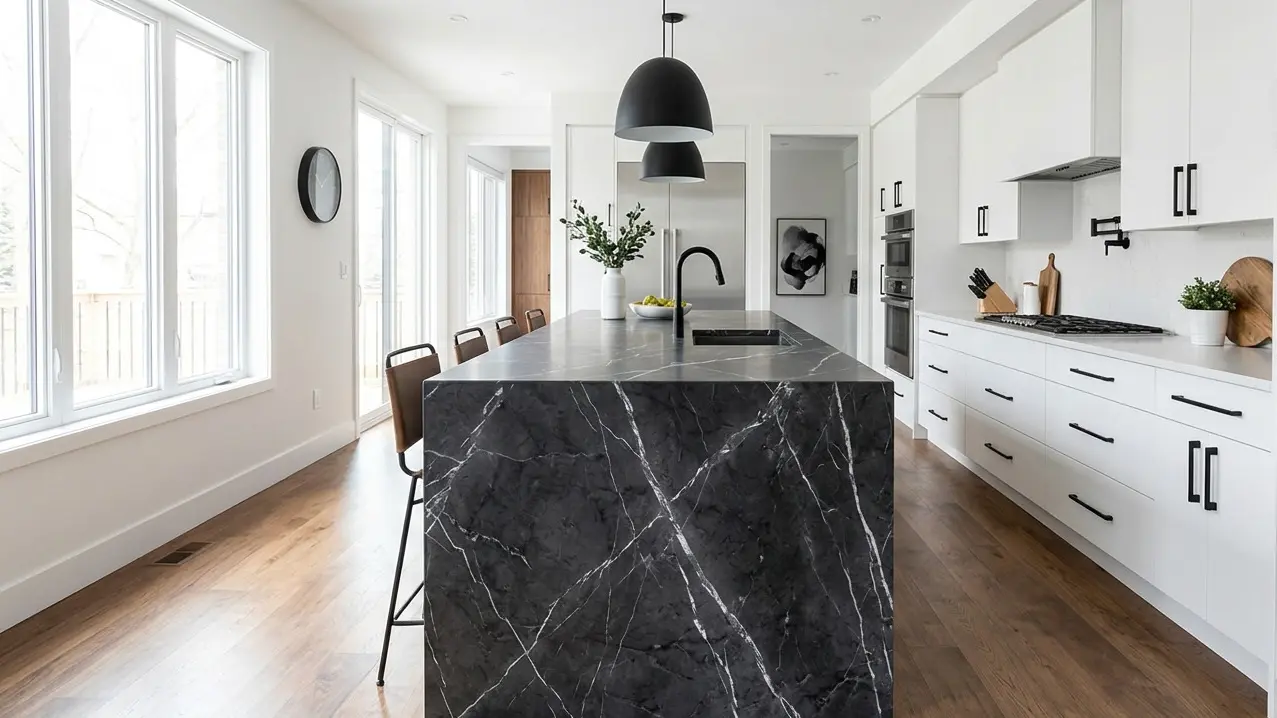
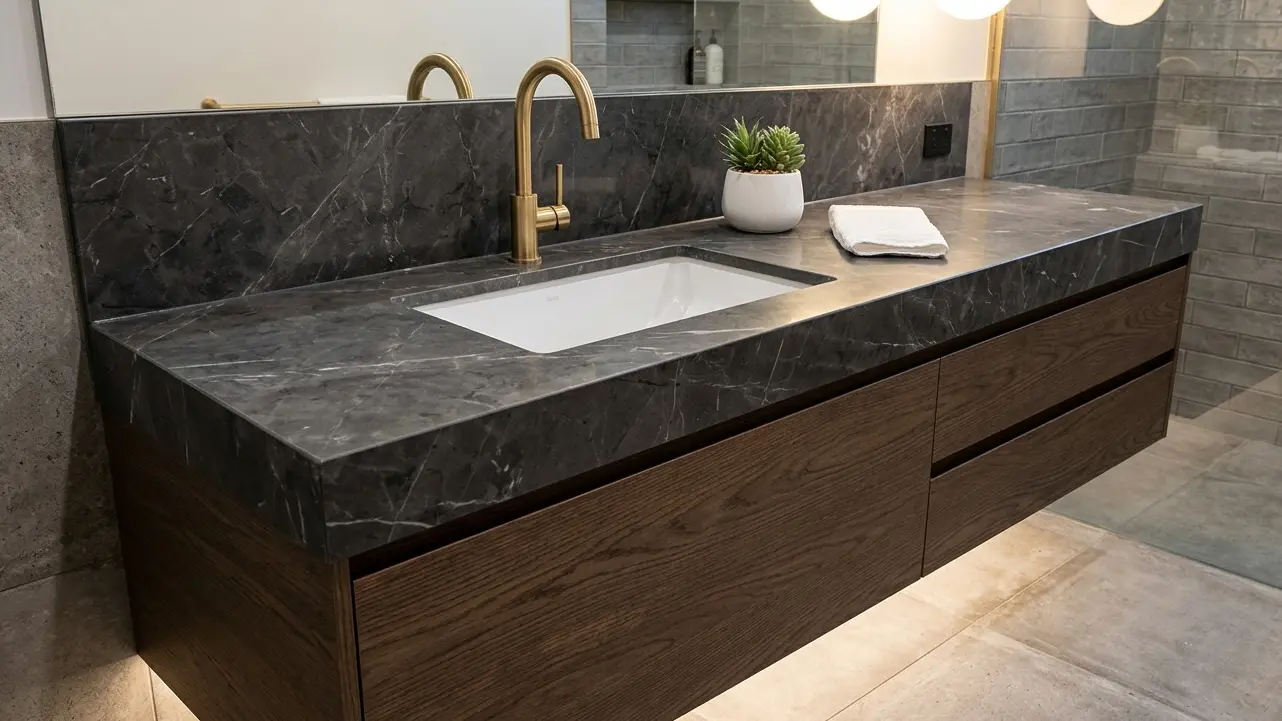
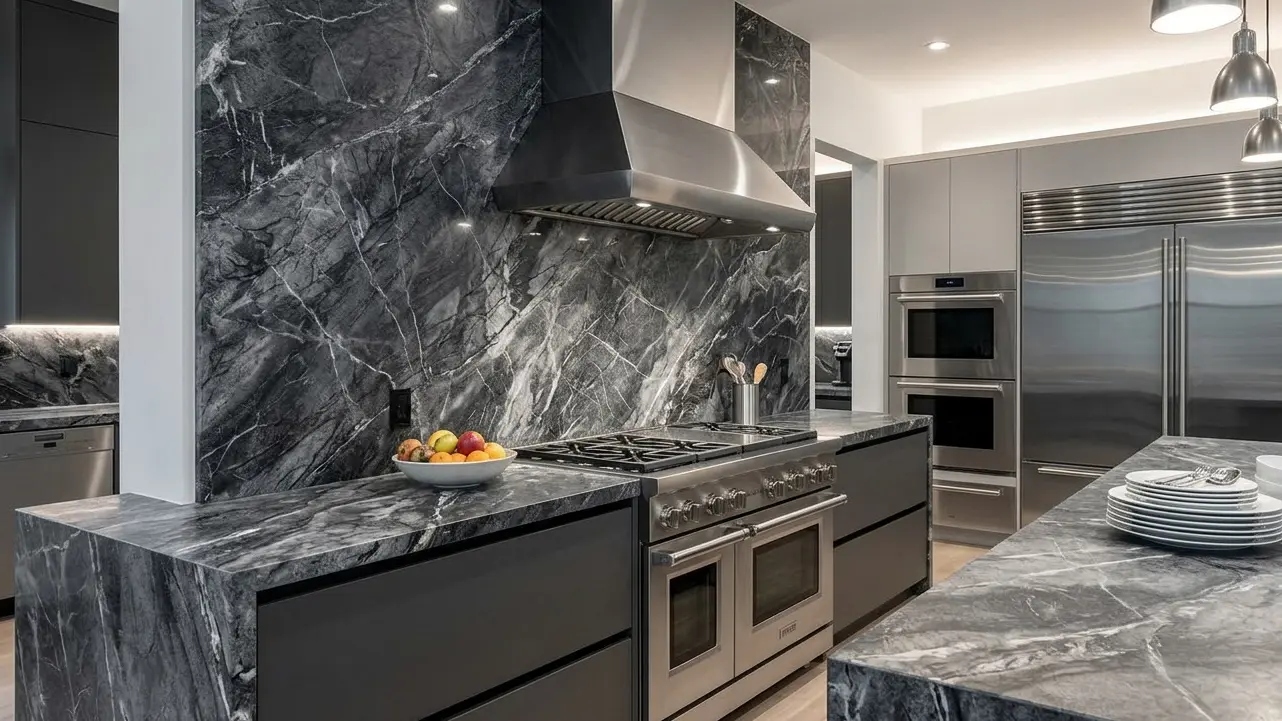
Charcoal Graphite Marble is a natural metamorphic stone rated at approximately 3 to 4 on the Mohs hardness scale. That puts it in the durable range for residential surfaces, though it is softer than granite or quartzite. For kitchen countertops, this means the stone holds up well under normal daily use, but cutting directly on the surface is not recommended and placing very hot items on it without protection should be avoided.
The slab format sets this stone apart from standard tile layouts immediately. Where grout lines in tile installations create visual breaks that can fragment a countertop or backsplash, a full slab delivers one continuous surface from edge to edge. That unbroken quality is what makes it such an effective choice for luxury kitchen countertops and feature walls where visual cohesion matters. According to a natural stone countertop guide from This Old House, slab surfaces consistently rank above tile for design continuity and long-term performance in kitchens.
For bathroom vanities, the slab format eliminates grout maintenance entirely, which is one practical advantage that compounds over time. The Gray Marble Countertop page is a useful reference for seeing how gray-toned natural marble performs across different bathroom and kitchen applications.
Built for Real Use: Practical Performance of This Natural Stone
Charcoal Graphite Marble delivers strong functional performance when used and maintained correctly. Each of these benefits comes with an honest note on what that performance actually requires in practice.
The Natural Stone Institute's care guidance is a reliable resource for understanding sealing schedules, appropriate cleaners, and long-term care routines for marble surfaces.
Practical Benefits
- The slab is durable, but proper care will help preserve its appearance over time.
- The surface is scratch resistant, but cutting directly on it is not recommended; always use a cutting board.
- The stone is moisture resistant, but standing water should not be left on the surface for extended periods, especially near edges and seams.
- The material is suitable for high-use areas, but misuse such as placing very hot cookware directly on the surface can still cause thermal shock.
- The finish is designed for everyday use, but care instructions should always align with the specific finish selected (polished requires more attention than honed in a kitchen setting).
- The slab is non-porous when sealed, but regular sealing every 6 to 12 months is still recommended to maintain that protection.
- The surface is suitable for food preparation, but a cutting board is always recommended to protect both the stone and your utensils.
- Matte and textured finishes offer better slip resistance than polished finishes, which can become slippery when wet.
- Avoid abrasive cleaners and harsh chemicals on any finish type; pH-neutral products extend the life of both the stone and the sealant.
Charcoal Graphite Marble as a Long-Term Design and Financial Investment
Few surface materials hold their visual relevance across design cycles the way dark natural marble does. Charcoal Graphite Marble does not follow seasonal color trends. The depth of its tone and the organic quality of its veining remain visually compelling regardless of what styles cycle in and out of favor around it. That design permanence is one reason this stone appears consistently in high-end residential projects.
The slab resists fading, but prolonged exposure to direct sunlight should still be considered when selecting placement. The material is built for lasting use, though each application should be evaluated individually to ensure the finish, sealing, and maintenance plan match the environment.
From a financial standpoint, natural marble surfaces are associated with higher perceived property value and are consistently included among premium finish materials in real estate appraisals. A review of the best countertop materials from Bob Vila confirms that natural stone ranks at the top for resale impact and long-term design credibility.
If you are deciding between natural marble and other gray-toned stone options, the Gray Natural Stone Countertop page covers a broader comparison of gray stone materials and their respective performance characteristics.
For additional reading on how marble countertops perform over time in real residential settings, the Nova Tile and Stone blog post Are Marble Countertops Worth It? Pros And Cons Explained gives an honest, detailed breakdown worth reviewing before committing to the material.
Fresh Insights from Our Slab Blogs
Frequently Asked Questions
Yes, with the right finish and consistent sealing. Honed or leathered finish is better suited to kitchen environments than polished because both are more forgiving under daily use. Polished marble in a kitchen can show etching from acidic substances more visibly and requires more attentive upkeep.
It performs well for bathroom vanities. The surface is moisture resistant when sealed, but standing water near faucets and along edges should be wiped up rather than left to sit. Polished finish is common for vanities because the bathroom environment is lower-impact than a kitchen countertop.
Polished deepens the charcoal tone and makes veining more vivid and reflective. Honed produces a softer, matte appearance that is slightly more muted in color but easier to maintain in kitchens. Leathered adds a low-profile texture that hides fingerprints and light surface marks better than either of the other two options.
Yes. Like most natural marble, this stone is porous and benefits from sealing every 6 to 12 months depending on usage and finish type. Unsealed marble is more susceptible to staining from oils, acidic liquids, and moisture over time.
Yes, and it is a popular design choice to use matching slabs on both the wall and floor in bathrooms and wet rooms for a cohesive look. For floors, honed or textured finish is strongly preferred over polished to reduce slip risk when the surface is wet.
Start Your Project with Slabs That Are Ready to Be Seen in Person
Charcoal Graphite Marble is the kind of stone that earns its place the moment you see the actual slab. The veining, tone depth, and finish interaction are impossible to fully evaluate from a photo. Visit any of our four showroom locations in Reno, Sacramento, Minden, or Fernley to view current inventory and work with our team on your project.