Graphite Marble Backsplash
Dark Stone in a Light-Dominant Market
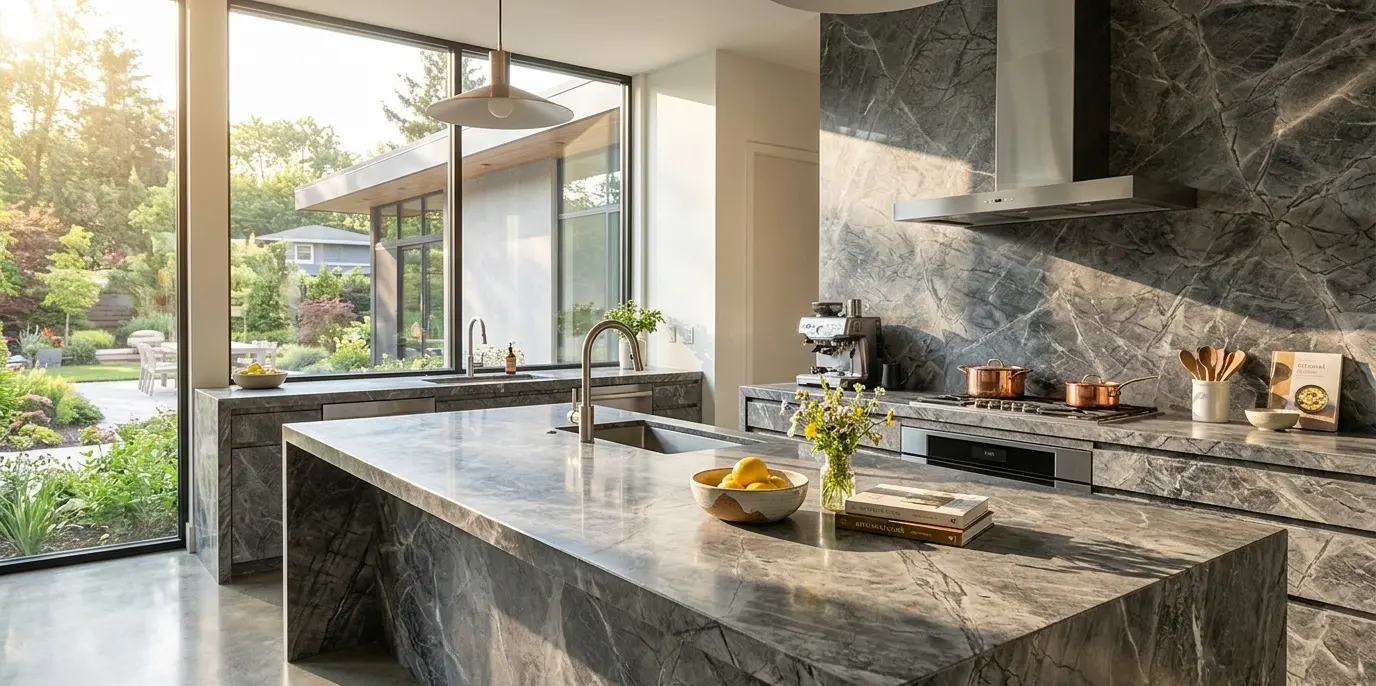
Most backsplash materials trend light. White subway tile, pale porcelain, and neutral glass mosaics dominate showroom floors because they are safe choices. A graphite marble backsplash moves in the opposite direction. It introduces depth, contrast, and a sense of weight that lighter materials cannot replicate.
In kitchens with white or light cabinetry, dark marble creates a sharp contrast that grounds the space. In kitchens that already run darker, it layers tone on tone for a more enveloping result. Against stainless appliances and hardware, the stone's natural metallic veining picks up the sheen of surrounding fixtures, tying the room together in a way that feels considered rather than accidental.
Beyond the kitchen, graphite marble works well in bathroom niches, wet walls, and fireplace surrounds wherever a backsplash needs to carry visual weight.
How Graphite Marble Forms
Marble forms when limestone is subjected to intense heat and pressure deep within the earth. The recrystallization of calcite minerals gives marble its characteristic veining and translucency. In graphite marble specifically, carbon-based graphite minerals mix into the stone during formation, producing dark backgrounds that range from charcoal gray to near-black.
On the Mohs hardness scale, marble rates between 3 and 5, placing it below granite (6 to 8) and quartzite (7). For a backsplash installation, this hardness range is generally adequate. Backsplashes are vertical surfaces that do not bear weight or face the repeated abrasion that floors and countertops do.
The porous nature of marble requires attention. Because calcite is reactive to acids, exposure to lemon juice, vinegar, or tomato-based sauces can cause etching, a chemical dulling of the surface that differs from a physical scratch. This is a characteristic of all marble, not specific to graphite varieties.
Polished, Honed, or Leathered
The finish applied to a graphite marble slab changes both its appearance and its practical behavior.
A polished finish brings out the stone's full color depth and makes the veining highly reflective. On dark marble, this intensifies the contrast between the graphite background and lighter veins for a dramatic, high-gloss effect.
A honed finish removes the gloss and produces a flat, matte surface with a more raw, architectural quality. Honed surfaces are better at concealing minor scratches, since small marks do not catch the light.
A leathered finish has a low-gloss, textured surface that is particularly effective on darker stones, adding tactile depth without the formality of a full polish.
Keeping the Stone Protected
Sealing is not optional with marble in a kitchen environment. Because the stone is porous, an unsealed surface is vulnerable to staining from cooking oils, water spots, and food splatter. A penetrating stone sealer fills the surface pores and reduces absorption.
For backsplash applications, resealing every six months is a reasonable starting point. Daily cleaning should use a soft cloth and a pH-neutral cleaner. Acidic cleaning products, including many common household sprays, can etch the calcite and break down the sealer faster. If you are planning a broader renovation alongside your backsplash, our tile and stone showrooms carry a full range of complementary materials across all four locations.
Frequently asked questions
Graphite marble works well as a backsplash material. Because it is a vertical surface that does not receive the same daily wear as a countertop or floor, its Mohs hardness of 3 to 5 is sufficient for typical kitchen use. The main maintenance requirements are regular sealing and prompt cleanup of acidic spills to prevent etching.
For a kitchen backsplash, resealing every six months is a reasonable general guideline. Because backsplashes are vertical, the standard water bead test is less practical than on a countertop. Scheduling a reseal twice a year, or whenever the surface appears to be absorbing liquids rather than repelling them, keeps the stone well protected.
Etching is a chemical reaction between acidic substances and the calcite in the marble. Common culprits include lemon juice, vinegar, wine, and tomato-based foods. The result is a dull, chalky-looking mark on the surface, whereas a scratch is a physical abrasion. Minor etching can sometimes be addressed with a marble polishing powder; deeper etching may require professional refinishing.
A polished finish maximizes contrast and depth, making it a strong choice for kitchens with simple, neutral cabinetry. A honed finish reads quieter and is more forgiving of minor marks. A leathered finish adds texture and works particularly well on darker stones like graphite marble.
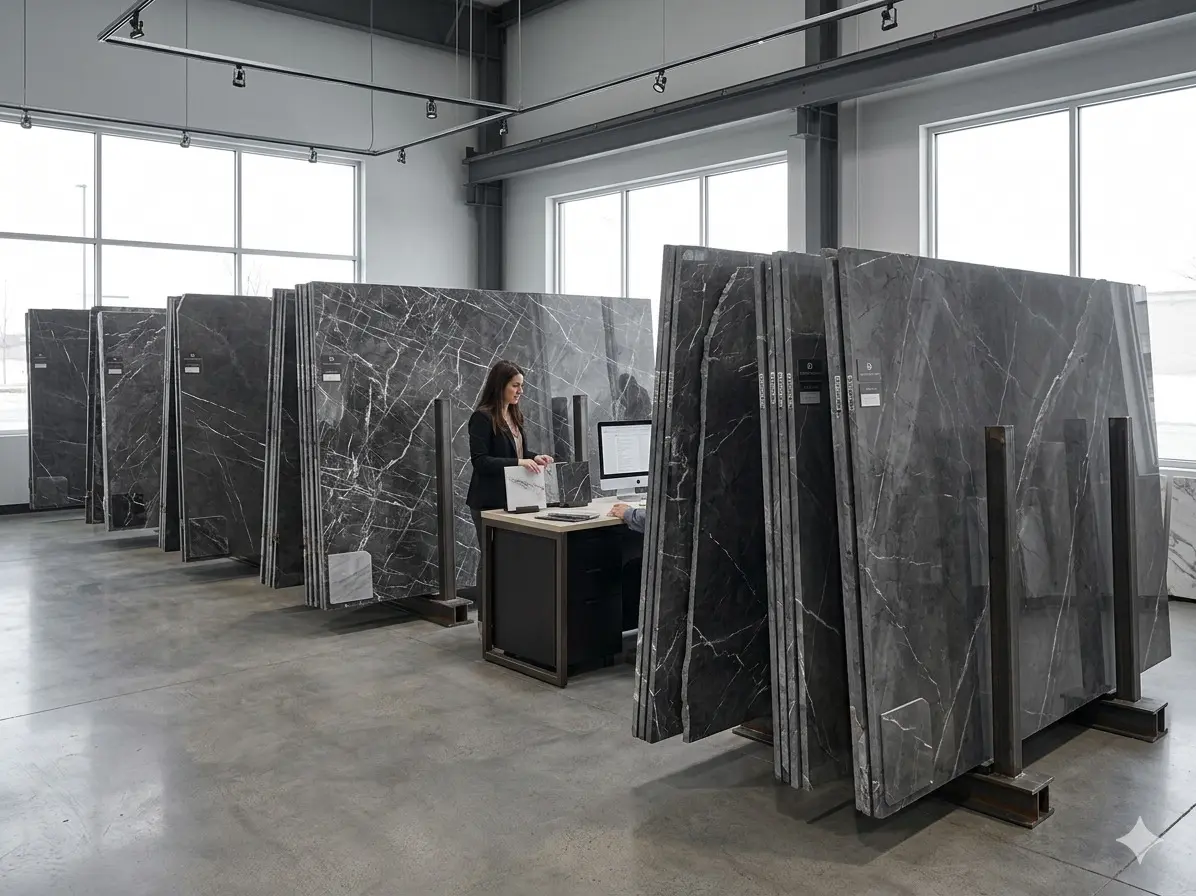
Yes, and we encourage it. Natural stone varies slab to slab, and seeing the material in person alongside samples of your cabinetry and countertop gives you a much clearer picture than any photo can. Schedule a showroom appointment at any of our four locations, or visit our showroom pages to find hours and directions. Trade professionals can also apply for a trade account for access to dedicated support and pricing.
Related Articles About Marble Backsplashes
See It in Person at Our Showrooms
Every natural stone slab is unique. The pattern you see in a photograph represents one instance of graphite marble; the actual slab you choose will have its own veining, tonal variation, and character. This is part of what distinguishes natural stone from manufactured alternatives, and it means the selection process benefits from seeing the material in person.
Our commission-free design consultants are available at all four of our showrooms in Reno, Sacramento, Minden, and Fernley. Browse our current slab inventory online before your visit, or request a slab quote to get the process started. We have been working with homeowners and trade professionals since 2005, and our team brings that experience to every consultation.