
Green Dolomite is a rare natural stone slab recognized for its deep forest and sage tones, organic veining, and patterns that cannot be replicated with engineered materials. Available in polished, honed, and leathered finishes, these slabs serve kitchen countertops, bathroom vanities, floors, walls, patios, pool decks, and wall cladding projects with equal authority. Because no two slabs share the same marking, every surface cut from this stone is genuinely unique. Trusted natural stone sourcing specialists connects homeowners and trade professionals directly to a live slab inventory, so you can see and choose the exact piece before it moves.
Green Dolomite Slabs: What the Material Actually Offers
Green dolomite is a sedimentary carbonate rock whose color, ranging from deep forest green to soft sage, develops through mineral inclusions such as chlorite and serpentine formed over millions of years. Standard slabs are available in 2 cm (3/4") and 3 cm (1-1/4") thicknesses, with slab dimensions typically reaching 55" x 110" or wider. The stone rates 3.5 to 4 on the Mohs hardness scale, which is comparable to marble and notably softer than granite (6 to 6.5) or quartzite (7), making consistent sealing an important part of the maintenance routine.
Polished finishes intensify the color and veining; honed surfaces deliver a diffused, matte quality; and leathered finishes add tactile depth while keeping the stone's natural character front and center. Compared to engineered quartz, green dolomite slabs bring a rarity and visual authenticity that no manufactured product can genuinely replicate.
Layout Directions That Transform Every Surface
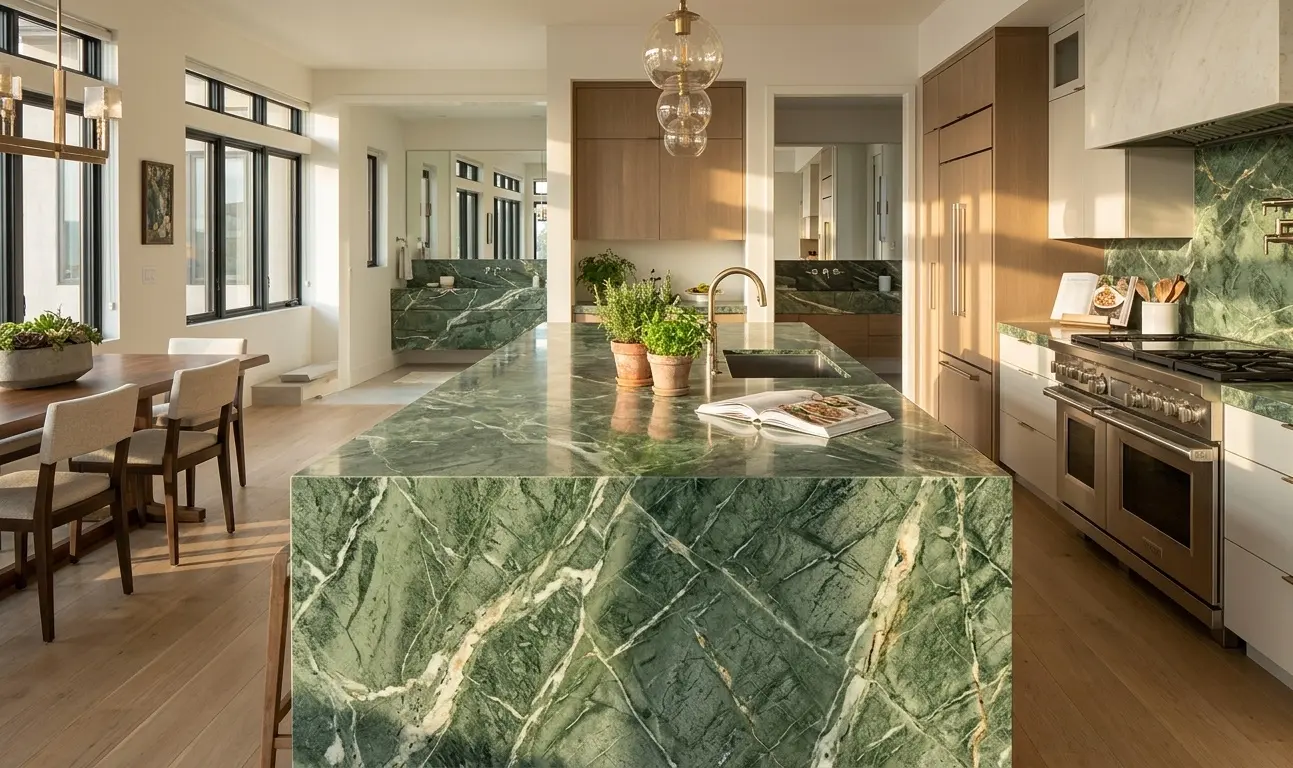
Green dolomite adapts to a wide range of layout orientations without losing visual impact. Horizontal slab runs across kitchen countertops and bathroom vanity tops create an expansive, grounded feel, while vertical orientation on feature walls draws the eye upward and amplifies a room's height. On floors, a straight grid layout emphasizes the stone's pattern symmetry, while a diagonal or offset configuration adds movement and visual interest to larger spaces. Pool decks and outdoor patio surfaces benefit from the stone's organic tones, which sit naturally alongside exterior greenery, timber decking, and neutral pavers.
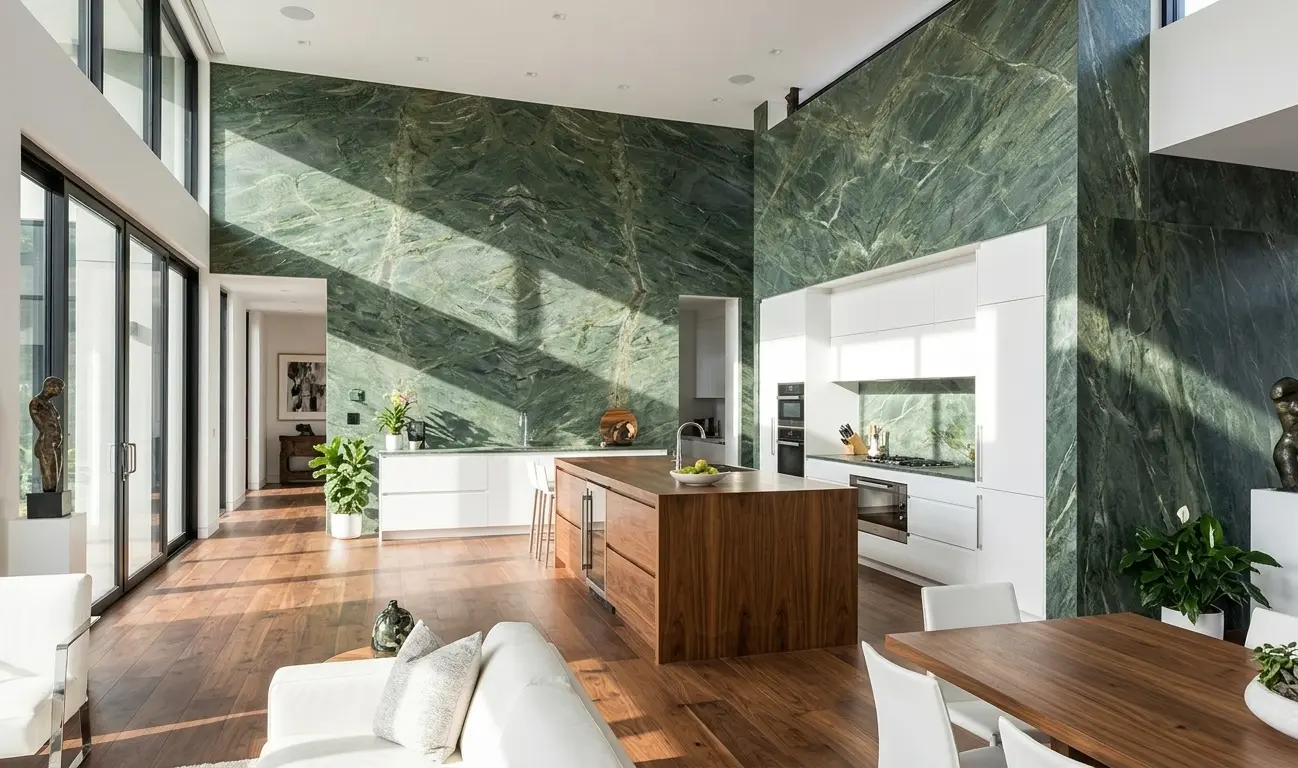
As wall cladding, green dolomite brings a quality associated with high-end spas and luxury residential design that pairs confidently with white, warm-grey, and walnut interior palettes. For a deeper look at how natural stone behaves across different surfaces and settings, the complete guide to natural stone slab flooring, materials, finishes, and care covers everything worth knowing before finalizing your layout plan.
Why Green Dolomite Performs Well in Real Projects
- Rare patterning: Every slab carries a veining composition found nowhere else, giving your surface a one-of-a-kind appearance at a natural stone price point.
- Finish flexibility: Polished, honed, and leathered options let you match the surface to your lifestyle, from high-gloss kitchens to low-maintenance, matte bathroom vanities.
- Thermal stability: Green dolomite handles normal heat exposure from cookware without warping, discoloring, or releasing compounds.
- Broad application range: Performs across indoor kitchens, bathroom vanities, floors, walls, outdoor pool decks, and patio cladding projects.
- Backed by design expertise: Nova Tile and Stone provides free design consultations, home delivery, and slab viewing across four showroom locations, so the purchasing process is as considered as the stone itself.

A Rare Stone That Holds Its Ground Over Time
Selecting green dolomite is a long-range decision, not only a style preference. Its rarity means slabs are not mass-produced or interchangeable, which sustains the material's desirability well beyond the initial installation. When properly sealed and maintained, the stone resists staining and retains its finish for decades without looking dated.
Unlike trend-dependent materials tied to a specific palette or decade, green dolomite's organic tones age gracefully alongside shifting interior styles. Properties featuring rare natural stone consistently attract buyers who recognize the quality embedded in the surface. Browse the live slab inventory to confirm current availability and reserve your slab before the selection changes.
Green Dolomite Slabs Available at Four Showroom Locations
Frequently Asked Questions
Yes, when properly sealed. Its hardness is comparable to marble, so acidic liquids should be cleaned promptly and resealing done annually to keep the surface protected.
Slabs come in polished, honed, and leathered finishes. Polished delivers the highest color intensity; honed creates a matte, subdued surface; leathered adds texture and tolerates everyday use well.
Quartzite rates around 7 on the Mohs scale, while green dolomite lands at 3.5 to 4. Quartzite is lower-maintenance, but green dolomite offers rarer patterning and more dramatic coloring that quartzite cannot match.
Yes, in moderate climates. Proper sealing is essential to protect against weather exposure. In colder regions, the sealer should be rated for freeze-thaw conditions.
For countertops, 3 cm is standard and preferred for structural strength. For flooring and wall cladding, 2 cm slabs are commonly used depending on the substrate and project span.
